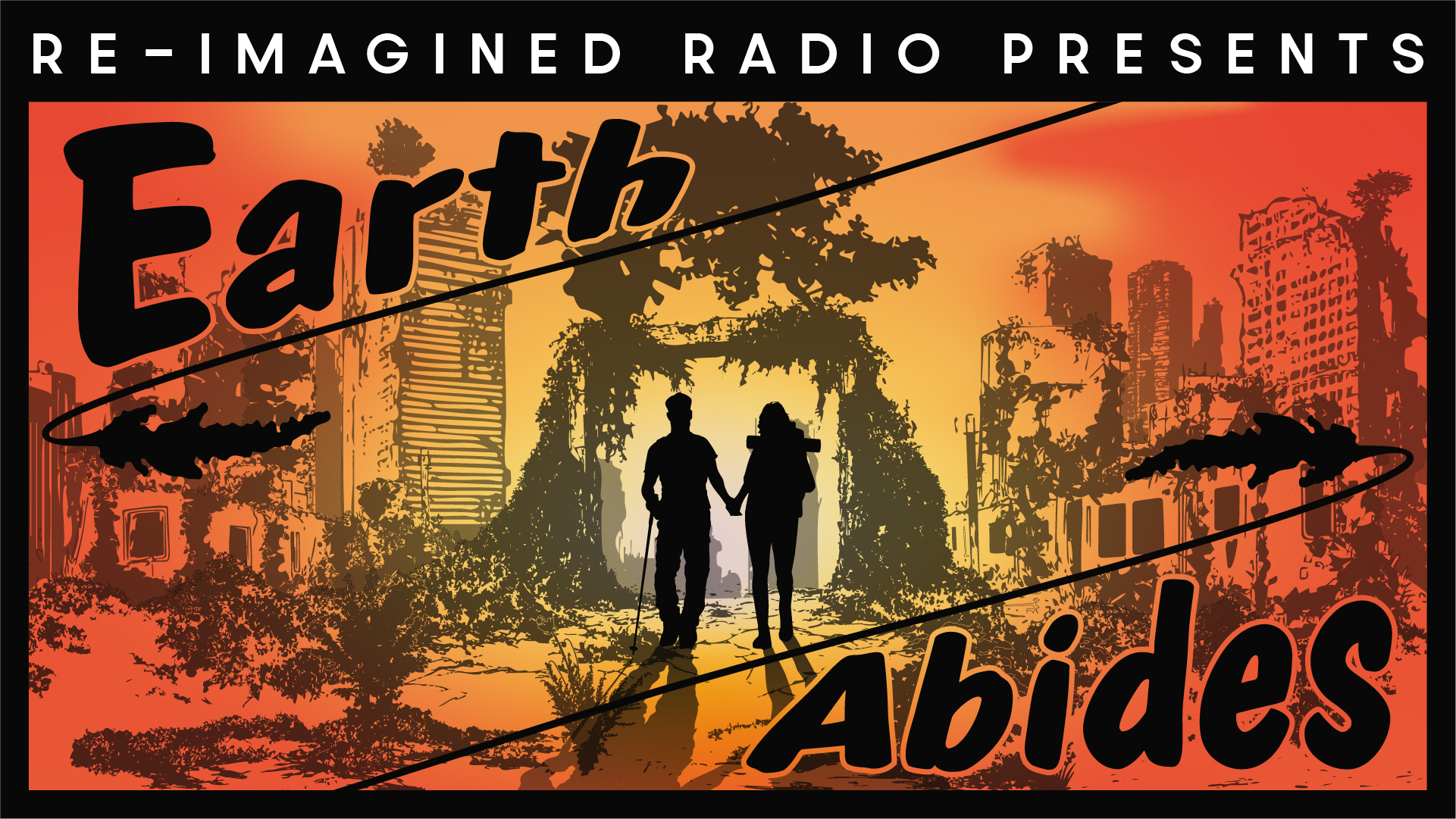
Re-Imagined Radio Opens Season 14 With Post-apocalyptic Classic “Earth Abides” (Photo) - 01/05/26
VANCOUVER, Wash. – Re-Imagined Radio launches Season 14 this month with a landmark work of post-apocalyptic science fiction that examines what remains after human civilization collapses.
The episode presents “Earth Abides,” adapted from the 1949 novel by American writer George R. Stewart. The story explores the aftermath of a sudden and deadly pandemic virus that wipes out most of Earth’s human population, while the natural world quietly continues.
Set in the 1940s, the novel is narrated by Isherwood Williams, a survivor who escapes the pandemic while living in the mountains of Northern California. Williams travels across the United States to New York City, encountering only a handful of survivors along the way. He eventually returns to his family home in Berkeley, California, where he spends the rest of his life observing nature’s resilience and the emergence of a new, less technologically dependent human society.
Williams describes himself as a student of ecology. He studies how nonhuman populations respond after generations of living under human dominance. Some species adapt and thrive. Others disappear. Humans also change, initially surviving by scavenging canned food, occupying abandoned homes and using deserted machinery. Literacy fades quickly, replaced by oral storytelling. When electrical and water systems fail, survivors revert to a hunter-gatherer lifestyle reminiscent of their distant ancestors.
The novel’s central theme is the impermanence of human effort and achievement. Civilizations rise and fall, but Earth endures.
Published in 1949, “Earth Abides” received widespread acclaim. It won the first International Fantasy Award in 1951 and was later named to Locus magazine’s best all-time science fiction lists in 1987 and 1998. The novel was also nominated for the Prometheus Hall of Fame.
The story was adapted for radio by David Ellis and broadcast in two episodes of the adventure radio series “Escape” in November 1950. With minimal editing, Re-Imagined Radio combines the two parts for this presentation as part of its Adventure and Science Fiction series.
“This adaptation, like Stewart’s original novel, examines nature’s resilience following the collapse of human civilization caused by a sudden and deadly pandemic virus,” said John F. Barber, producer and host of Re-Imagined Radio and faculty member in the Digital Technology and Culture program at Washington State University Vancouver. “For decades, this scenario seemed like speculative science fiction, until January 2020 and the beginning of the COVID pandemic.”
Re-Imagined Radio episodes air on KXRW-FM (99.9) in Vancouver, KXRY-FM (91.1 and 107.1) in Portland, and KNOM-AM (780) in Nome, Alaska, with additional broadcasts and streaming through partner stations.
New episodes premiere on the third Monday of each month. Programs stream globally and later become available as podcasts and on YouTube. Listening links and an archive of past episodes are available at reimaginedradio.fm, which also features Re-Imagined Radio EXTRA, offering additional sound-based storytelling between monthly episodes.
About Re-Imagined Radio
Created in 2013 by Barber, Re-Imagined Radio explores sound-based storytelling across genres including drama, comedy, documentary and sound art. Through performances, broadcasts, streaming, podcasts and social media, the program reimagines radio storytelling for contemporary audiences.
About WSU Vancouver
As one of six campuses of the WSU system, WSU Vancouver offers big-school resources in a small-school environment. The university provides affordable, high-quality baccalaureate- and graduate-level education to benefit the people and communities it serves. As the only four-year research university in Southwest Washington, WSU Vancouver helps drive economic growth through relationships with local businesses and industries, schools and nonprofit organizations.
WSU Vancouver is located on the homelands of the Cowlitz Indian Tribe and Peoples of the Lower Columbia Valley. We acknowledge their presence here. WSU Vancouver expresses its respect towards these original and current caretakers of the region. We pledge that these relationships will be built on mutual trust and respect.
# # #