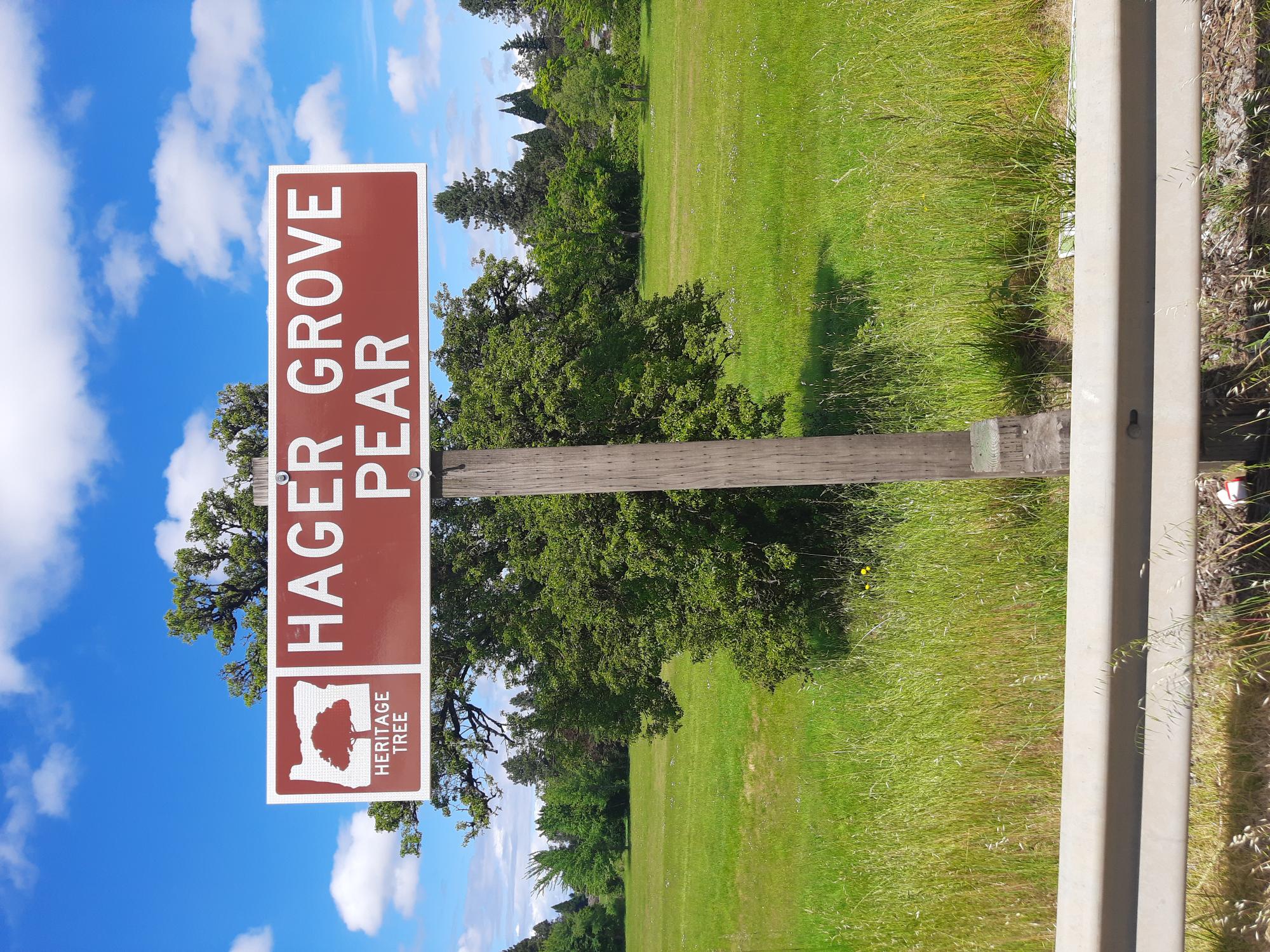
Oregon Heritage Tree Program Celebrates 30 Years - Marion & Polk Counties (Photo) - 03/31/26
(Salem, Oregon) The Travel Information Council and its volunteer Oregon Heritage Tree Committee, invite communities across Oregon to shine a spotlight on their heritage trees in 2026, particularly during Arbor Month in April.
Founded in 1996, Oregon was the first state in the country to launch a state-sponsored heritage tree program. The goal of the program is to educate Oregonians about the value of heritage trees and promote their appreciation. Over the past 30 years, 85 trees have been designated across the state in 26 of Oregon’s 36 counties. Seventy-nine of those trees are still living and provide the chance to engage the senses and learn about significant people, places and events at historic sites, public gardens, and hiking trails across the state.
Oregon Heritage Tree Committee Chair Dave Hedberg encourages the public to visit a state or local heritage tree. “Visiting an Oregon Heritage Tree is a chance to engage your senses and learn about local history in the real world – not just in books and on screens. All of Oregon’s Heritage Trees are deeply connected to the people of the past. Enjoying these trees today connects us with our history.”
State-designated heritage trees in the local area:
Hager Grove Pear, Salem: One of the oldest and largest pear trees in Oregon.
Waldo Park Tree, Salem: Judge William Waldo, pioneer settler and state legislator, planted this sequoia in 1872.
Star Trees at Willamette University, Salem: Grove of giant sequoias planted by students of the Class of 1942 in honor of Willamette University's 100th anniversary.
Moon Tree, State Capitol Grounds: This tree was raised from seed carried to the moon by Apollo 14 astronaut Stuart Roosa in 1971.
State Fairgrounds Oak Grove, Salem: Once a seasonal camp used by Kalapuya Indians, this grove of Oregon white oaks became the historic campground for the Oregon State Fair.
Governor McCall Maple, State Capitol Grounds: Planted by Oregon Governor Tom McCall during his second term of office in late 1973 or early 1974.
GeerCrest Orchard, Silverton: Mixed fruit and nut trees, planted in 1847 by Ralph Geer who helped start the modern fruit industry in Oregon.
Benedictine Sisters’ Sequoia, Mt. Angel: Planted in 1893, five years after the founding of the monastery and when the town was renamed from Fillmore to Mt. Angel
Signature Oak, Silverton: This 400-year-old landmark symbolizes the importance of Oregon white oak to the ecology and culture of the Willamette Valley.
Oregon Heritage Trees can be located using this map: https://oregontic.com/oregon-heritage-trees/oregon-heritage-tree-map/
Individuals, cities, tourism organizations, and heritage groups are invited to nominate a tree with documented historic significance to the state.
Al Tocchini, vice-chair of the Oregon Heritage Tree Committee says he and fellow members share a clear vision for the future of program- to be more inclusive. “In particular, we are seeking underrepresented stories of Oregon’s diverse populations in places that are accessible to the general public.”
The nomination form can be found at: oregontic.com/oregon-heritage-trees.
The Oregon Heritage Tree Program is administered by the Oregon Travel Information Council and a committee of dedicated volunteers from across the state. The Travel Information Council is a semi-independent state agency created by the State of Oregon in the 1970s to operate the highway blue logo sign program following the Highway Beautification Act. The agency now also operates the Oregon Historical Marker and Heritage Tree Programs as well as 39 rest areas at 25 locations in Oregon, providing clean, safe, and inviting locations that are open and free to use 24 hours a day, seven days a week.
For more information regarding the Heritage Tree program visit www.oregontic.com/oregon-heritage-trees.