
Oregon Travel Information Council

Emergency Messages as of 10:51 PM, Tue. Mar 31

No information currently posted.

logo

Subscribe to receive FlashAlert messages from Oregon Travel Information Council.

News Release

Oregon Heritage Tree Program Celebrates 30 Years -Eugene, Springfield (Photo) - 03/31/26

(Salem, Oregon) The Travel Information Council and its volunteer Oregon Heritage Tree Committee, invite communities across Oregon to shine a spotlight on their heritage trees in 2026, particularly during Arbor Month in April. 


Founded in 1996, Oregon was the first state in the country to launch a state-sponsored heritage tree program. The goal of the program is to educate Oregonians about the value of these trees and promote their appreciation. Over the past 30 years, 85 trees have been designated across the state in 26 of Oregon’s 36 counties. Seventy-nine heritage trees are still living and provide the chance to engage the senses and learn about significant people, places and events at historic sites, public gardens, and hiking trails across the state.


Oregon Heritage Tree Committee Chair Dave Hedberg encourages the public to visit a state or local heritage tree. “Visiting an Oregon Heritage Tree is a chance to engage your senses and learn about local history in the real world – not just in books and on screens. All of Oregon’s Heritage Trees are deeply connected to the people of the past. Enjoying these trees today connects us with our history.”


State-designated heritage trees in the area:


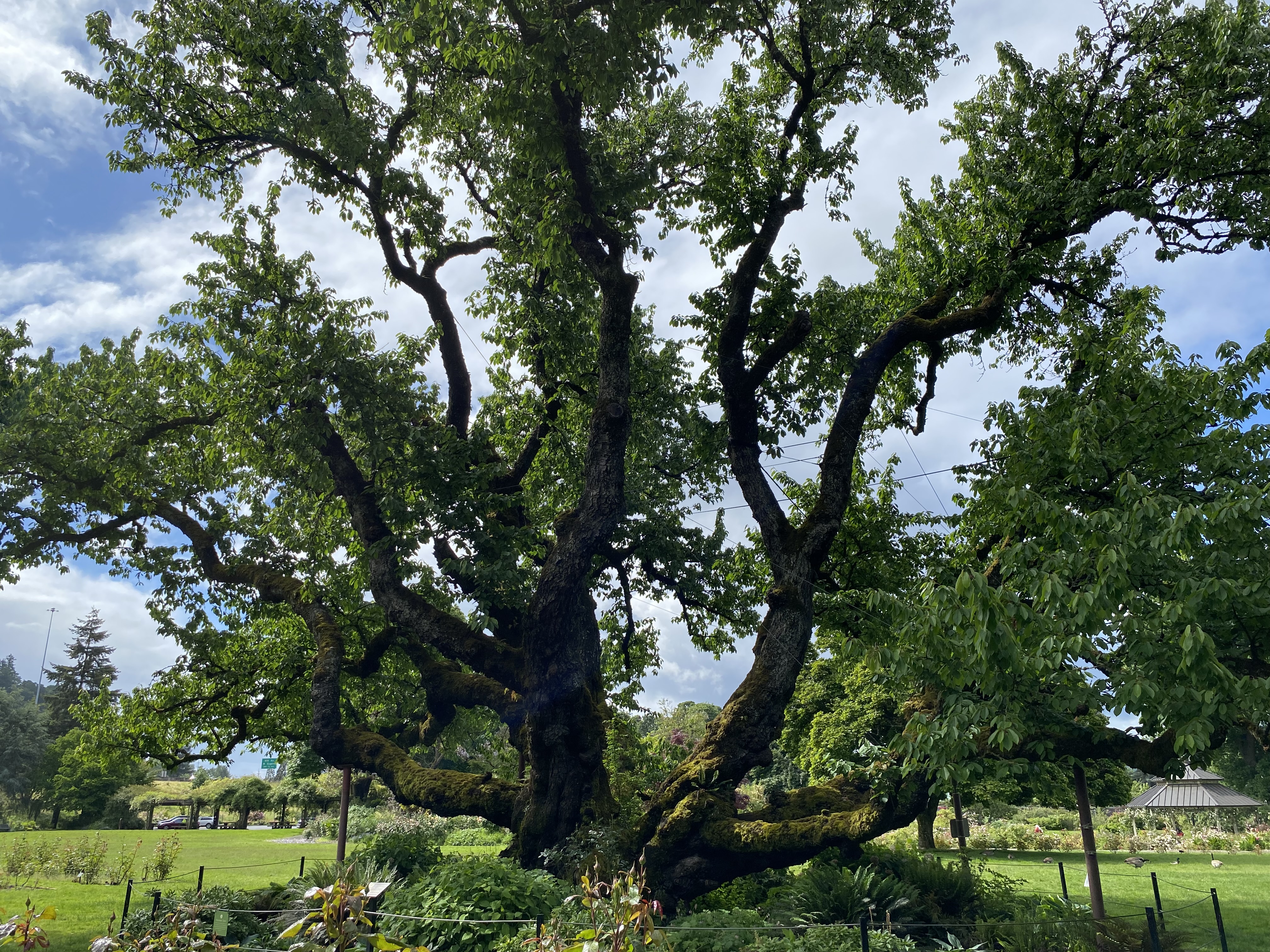
Owen Cherry, Eugene:  It is believed this tree was planted in the mid-1800s by Eugene Skinner, founder of the City of Eugene in 1853.  The tree is within the boundaries of Skinner's 1846 land claim.  By 1850, the site of the tree was owned by George Owen, a former Eugene City Councilor, lumberman, and philanthropist.  Mr. Owen donated the site to the city for use as a rose garden.


Dorris Ranch Hazelnut Orchard, Springfield: The first commercial-sized planting of hazelnuts in Oregon occurred when George Dorris planted a five-acre orchard here in 1905.  In addition to growing trees for nut production, Dorris started a hazelnut nursery that operated for 40 years and produced an average of 70,000 trees per year.  It is estimated that more than half of the trees in Oregon's hazelnut industry originated from Dorris Ranch nursery stock.


Ellmaker Grove, Zumwalt Park: In 1857, Enos and Elizabeth Fisher Ellmaker traded donation land claims with Levi W. and Mary Malinda Zumwalt. The Ellmakers built their house and blacksmith shop by this Oregon white oak, while nearby incense-cedar sheltered their livestock. The bigleaf maples, planted along the driveway by the Ellmakers, linked blacksmith shop customers to the ancient route sometimes known as a branch of the Applegate Trail.


These trees and more can be located using this map: https://oregontic.com/oregon-heritage-trees/oregon-heritage-tree-map/


Individuals, cities, tourism organizations, and heritage groups are invited to nominate a tree with documented historic significance to the state.


Al Tocchini, vice-chair of the Oregon Heritage Tree Committee says he and fellow members share a clear vision for the future of program- to be more inclusive. “In particular, we are seeking underrepresented stories of Oregon’s diverse populations in places that are accessible to the general public.”  


The nomination form can be found at: oregontic.com/oregon-heritage-trees.


The Oregon Heritage Tree Program is administered by the Oregon Travel Information Council and a committee of dedicated volunteers from across the state. The Travel Information Council is a semi-independent state agency created by the State of Oregon in the 1970s to operate the highway blue logo sign program following the Highway Beautification Act. The agency now also operates the Oregon Historical Marker and Heritage Tree Programs as well as 39 rest areas at 25 locations in Oregon, providing clean, safe, and inviting locations that are open and free to use 24 hours a day, seven days a week.


For more information regarding the Heritage Tree program visit www.oregontic.com/oregon-heritage-trees.
Oregon Heritage Tree Program Celebrates 30 Years -Eugene, Springfield (Photo) - 03/31/26

(Salem, Oregon) The Travel Information Council and its volunteer Oregon Heritage Tree Committee, invite communities across Oregon to shine a spotlight on their heritage trees in 2026, particularly during Arbor Month in April. 


Founded in 1996, Oregon was the first state in the country to launch a state-sponsored heritage tree program. The goal of the program is to educate Oregonians about the value of these trees and promote their appreciation. Over the past 30 years, 85 trees have been designated across the state in 26 of Oregon’s 36 counties. Seventy-nine heritage trees are still living and provide the chance to engage the senses and learn about significant people, places and events at historic sites, public gardens, and hiking trails across the state.


Oregon Heritage Tree Committee Chair Dave Hedberg encourages the public to visit a state or local heritage tree. “Visiting an Oregon Heritage Tree is a chance to engage your senses and learn about local history in the real world – not just in books and on screens. All of Oregon’s Heritage Trees are deeply connected to the people of the past. Enjoying these trees today connects us with our history.”


State-designated heritage trees in the area:


Owen Cherry, Eugene:  It is believed this tree was planted in the mid-1800s by Eugene Skinner, founder of the City of Eugene in 1853.  The tree is within the boundaries of Skinner's 1846 land claim.  By 1850, the site of the tree was owned by George Owen, a former Eugene City Councilor, lumberman, and philanthropist.  Mr. Owen donated the site to the city for use as a rose garden.


Dorris Ranch Hazelnut Orchard, Springfield: The first commercial-sized planting of hazelnuts in Oregon occurred when George Dorris planted a five-acre orchard here in 1905.  In addition to growing trees for nut production, Dorris started a hazelnut nursery that operated for 40 years and produced an average of 70,000 trees per year.  It is estimated that more than half of the trees in Oregon's hazelnut industry originated from Dorris Ranch nursery stock.


Ellmaker Grove, Zumwalt Park: In 1857, Enos and Elizabeth Fisher Ellmaker traded donation land claims with Levi W. and Mary Malinda Zumwalt. The Ellmakers built their house and blacksmith shop by this Oregon white oak, while nearby incense-cedar sheltered their livestock. The bigleaf maples, planted along the driveway by the Ellmakers, linked blacksmith shop customers to the ancient route sometimes known as a branch of the Applegate Trail.


These trees and more can be located using this map: https://oregontic.com/oregon-heritage-trees/oregon-heritage-tree-map/


Individuals, cities, tourism organizations, and heritage groups are invited to nominate a tree with documented historic significance to the state.


Al Tocchini, vice-chair of the Oregon Heritage Tree Committee says he and fellow members share a clear vision for the future of program- to be more inclusive. “In particular, we are seeking underrepresented stories of Oregon’s diverse populations in places that are accessible to the general public.”  


The nomination form can be found at: oregontic.com/oregon-heritage-trees.


The Oregon Heritage Tree Program is administered by the Oregon Travel Information Council and a committee of dedicated volunteers from across the state. The Travel Information Council is a semi-independent state agency created by the State of Oregon in the 1970s to operate the highway blue logo sign program following the Highway Beautification Act. The agency now also operates the Oregon Historical Marker and Heritage Tree Programs as well as 39 rest areas at 25 locations in Oregon, providing clean, safe, and inviting locations that are open and free to use 24 hours a day, seven days a week.


For more information regarding the Heritage Tree program visit www.oregontic.com/oregon-heritage-trees.