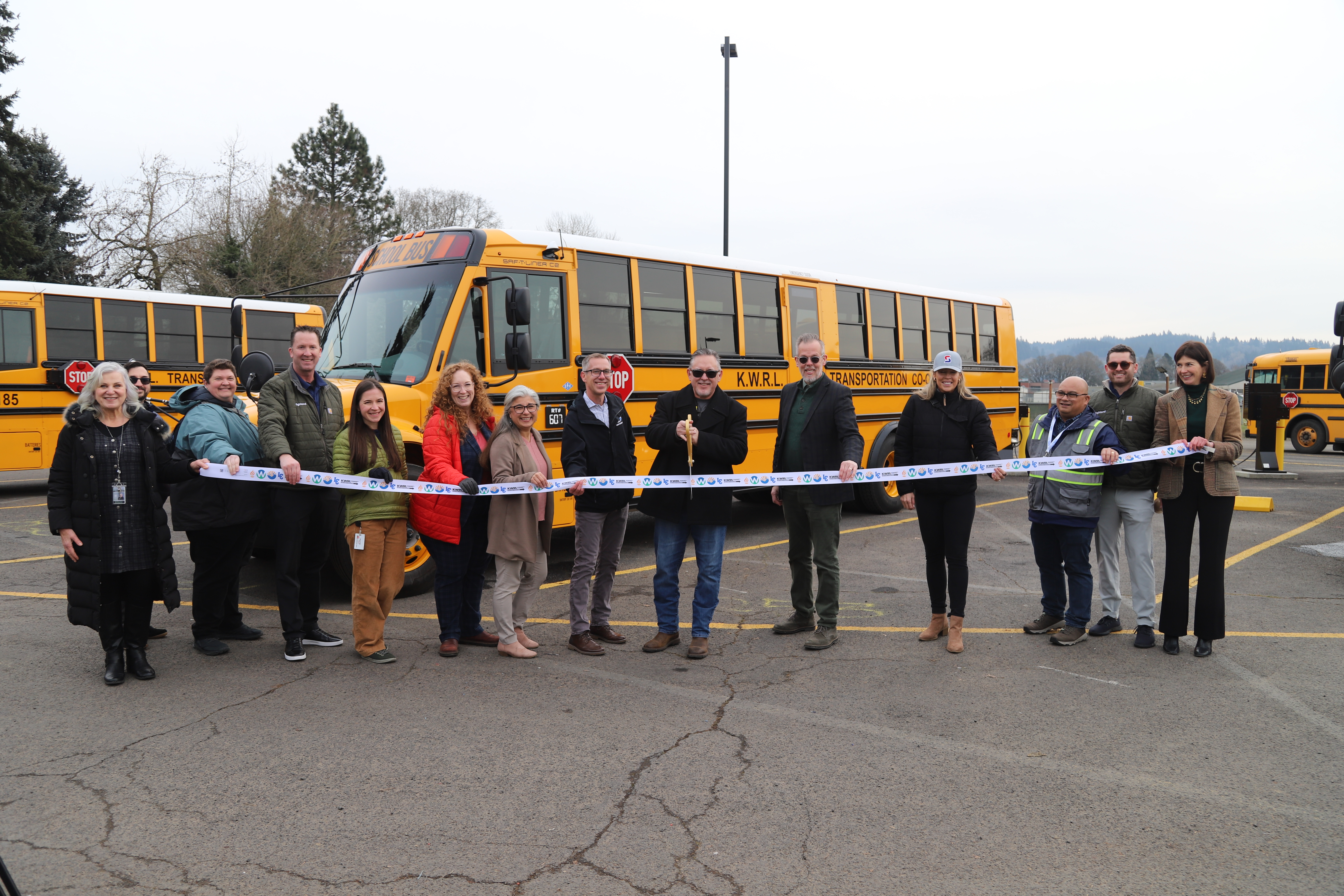
KWRL Transportation Embraces The Future With 14 New Electric School Buses (Photo) - 01/27/26
KWRL Transportation—the long-standing transportation cooperative serving Kalama, Woodland, Ridgefield, and La Center School Districts—is taking a major step toward modernizing its fleet and improving long-term cost efficiency with the purchase of 14 new electric school buses. The milestone is the result of a multi-year effort to secure state, federal, and local utility grants that make electrification financially attainable for smaller districts.
Shannon Barnett, Transportation Director for KWRL, explained that the journey toward this purchase began nearly two years ago when bus manufacturers warned districts that diesel buses would soon be unavailable due to California emission standards being adopted in Washington and Oregon. “We were no longer going to be able to purchase diesel buses,” Barnett said, prompting KWRL to begin seriously exploring electrification options.
At first, KWRL hesitated to pursue electric buses due to infrastructure costs and concerns about range limitations for long-distance trips. But increasing grant opportunities—and the looming phase-out of diesel—spurred the Cooperative to apply.
“We applied the first time and were not accepted,” Barnett noted. But a second application, boosted by expanded grant programs, proved transformative. “I honestly didn’t think we would qualify, but it doesn’t hurt to apply,” he said. That persistence paid off.
A Unique Combination of Funding Sources
KWRL ultimately secured funding from three major sources: the Environmental Protection Agency (EPA), the Washington State Department of Ecology, and local Public Utility Districts (PUDs). “This creative approach to access multiple sources of funding ultimately allowed the cooperative to cover not just the cost of the buses, but also the infrastructure needed to power them, saving our local taxpayers money,” said Dr. Jenny Rodriquez, Ridgefield School District Superintendent.
When Barnett contacted Clark and Cowlitz PUDs to assess feasibility, he received an unexpected offer. “They said, ‘We’ve got all of this gas tax money and the governor is encouraging us to use it on infrastructure—could we help you build infrastructure?’” Barnett recalled. With that, KWRL added substantial PUD contributions to its grant portfolio.
The final package included EPA funding covering half the cost of each electric bus, plus up to $40,000 per vehicle for infrastructure; Department of Ecology funds covered the remainder for 10 buses; and PUD support pushed the infrastructure costs to zero. In total, 10 of the 14 buses are fully grant-funded, while the remaining four cost the cooperative roughly $50,000 each—just a fraction of a standard diesel purchase price.
“Normally we’re looking at about $250,000 to $280,000 for a diesel bus and $400,000 for an electric bus,” Barnett said.
Long-Term Savings for Local Taxpayers
Beyond reduced fuel and maintenance costs, the electric transition will produce substantial savings for the four partner districts over the next decade. That’s because school buses in Washington are depreciated and reimbursed by the state over 13 years—regardless of how the buses were purchased.
“The state pays us back for every purchase… even though EPA and Ecology purchased them,” Barnett explained. “We’re getting payments on something that we didn’t spend money on.”
This means KWRL’s Transportation Vehicle Fund (TVF) will grow significantly without requiring annual contributions from local districts. Historically, the four KWRL districts have contributed approximately $300,000–$350,000 per year from local dollars to sustain the Cooperative. Those contributions will now be on hold.
Improved Riding Experience for Students
Electric buses offer several advantages that directly improve students’ daily ride to school. They are significantly quieter, which some students prefer. “Districts that already operate electric buses report a more peaceful ride,” said Barnett.
Electric buses also have smoother air-ride suspension systems and far fewer moving parts, dramatically reducing maintenance needs. And with the grant covering electricity, KWRL’s operating costs for these 14 routes will drop considerably.
Training and Timeline
About 30 KWRL employees—drivers, mechanics, and office staff—have already received specialized training in operating and maintaining electric buses. KWRL has also built internal capacity by training its own staff to serve as future instructors.
The buses are arriving in stages, two at a time, with full deployment expected by mid-February. Woodland launched the first electric route on December 15, with the ribbon-cutting celebration occuring on January 27.
“Saving Us Local Dollars and Upgrading Our Fleet”
When asked what he most wants the community to know about this transition, Barnett emphasized two key points: fiscal responsibility and modernization.
“This is saving us local dollars and upgrading to a newer and more modern fleet,” he said. Grant funding is not only supporting the purchase of electric buses but also allowing KWRL to continue purchasing diesel buses where appropriate for long-range routes. “It’s saving operational costs in maintenance and fuel.”
“For Ridgefield and our partners in Kalama, Woodland, and La Center, the move to electrification represents our shared desire for both innovation and fiscal stewardship,” said Rodriquez.