Oregon Department of Emergency Management (OEM)

Emergency Messages as of 4:42 PM, Mon. Aug 3

No information currently posted.

logo

Subscribe to receive FlashAlert messages from Oregon Department of Emergency Management (OEM).

News Release

Oregon Agencies Highlight Air Quality Safety For Livestock And Fair Exhibitors - 08/03/26
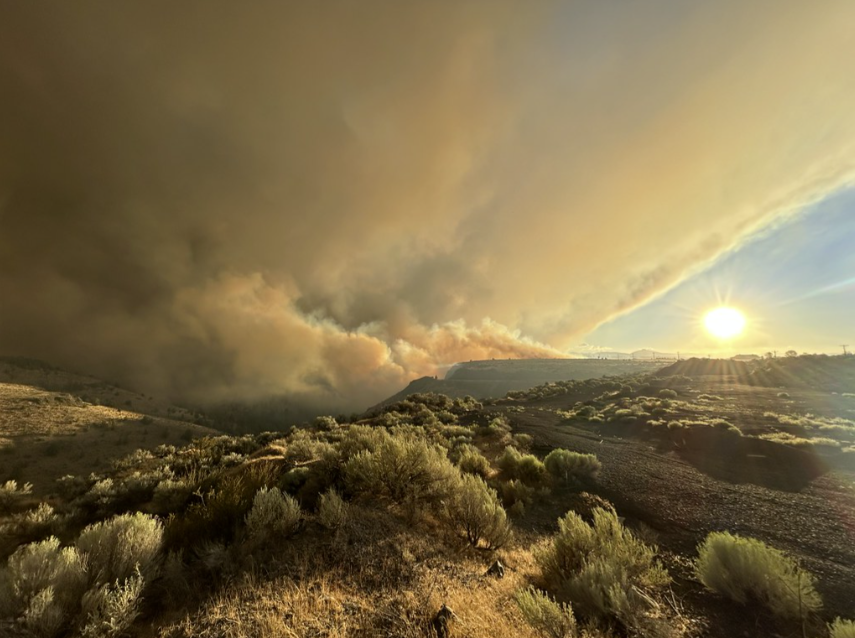
 

Wildfire smoke rolls over the skies near Warm Springs - A wildfire burns along U.S. 26 near Warm Springs on July 25, 2026 ODOT

Wildfire smoke rolls over the skies near Warm Springson July 25, 2026 - courtesy of the Oregon Department of Transportation


SALEM, Ore. — As wildfire seasons intensify and air quality fluctuates across Oregon, the Department of Environmental Quality (DEQ), Oregon Health Authority (OHA), Oregon State University (OSU) Extension Service, and Oregon Department of Agriculture (ODA) are issuing coordinated guidance for livestock owners and fair exhibitors to safeguard animal health during smoke events.

Air Quality Monitoring and Alerts

DEQ’s statewide monitoring network provides real-time updates on fine particulate matter, ozone, and other pollutants at more than 40 sites throughout Oregon. Daily updates, including wildfire smoke advisories, are available through the DEQ Air Quality Index map and compatible mobile applications.

During severe wildfire periods, DEQ, OHA, and partner agencies implement the Wildfire Smoke Response Protocol, which triggers air quality alerts, public advisories, and technical support.

Protecting Livestock from Smoke Exposure

The OSU Extension Service advises that wildfire smoke contains fine particles that can irritate respiratory systems in animals. During smoke events, livestock owners are encouraged to minimize animal exercise, provide abundant fresh water, and use dust‑free bedding or feed. Misting or sprinkling holding areas can also help reduce airborne particulates.

A recent OSU study found that even short-term smoke exposure can elevate stress markers in calves and activate immune responses before outward symptoms appear. Producers should closely monitor air quality forecasts and adjust livestock activities accordingly.

Livestock intended for exhibition should only be shown on days with favorable air quality and should be monitored for signs of respiratory stress.

Fairground Biosecurity and Exhibitor Safety

ODA requires all livestock exhibitions to register at least 20 days before an event and maintain complete animal records for 90 days afterward. Events must designate isolation areas for animals that show signs of illness and maintain veterinarian oversight throughout their duration.

Influenza‑susceptible species—including dairy cattle, swine, poultry, and waterfowl—must be housed separately from other species. Lactating dairy cattle must be milked in areas inaccessible to the public or protected by a physical barrier.

Human Health Considerations

The Oregon Health Authority notes that fair participants may be exposed to smoke outdoors for prolonged periods. People with heart and lung disease, infants, children, youth, older adults, pregnant women are at higher risk of poor health outcomes than other groups. Outdoor workers and volunteers are at higher risk of exposure. Individuals may have more than one risk factor. It is best to avoid smoke by staying indoors during periods of poor air quality. Participants who must be outdoors should:

  • Follow any breathing plan developed with their health care provider. Keep any prescribed rescue medication close.
  • Take frequent rest breaks in indoor spaces- preferably in air conditioned buildings with filtered air.
  • Consider use of a N95 or better respirator during periods of poor air quality. Those with heart and lung disease should consult with their provider first.
  • Take extra care when heat and smoke occur together. The combination can worsen harmful health effects.  

Fair organizers and exhibitors should provide and clearly mark filtered-air indoor spaces, ensure access to handwashing stations, and offer clear messaging about air quality expectations. 

OHA also recognizes agricultural community members affected by wildfires may be under emotional distress. Two helplines offer 24/7 emotional support. 988 is available for anyone who needs support. The Agristress Helpline supports farmers, ranchers and rural community members. Fair organizers are encouraged to share this information as well.  

Recommendations for Upcoming Fairs and Exhibitions

  • Monitor official air quality sources regularly and schedule events during favorable conditions.
  • Prioritize animal welfare by reducing stressors such as exercise and dust exposure.
  • Follow ODA’s exhibition registration, recordkeeping, and isolation-area requirements.
  • Enhance human safety by offering filtered-air spaces, sanitation facilities, and clear public communications.
  • Provide real-time updates and preparedness guidance to staff, volunteers, exhibitors, and visitors.

Additional Resources


oha-oem-deq-oda-logos


Oregon Agencies Highlight Air Quality Safety For Livestock And Fair Exhibitors - 08/03/26


Wildfire smoke rolls over the skies near Warm Springs - A wildfire burns along U.S. 26 near Warm Springs on July 25, 2026 ODOT

Wildfire smoke rolls over the skies near Warm Springson July 25, 2026 - courtesy of the Oregon Department of Transportation


SALEM, Ore. — As wildfire seasons intensify and air quality fluctuates across Oregon, the Department of Environmental Quality (DEQ), Oregon Health Authority (OHA), Oregon State University (OSU) Extension Service, and Oregon Department of Agriculture (ODA) are issuing coordinated guidance for livestock owners and fair exhibitors to safeguard animal health during smoke events.

Air Quality Monitoring and Alerts

DEQ’s statewide monitoring network provides real-time updates on fine particulate matter, ozone, and other pollutants at more than 40 sites throughout Oregon. Daily updates, including wildfire smoke advisories, are available through the DEQ Air Quality Index map and compatible mobile applications.

During severe wildfire periods, DEQ, OHA, and partner agencies implement the Wildfire Smoke Response Protocol, which triggers air quality alerts, public advisories, and technical support.

Protecting Livestock from Smoke Exposure

The OSU Extension Service advises that wildfire smoke contains fine particles that can irritate respiratory systems in animals. During smoke events, livestock owners are encouraged to minimize animal exercise, provide abundant fresh water, and use dust‑free bedding or feed. Misting or sprinkling holding areas can also help reduce airborne particulates.

A recent OSU study found that even short-term smoke exposure can elevate stress markers in calves and activate immune responses before outward symptoms appear. Producers should closely monitor air quality forecasts and adjust livestock activities accordingly.

Livestock intended for exhibition should only be shown on days with favorable air quality and should be monitored for signs of respiratory stress.

Fairground Biosecurity and Exhibitor Safety

ODA requires all livestock exhibitions to register at least 20 days before an event and maintain complete animal records for 90 days afterward. Events must designate isolation areas for animals that show signs of illness and maintain veterinarian oversight throughout their duration.

Influenza‑susceptible species—including dairy cattle, swine, poultry, and waterfowl—must be housed separately from other species. Lactating dairy cattle must be milked in areas inaccessible to the public or protected by a physical barrier.

Human Health Considerations

The Oregon Health Authority notes that fair participants may be exposed to smoke outdoors for prolonged periods. People with heart and lung disease, infants, children, youth, older adults, pregnant women are at higher risk of poor health outcomes than other groups. Outdoor workers and volunteers are at higher risk of exposure. Individuals may have more than one risk factor. It is best to avoid smoke by staying indoors during periods of poor air quality. Participants who must be outdoors should:

  • Follow any breathing plan developed with their health care provider. Keep any prescribed rescue medication close.
  • Take frequent rest breaks in indoor spaces- preferably in air conditioned buildings with filtered air.
  • Consider use of a N95 or better respirator during periods of poor air quality. Those with heart and lung disease should consult with their provider first.
  • Take extra care when heat and smoke occur together. The combination can worsen harmful health effects.  

Fair organizers and exhibitors should provide and clearly mark filtered-air indoor spaces, ensure access to handwashing stations, and offer clear messaging about air quality expectations. 

OHA also recognizes agricultural community members affected by wildfires may be under emotional distress. Two helplines offer 24/7 emotional support. 988 is available for anyone who needs support. The Agristress Helpline supports farmers, ranchers and rural community members. Fair organizers are encouraged to share this information as well.  

Recommendations for Upcoming Fairs and Exhibitions

  • Monitor official air quality sources regularly and schedule events during favorable conditions.
  • Prioritize animal welfare by reducing stressors such as exercise and dust exposure.
  • Follow ODA’s exhibition registration, recordkeeping, and isolation-area requirements.
  • Enhance human safety by offering filtered-air spaces, sanitation facilities, and clear public communications.
  • Provide real-time updates and preparedness guidance to staff, volunteers, exhibitors, and visitors.

Additional Resources


oha-oem-deq-oda-logos