Oregon Health Authority

Emergency Messages as of 3:32 PM, Tue. Nov 24

No information currently posted.

Subscribe to receive FlashAlert messages from Oregon Health Authority.

News Release

Clean, Separate, Cook, Chill: Keep Holiday Meals Safe, Germ-free - 11/24/26

November 24, 2026

Media contact: Lance Heisler, [email protected]

Clean, separate, cook, chill: Keep holiday meals safe, germ-free

CDC’s steps to food safety stress proper poultry handling, kitchen hygiene

PORTLAND, Ore.—Keeping yourself and loved ones safe from foodborne germs this holiday season takes just four easy steps—cleaning, separating, cooking and chilling—according to an Oregon Health Authority (OHA) food safety expert.

Emilio DeBess, foodborne illness epidemiologist expert at OHA’s Public Health Division, says the Centers for Disease Control and Prevention’s (CDC) four steps to food safety emphasize slowing down and planning ahead as the big meal approaches to ensure the holidays stay safe and healthy.

“No one wants their holiday meal to be remembered as the source of an outbreak of a foodborne infection such as Salmonella, Clostridium or Campylobacter,” DeBess said. “Thinking ahead about how you can keep your kitchen environment clean is a great way for your meal to be remembered as a fun get-together of friends, family and neighbors.”
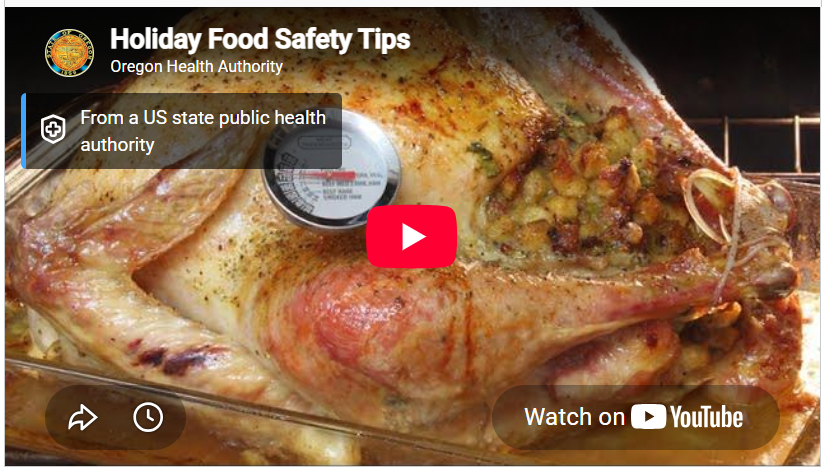
Video: OHA has published a video on proper food handling and preparation for holiday meals. 

According to CDC, Clostridium perfringens outbreaks occur most often in November and December. Many Clostridium outbreaks have been linked to common holiday foods such as turkey and roast beef. Those meats also are common sources of Salmonella and Campylobacter, which can spread easily to other foods from unwashed hands and contaminated kitchen surfaces.

The three bacteria share two symptoms: diarrhea and stomach cramps, with symptom onset beginning between several hours and several days after infection. Salmonella infection can also cause headaches, nausea, vomiting and loss of appetite, and Campylobacter can also cause fever, nausea, and vomiting.

Preventing these bacteria during holiday meal preparation can be done by taking these simple steps, according to DeBess and CDC:

Clean: wash your hands and surfaces often.

  • Wash your hands at least 20 seconds with soap and water before, during, and after preparing food and before eating. Always wash hands after handling uncooked meat, chicken and other poultry, seafood, flour, or eggs; wash utensils, cutting boards and countertops with hot, soapy water after preparing each food item; rinse fresh fruits and vegetables under running water.

Separate: don’t cross-contaminate.

  • When grocery shopping, keep raw meat, poultry, seafood and their juices away from other foods; keep raw or marinating meat, poultry, seafood, and eggs separate from other foods in the refrigerator; store raw meat, poultry, and seafood in sealed containers or wrap them securely so the juices don't leak onto other foods; use one cutting board or plate for raw meat, poultry, and seafood and a separate cutting board or plate for produce, bread, and other foods that won't be cooked. Washing raw chicken, which is ready to cook and doesn’t need washing, can spread germs to other foods, the sink and the counter, and make you sick.

Cook to the right temperature.

  • The only way to tell if food is safely cooked to a temperature that kills germs is to use a food thermometer:
    • Whole cuts of beef, veal, lamb, and pork, including fresh ham: 145°F (then allow the meat to rest for 3 minutes before carving or eating).
    • Fish with fins: 145°F or cook until the flesh is opaque and separates easily with a fork.
    • Ground meats, such as beef and pork: 160°F.
    • All poultry, including ground chicken and turkey: 165°F.
    • Leftovers and casseroles: 165°F.
    • Check this chart for a detailed list of temperatures and foods, including shellfish and precooked ham.

Chill: refrigerate promptly.

  • Never leave perishable food out for more than 2 hours (or 1 hour if exposed to temperatures above 90°F); keep your refrigerator at 40°F or below and your freezer at 0°F or below, and know when to throw food out before it spoils; if your refrigerator doesn't have a built-in thermometer, keep an appliance thermometer inside it to check the temperature; package warm or hot food into several clean, shallow containers and then refrigerate—it is OK to put small portions of hot food in the refrigerator since they will chill faster; refrigerate perishable food (meat, seafood, dairy, cut fruit, some vegetables, and cooked leftovers) within 2 hours. If the food is exposed to temperatures above 90°F, like a hot car or picnic, refrigerate it within 1 hour; thaw frozen food safely in the refrigerator, in cold water, or in the microwave – never thaw food on the counter because bacteria multiply quickly in the parts of the food that reach room temperature.

For more information, visit the CDC’s page for “Preparing Your Holiday Turkey Safely” page and its “About Four Steps to Food Safety” page.

###


Clean, Separate, Cook, Chill: Keep Holiday Meals Safe, Germ-free - 11/24/26

November 24, 2026

Media contact: Lance Heisler, [email protected]

Clean, separate, cook, chill: Keep holiday meals safe, germ-free

CDC’s steps to food safety stress proper poultry handling, kitchen hygiene

PORTLAND, Ore.—Keeping yourself and loved ones safe from foodborne germs this holiday season takes just four easy steps—cleaning, separating, cooking and chilling—according to an Oregon Health Authority (OHA) food safety expert.

Emilio DeBess, foodborne illness epidemiologist expert at OHA’s Public Health Division, says the Centers for Disease Control and Prevention’s (CDC) four steps to food safety emphasize slowing down and planning ahead as the big meal approaches to ensure the holidays stay safe and healthy.

“No one wants their holiday meal to be remembered as the source of an outbreak of a foodborne infection such as Salmonella, Clostridium or Campylobacter,” DeBess said. “Thinking ahead about how you can keep your kitchen environment clean is a great way for your meal to be remembered as a fun get-together of friends, family and neighbors.”

Video: OHA has published a video on proper food handling and preparation for holiday meals. 

According to CDC, Clostridium perfringens outbreaks occur most often in November and December. Many Clostridium outbreaks have been linked to common holiday foods such as turkey and roast beef. Those meats also are common sources of Salmonella and Campylobacter, which can spread easily to other foods from unwashed hands and contaminated kitchen surfaces.

The three bacteria share two symptoms: diarrhea and stomach cramps, with symptom onset beginning between several hours and several days after infection. Salmonella infection can also cause headaches, nausea, vomiting and loss of appetite, and Campylobacter can also cause fever, nausea, and vomiting.

Preventing these bacteria during holiday meal preparation can be done by taking these simple steps, according to DeBess and CDC:

Clean: wash your hands and surfaces often.

  • Wash your hands at least 20 seconds with soap and water before, during, and after preparing food and before eating. Always wash hands after handling uncooked meat, chicken and other poultry, seafood, flour, or eggs; wash utensils, cutting boards and countertops with hot, soapy water after preparing each food item; rinse fresh fruits and vegetables under running water.

Separate: don’t cross-contaminate.

  • When grocery shopping, keep raw meat, poultry, seafood and their juices away from other foods; keep raw or marinating meat, poultry, seafood, and eggs separate from other foods in the refrigerator; store raw meat, poultry, and seafood in sealed containers or wrap them securely so the juices don't leak onto other foods; use one cutting board or plate for raw meat, poultry, and seafood and a separate cutting board or plate for produce, bread, and other foods that won't be cooked. Washing raw chicken, which is ready to cook and doesn’t need washing, can spread germs to other foods, the sink and the counter, and make you sick.

Cook to the right temperature.

  • The only way to tell if food is safely cooked to a temperature that kills germs is to use a food thermometer:
    • Whole cuts of beef, veal, lamb, and pork, including fresh ham: 145°F (then allow the meat to rest for 3 minutes before carving or eating).
    • Fish with fins: 145°F or cook until the flesh is opaque and separates easily with a fork.
    • Ground meats, such as beef and pork: 160°F.
    • All poultry, including ground chicken and turkey: 165°F.
    • Leftovers and casseroles: 165°F.
    • Check this chart for a detailed list of temperatures and foods, including shellfish and precooked ham.

Chill: refrigerate promptly.

  • Never leave perishable food out for more than 2 hours (or 1 hour if exposed to temperatures above 90°F); keep your refrigerator at 40°F or below and your freezer at 0°F or below, and know when to throw food out before it spoils; if your refrigerator doesn't have a built-in thermometer, keep an appliance thermometer inside it to check the temperature; package warm or hot food into several clean, shallow containers and then refrigerate—it is OK to put small portions of hot food in the refrigerator since they will chill faster; refrigerate perishable food (meat, seafood, dairy, cut fruit, some vegetables, and cooked leftovers) within 2 hours. If the food is exposed to temperatures above 90°F, like a hot car or picnic, refrigerate it within 1 hour; thaw frozen food safely in the refrigerator, in cold water, or in the microwave – never thaw food on the counter because bacteria multiply quickly in the parts of the food that reach room temperature.

For more information, visit the CDC’s page for “Preparing Your Holiday Turkey Safely” page and its “About Four Steps to Food Safety” page.

###