OHA, DEQ Finalize 2026-2027 Oregon Beach Monitoring List - 04/06/26
April 6, 2026
Media contact: Jonathan Modie, PHD.Communications@oha.oregon.gov
OHA, DEQ finalize 2026-2027 Oregon beach monitoring list
Agency shares list of state beaches to be sampled for bacteria
PORTLAND, Ore. -- The Oregon Beach Monitoring Program (OBMP) has released its list of coastal recreation areas it will be monitoring for the presence of bacteria during 2026 and 2027.
The OBMP, based at the Oregon Health Authority Public Health Division, monitors some of the most frequently visited beaches in the state. The list of monitored beaches includes those where the program has found bacteria present, or beaches for which local partners and the public have requested monitoring due to potential pollution.
- To see a video about Oregon’s beach monitoring effort, visit https://www.youtube.com/watch?v=82GVixgeGsM
Every two years, as part of an adaptive sampling plan, OHA and the Oregon Department of Environmental Quality (DEQ) re-evaluate beaches and sampling locations to ensure available resources best protect public health. Based on OBMP’s evaluation criteria, the following list contains Oregon beaches that DEQ and OHA will monitor in the 2026 and 2027 seasons, from late May through late September of each year. A copy of the beach evaluation is available upon request by sending an e-mail to: Beach.Health@oha.oregon.gov.
Clatsop County
- SEASIDE BEACH – Seaside
- CANNON BEACH – Cannon Beach
- TOLOVANA SP BEACH – Cannon Beach
Coos County
- BASTENDORFF BEACH – Coos Bay
- SUNSET BAY SP BEACH – Coos Bay

Curry County
- HUBBARD CREEK BEACH – Port Orford
- HARRIS BEACH SP – Brookings
- MILL BEACH – Brookings
- CRISSEY FIELD RECREATION SITE – Brookings
Lane County
- HECETA BEACH – Florence
Lincoln County
- D RIVER SP BEACH – Lincoln City
- BEVERLY BEACH – Newport
- AGATE SP BEACH – Newport
- NYE BEACH – Newport
- SEAL ROCK SP BEACH – Seal Rock
- SILETZ BAY – Lincoln City
- ONA BEACH (Brian Booth – Beaver Creek State Park) – Seal Rock
- ROADS END – Lincoln City (new for 2026/2027)

Tillamook County
- SHORT SAND SP BEACH – Arch Cape
- MANZANITA BEACH – Manzanita
- ROCKAWAY BEACH – Rockaway
- TWINS ROCKS BEACH – Twin Rocks
- OCEANSIDE – Oceanside
- CAPE KIWANDA – Pacific City
- NESKOWIN SP BEACH – Neskowin
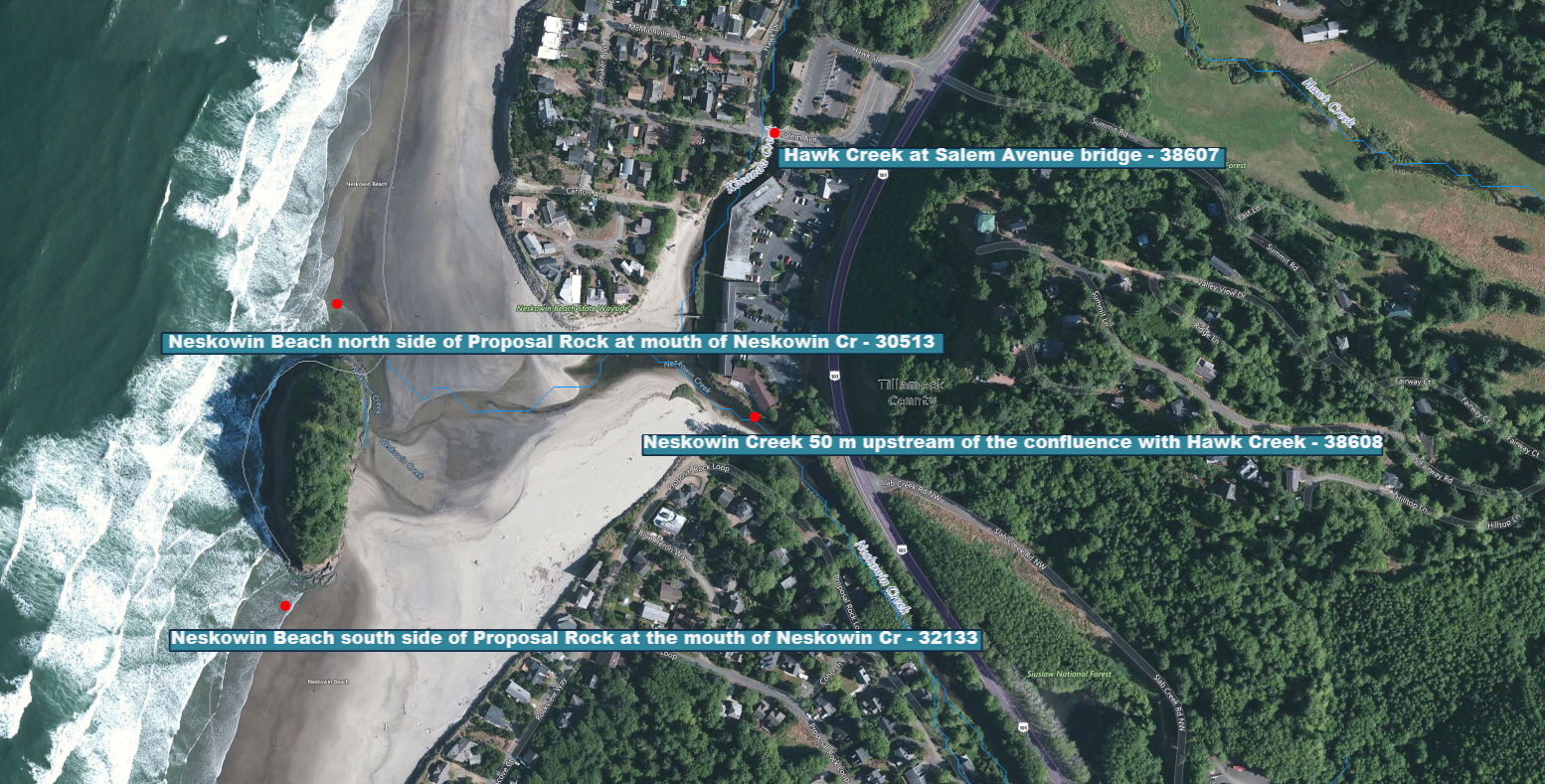
When laboratory testing of water samples taken at monitored beaches indicates levels of bacteria above recreational guideline values, OHA issues an advisory, urging visitors to avoid contact with water at the beach. OHA advisories encourage people to avoid wading in nearby creeks, pools of water on the beach, or in discolored water.
Beach advisories are only issued for beaches that are actively being monitored within the May-September sampling window. Other beaches will be investigated for inclusion in the upcoming beach monitoring seasons.
OHA and DEQ work together to evaluate beaches for monitoring based on several criteria. These criteria are: pollution hazards present, previous beach monitoring data that identify water quality concerns, type and amount of beach use, and public input.
Unsafe levels of fecal bacteria in beach water can cause diarrhea, stomach cramps, skin rashes, upper respiratory infections, and other illnesses. Children, elderly and those with a compromised immune system should use extra caution as they are more vulnerable to illness from waterborne bacteria.
Unsafe levels of fecal bacteria in ocean waters can come from both shore and inland sources including stormwater runoff, sewer overflows, failing septic systems, and animal waste from livestock, pets and wildlife.
For more information and current beach monitoring conditions, visit our beach monitoring website.
Contact OBMP by email at Beach.Health@oha.oregon.gov or call 1-877-290-6767.
###