Oregon Dept. of Forestry

Emergency Messages as of 11:11 AM, Tue. Jul 14

No information currently posted.

logo

Subscribe to receive FlashAlert messages from Oregon Dept. of Forestry.

News Release

Guzzlers Help Wildlife In Gilchrist State Forest /Team Of Volunteers Maintain These Low-tech Watering Stations (Photo) - 07/14/26

Gilchrist State Forest, Ore.—With only an average yearly rainfall of 10 inches, wildlife in the Gilchrist State Forest can get easily stressed during the hot dry summers of central Oregon.  But thanks to some old school technology that has been used since the 1960s wildlife can use 11 artificial watering holes called guzzlers in the 72,000-acre state forest managed by the Oregon Department of Forestry (ODF).


“The entire Gilchrist has no perennial water source, meaning no rivers, streams, lakes, or ponds” said Vanessa Petro, ODF’s Lead State Forest Wildlife Biologist. “Providing important habitat features like these guzzlers benefits a wide range of species including the Crescent mule deer herd, American badger, Rocky Mountain elk, and many small mammals, birds, reptiles, and amphibians.”


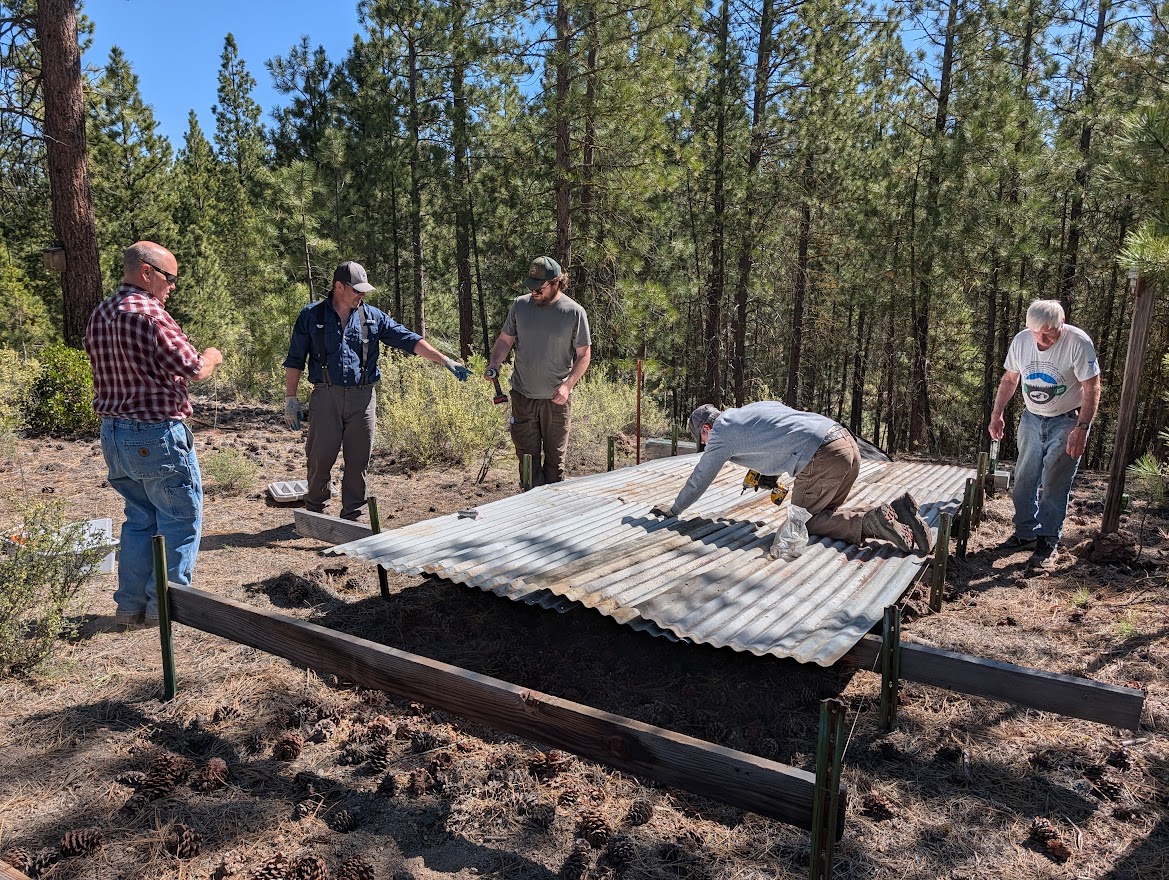
Guzzlers are typically constructed of common metal roofing material just a foot or two off the ground that is the collector of rain, snow, or condensation. The water flows from the collector into a gutting system that takes it to an underground holding tank or tanks. From there a float system like in your toilet keeps a nearby downhill watering trough filled.


Though simple in design the guzzlers do require regular maintenance.


“We inventoried and examined all 11,” said Petro. “Three of them need to be rebuilt later this summer when more supplies are available while several others had either muck in the tanks, plumbing issues, or the apron needed to be repaired.”


The group of volunteers from the Oregon Hunter’s Association, Walker Range Fire Protection Association, and ODF wildlife staff got busy in the field fixing those issues.

“We also were able to enroll all the guzzlers on Gilchrist into the Oregon Department of Fish and Wildlife’s Adopt a Guzzler Program,” said Petro. “This helps pay for materials by tracking volunteer time and mileage the state can use as grant funding match.”


Although ODF led this round of maintenance and the guzzler enrollment paperwork, it’s the volunteers who make the guzzlers effective year-round.


“The Walker Range FPA volunteers use their firefighting tanker trucks to fill up the guzzler tanks several times each summer when they are not being used to fight wildfires,” said Petro.  “There just isn’t enough rainfall or condensation to keep those tanks filled and in use. The OHA volunteers fix things on the spot when they see something that needs to be repaired and are also key in educating other hunters on ethics with guzzlers, including the reminder of the recommended 300-foot spacing for setting up tree stands.”


Most Oregon residents associate the lush Clatsop and Tillamook State Forests as their state forests; but Gilchrist and Sun Pass State Forests in eastern Oregon are different and unique.


“ODF actively manages these state forestlands under forest management plans to provide economic, environmental, and social benefits to Oregonians,” said Petro. “Wildlife plays a big part of all three of those management goals. So, it is critical to have diverse and healthy wildlife populations in all our state forests. One small way to aid that in the Gilchrist is through the guzzlers. Just as important is to have folks actively participate in maintaining and improving their state forests. We thank all the volunteers who help do that.”


For more on Oregon’s state forests see: Oregon Department of Forestry : State forests : Forest resources : State of Oregon
Guzzlers Help Wildlife In Gilchrist State Forest /Team Of Volunteers Maintain These Low-tech Watering Stations (Photo) - 07/14/26

Gilchrist State Forest, Ore.—With only an average yearly rainfall of 10 inches, wildlife in the Gilchrist State Forest can get easily stressed during the hot dry summers of central Oregon.  But thanks to some old school technology that has been used since the 1960s wildlife can use 11 artificial watering holes called guzzlers in the 72,000-acre state forest managed by the Oregon Department of Forestry (ODF).


“The entire Gilchrist has no perennial water source, meaning no rivers, streams, lakes, or ponds” said Vanessa Petro, ODF’s Lead State Forest Wildlife Biologist. “Providing important habitat features like these guzzlers benefits a wide range of species including the Crescent mule deer herd, American badger, Rocky Mountain elk, and many small mammals, birds, reptiles, and amphibians.”


Guzzlers are typically constructed of common metal roofing material just a foot or two off the ground that is the collector of rain, snow, or condensation. The water flows from the collector into a gutting system that takes it to an underground holding tank or tanks. From there a float system like in your toilet keeps a nearby downhill watering trough filled.


Though simple in design the guzzlers do require regular maintenance.


“We inventoried and examined all 11,” said Petro. “Three of them need to be rebuilt later this summer when more supplies are available while several others had either muck in the tanks, plumbing issues, or the apron needed to be repaired.”


The group of volunteers from the Oregon Hunter’s Association, Walker Range Fire Protection Association, and ODF wildlife staff got busy in the field fixing those issues.

“We also were able to enroll all the guzzlers on Gilchrist into the Oregon Department of Fish and Wildlife’s Adopt a Guzzler Program,” said Petro. “This helps pay for materials by tracking volunteer time and mileage the state can use as grant funding match.”


Although ODF led this round of maintenance and the guzzler enrollment paperwork, it’s the volunteers who make the guzzlers effective year-round.


“The Walker Range FPA volunteers use their firefighting tanker trucks to fill up the guzzler tanks several times each summer when they are not being used to fight wildfires,” said Petro.  “There just isn’t enough rainfall or condensation to keep those tanks filled and in use. The OHA volunteers fix things on the spot when they see something that needs to be repaired and are also key in educating other hunters on ethics with guzzlers, including the reminder of the recommended 300-foot spacing for setting up tree stands.”


Most Oregon residents associate the lush Clatsop and Tillamook State Forests as their state forests; but Gilchrist and Sun Pass State Forests in eastern Oregon are different and unique.


“ODF actively manages these state forestlands under forest management plans to provide economic, environmental, and social benefits to Oregonians,” said Petro. “Wildlife plays a big part of all three of those management goals. So, it is critical to have diverse and healthy wildlife populations in all our state forests. One small way to aid that in the Gilchrist is through the guzzlers. Just as important is to have folks actively participate in maintaining and improving their state forests. We thank all the volunteers who help do that.”


For more on Oregon’s state forests see: Oregon Department of Forestry : State forests : Forest resources : State of Oregon