
Oregon Dept. of Forestry

Emergency Messages as of 9:19 AM, Tue. Jun 23

No information currently posted.

logo

Subscribe to receive FlashAlert messages from Oregon Dept. of Forestry.

News Release

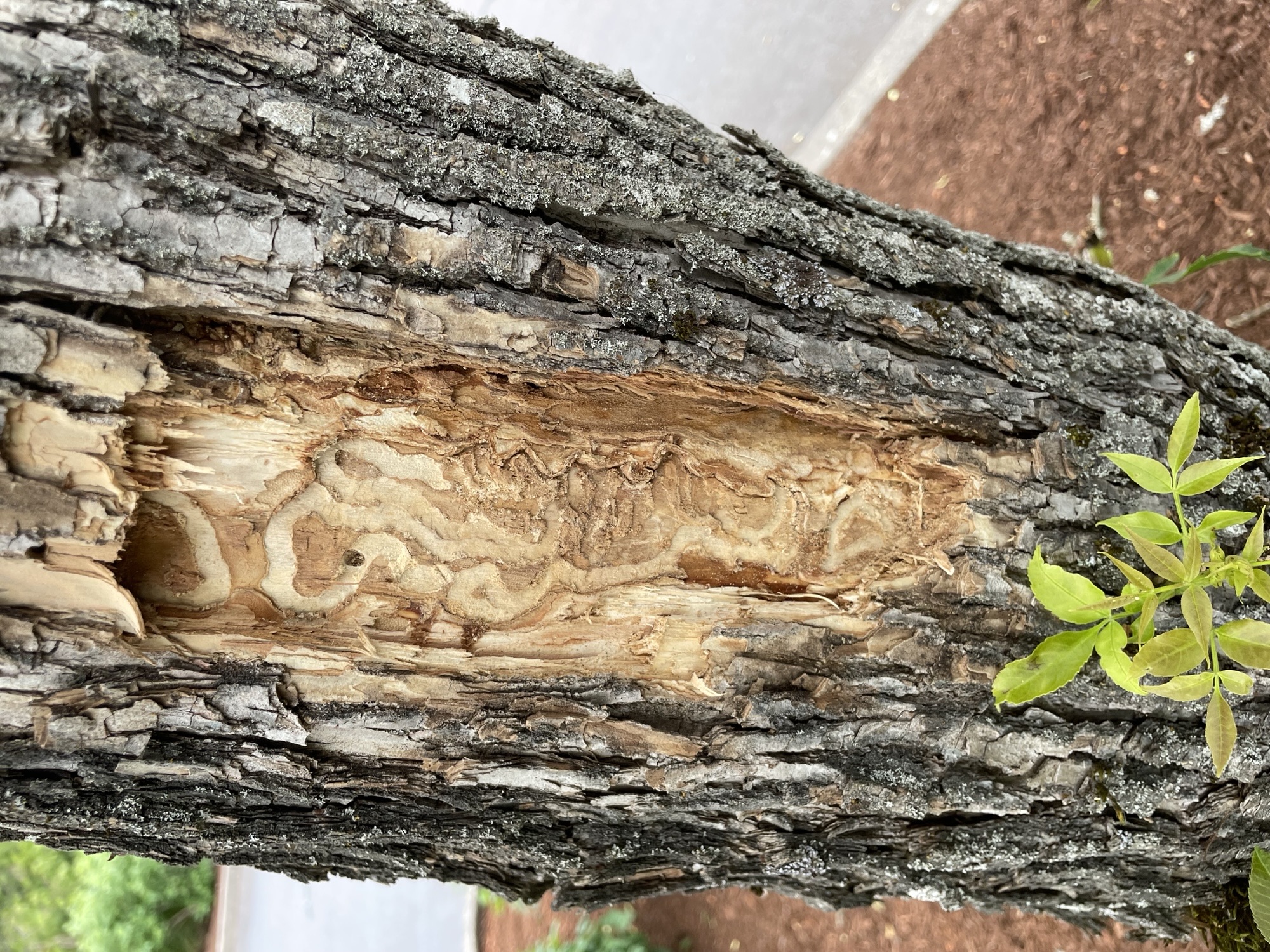
Emerald Ash Borer Found In Several New Locations In Northern Willamette Valley (Photo) - 06/23/26

(TUALATIN, Ore.) – The tree-killing emerald ash borer (EAB) pest has been confirmed in at least three new Willamette Valley communities this month – in a shopping center parking lot just east of I-5 in Tualatin, in a parking lot right outside Newberg, and at a private residence in Silverton.


The new detections are within the existing EAB quarantine zone covering the five counties where this pest has been found so far. Counties within the quarantined zone are Clackamas, Marion, Multnomah, Washington and Yamhill. By order of the Oregon Department of Agriculture, tree material from ash, olive, and white fringetree must remain within quarantined counties, along with firewood from any hardwood tree.


Oregon Department of Forestry EAB Support Specialist Matt Mills said, “we have long known that EAB would spread from infested sites to nearby areas, so these new detections are not unexpected. Experience from other states shows that four to five years or so after first being detected EAB spreads from pockets of infested ash trees and becomes much more widespread over an entire county or metropolitan area.”


All three reports were made by private individuals who recognized ash trees that were showing signs of EAB infestation and knew to report them on the invasive species hotline at https://oregoninvasiveshotline.org.


Kat Bethea, also an EAB Support Specialist with the Oregon Department of Forestry, said this shows the success of four years of outreach to the public in northwest Oregon with information about EAB and what to expect and where to report sightings.


“We are thankful that people are paying attention to the health of ash trees around them and letting us know when signs point to a possible EAB infestation,” Bethea said.

Bethea added that ODF has sent messages to officials in the affected towns and those in surrounding communities to let them know to keep a close eye on ash trees in their community for signs of EAB.


What the public can do

“This is a good time to identify any ash trees on your property. Decide which ones, if any, you want to keep and contact a licensed pesticide applicator to begin protective treatment with a systemically injected insecticide,” said Bethea.


Mills said if homeowners plan to remove ash trees already in poor condition, then they should wait until mid-October when adult EAB beetles are no longer flying. “Pre-emptive removal of such trees will allow them to replant with trees that aren’t vulnerable,” he said. “This will start restoring tree canopy and also spreads out the cost of removals. Simply waiting for EAB to start killing trees in your town can become overwhelming in a short period of time and costly.”

Mills said ash trees quickly become brittle and hazardous to climb or work under once they are killed.


“Removal of a dead or rapidly dying ash tree is more dangerous and costly than when it is still alive. That’s why in newly infested areas or areas nearby it’s a best practice to pre-emptively remove any ash trees that are along streets or in parks or yards, and which are in poor condition or planted in the wrong place,” he said.


Mills added that although EAB is spreading naturally through the northern Willamette Valley, people moving firewood more than 10 to 15 miles from an EAB-infested tree risk taking the pest into distant, uninfested areas. “Firewood being moved is a known way EAB is able to travel farther and spread faster than it could on its own. That is why the Oregon Department of Agriculture doesn’t allow hardwood firewood to be moved from quarantined zones.”


For more information on how to identify ash trees or EAB, what the signs of infestation are, and what can be done in response to an infestation, please visit www.OregonEAB.com.


Newberg

The pest was first reported in Yamhill County only two years ago. At that time, a single beetle was found on the county’s northern border with Washington County. This June the Oregon Department of Agriculture’s Max Ragozzino investigated a report called in to the Oregon Invasive Species Hotline. Ragozzino found two trees in a parking lot were heavily infested with EAB. Six others appear to be only lightly infested so far.


Tualatin

After a report came to the hotline about ash trees in a commercial parking lot near I-5 with telltale signs of EAB, ODF was able to visit and confirm that a number of the trees were infested with EAB. The location is especially concerning because it is only about a mile from the Tualatin River, whose banks are shaded by large numbers of Oregon ash.

City of Tualatin Parks Maintenance Manager Tom Steiger states that the city has been following the movement of the emerald ash borer, conducting tests within the city, and learning about treatment and mitigation measures. Additionally, the city has an inventory of where ash trees are located as street trees, and has funding budgeted for a survey along the banks of the Tualatin River and other natural areas, which can help inform next steps in the approach to management and replacement of ash trees within the city.


Silverton

A private pesticide applicator coming to treat an ash tree in a residential neighborhood on the north side of town reported signs of EAB in the tree, which ODF later confirmed. A second report has since come in as well, Mills said.

                                                          # # #
Emerald Ash Borer Found In Several New Locations In Northern Willamette Valley (Photo) - 06/23/26

(TUALATIN, Ore.) – The tree-killing emerald ash borer (EAB) pest has been confirmed in at least three new Willamette Valley communities this month – in a shopping center parking lot just east of I-5 in Tualatin, in a parking lot right outside Newberg, and at a private residence in Silverton.


The new detections are within the existing EAB quarantine zone covering the five counties where this pest has been found so far. Counties within the quarantined zone are Clackamas, Marion, Multnomah, Washington and Yamhill. By order of the Oregon Department of Agriculture, tree material from ash, olive, and white fringetree must remain within quarantined counties, along with firewood from any hardwood tree.


Oregon Department of Forestry EAB Support Specialist Matt Mills said, “we have long known that EAB would spread from infested sites to nearby areas, so these new detections are not unexpected. Experience from other states shows that four to five years or so after first being detected EAB spreads from pockets of infested ash trees and becomes much more widespread over an entire county or metropolitan area.”


All three reports were made by private individuals who recognized ash trees that were showing signs of EAB infestation and knew to report them on the invasive species hotline at https://oregoninvasiveshotline.org.


Kat Bethea, also an EAB Support Specialist with the Oregon Department of Forestry, said this shows the success of four years of outreach to the public in northwest Oregon with information about EAB and what to expect and where to report sightings.


“We are thankful that people are paying attention to the health of ash trees around them and letting us know when signs point to a possible EAB infestation,” Bethea said.

Bethea added that ODF has sent messages to officials in the affected towns and those in surrounding communities to let them know to keep a close eye on ash trees in their community for signs of EAB.


What the public can do

“This is a good time to identify any ash trees on your property. Decide which ones, if any, you want to keep and contact a licensed pesticide applicator to begin protective treatment with a systemically injected insecticide,” said Bethea.


Mills said if homeowners plan to remove ash trees already in poor condition, then they should wait until mid-October when adult EAB beetles are no longer flying. “Pre-emptive removal of such trees will allow them to replant with trees that aren’t vulnerable,” he said. “This will start restoring tree canopy and also spreads out the cost of removals. Simply waiting for EAB to start killing trees in your town can become overwhelming in a short period of time and costly.”

Mills said ash trees quickly become brittle and hazardous to climb or work under once they are killed.


“Removal of a dead or rapidly dying ash tree is more dangerous and costly than when it is still alive. That’s why in newly infested areas or areas nearby it’s a best practice to pre-emptively remove any ash trees that are along streets or in parks or yards, and which are in poor condition or planted in the wrong place,” he said.


Mills added that although EAB is spreading naturally through the northern Willamette Valley, people moving firewood more than 10 to 15 miles from an EAB-infested tree risk taking the pest into distant, uninfested areas. “Firewood being moved is a known way EAB is able to travel farther and spread faster than it could on its own. That is why the Oregon Department of Agriculture doesn’t allow hardwood firewood to be moved from quarantined zones.”


For more information on how to identify ash trees or EAB, what the signs of infestation are, and what can be done in response to an infestation, please visit www.OregonEAB.com.


Newberg

The pest was first reported in Yamhill County only two years ago. At that time, a single beetle was found on the county’s northern border with Washington County. This June the Oregon Department of Agriculture’s Max Ragozzino investigated a report called in to the Oregon Invasive Species Hotline. Ragozzino found two trees in a parking lot were heavily infested with EAB. Six others appear to be only lightly infested so far.


Tualatin

After a report came to the hotline about ash trees in a commercial parking lot near I-5 with telltale signs of EAB, ODF was able to visit and confirm that a number of the trees were infested with EAB. The location is especially concerning because it is only about a mile from the Tualatin River, whose banks are shaded by large numbers of Oregon ash.

City of Tualatin Parks Maintenance Manager Tom Steiger states that the city has been following the movement of the emerald ash borer, conducting tests within the city, and learning about treatment and mitigation measures. Additionally, the city has an inventory of where ash trees are located as street trees, and has funding budgeted for a survey along the banks of the Tualatin River and other natural areas, which can help inform next steps in the approach to management and replacement of ash trees within the city.


Silverton

A private pesticide applicator coming to treat an ash tree in a residential neighborhood on the north side of town reported signs of EAB in the tree, which ODF later confirmed. A second report has since come in as well, Mills said.

                                                          # # #