Oregon’s Trees Face Harm From Another Hot, Dry Summer (Photo)
- 05/04/26
SALEM, Ore. – Oregon trees are in for another difficult year due to climate change. Conditions this spring are already similar to those in 2015, when we experienced peak high temperatures and drought. That’s on top of a winter that tied 1934 for the warmest since accurate records were kept beginning in 1896, according to the National Oceanic and Atmospheric Administration.
Trees in Oregon have been experiencing chronic stress from hot droughts for at least a couple of decades. Although there have been a few breaks, the compounding of frequent, or long-duration warm and dry conditions have taken their toll on many trees. These conditions include:
- higher than average temperatures
- inconsistent precipitation, or more precipitation falling as rain than snow
- earlier snow melt.
Oregon Department of Forestry Forest Entomologist Christine Buhl said, “A warm or dry spring is particularly harmful for trees as this is their most active growing period. This stress reduces growth, weakens defenses against opportunistic insects and diseases, and can outright kill tissues or whole trees.”
Buhl said warmer conditions can also make conditions more favorable to tree pests.
“Warm winters reduce pest deaths from cold, increasing their growth or number of pests. It also extends the range of less cold-tolerant pests, and lengthens their feeding periods,” she said.
Buhl has this guidance for landowners:
- Plant species and seedlots (stock adapted to a specific area) only within their current and climate-projected range.
- Avoid planting seedlings during dry seasons and keep roots moist and out of direct sun when planting for best establishment.
- Reduce competition for moisture by controlling weeds and reducing stand density to the carrying capacity for the tree species, site quality, and climate.
- If currently adapted species or seedlots are struggling, shift toward a nearby, more drought-tolerant seedlot, or in extreme cases a more drought-tolerant species
- Native understory vegetation and mulch can help retain soil moisture.
- Avoid root compaction from heavy equipment when the soil is wet.
- Avoid fertilizing if the site is drought-stressed. Fertilizer increases biomass and therefore water requirements.
Find more information on trees and drought at https://www.oregon.gov/odf/documents/forestbenefits/drought.pdf
# # #
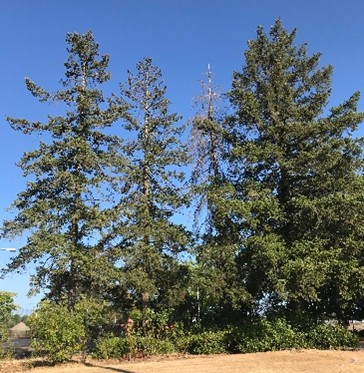
Oregon’s Trees Face Harm From Another Hot, Dry Summer (Photo)
- 05/04/26
SALEM, Ore. – Oregon trees are in for another difficult year due to climate change. Conditions this spring are already similar to those in 2015, when we experienced peak high temperatures and drought. That’s on top of a winter that tied 1934 for the warmest since accurate records were kept beginning in 1896, according to the National Oceanic and Atmospheric Administration.
Trees in Oregon have been experiencing chronic stress from hot droughts for at least a couple of decades. Although there have been a few breaks, the compounding of frequent, or long-duration warm and dry conditions have taken their toll on many trees. These conditions include:
- higher than average temperatures
- inconsistent precipitation, or more precipitation falling as rain than snow
- earlier snow melt.
Oregon Department of Forestry Forest Entomologist Christine Buhl said, “A warm or dry spring is particularly harmful for trees as this is their most active growing period. This stress reduces growth, weakens defenses against opportunistic insects and diseases, and can outright kill tissues or whole trees.”
Buhl said warmer conditions can also make conditions more favorable to tree pests.
“Warm winters reduce pest deaths from cold, increasing their growth or number of pests. It also extends the range of less cold-tolerant pests, and lengthens their feeding periods,” she said.
Buhl has this guidance for landowners:
- Plant species and seedlots (stock adapted to a specific area) only within their current and climate-projected range.
- Avoid planting seedlings during dry seasons and keep roots moist and out of direct sun when planting for best establishment.
- Reduce competition for moisture by controlling weeds and reducing stand density to the carrying capacity for the tree species, site quality, and climate.
- If currently adapted species or seedlots are struggling, shift toward a nearby, more drought-tolerant seedlot, or in extreme cases a more drought-tolerant species
- Native understory vegetation and mulch can help retain soil moisture.
- Avoid root compaction from heavy equipment when the soil is wet.
- Avoid fertilizing if the site is drought-stressed. Fertilizer increases biomass and therefore water requirements.
Find more information on trees and drought at https://www.oregon.gov/odf/documents/forestbenefits/drought.pdf
# # #