
Oregon Dept. of Forestry

Emergency Messages as of 1:42 PM, Tue. Mar 24

No information currently posted.

logo

Subscribe to receive FlashAlert messages from Oregon Dept. of Forestry.

News Release

New Multi-mission Aircraft Enhances Oregon’s Wildfire And All-hazards Response (Photo) - 03/24/26

Prineville, Ore—The Oregon Department of Forestry (ODF) is strengthening its statewide wildfire and emergency response capabilities with the addition of a new Multi-Mission Aircraft (MMA). 


“This is a significant advancement in how the agency detects, monitors, and responds to incidents across Oregon,” said Sarah Prout, ODF’s State Aviation Coordinator.


This $13.23 million investment, including $12 million in legislatively approved bonds (2023) and $1.23 million from additional funding sources, builds on ODF’s long-standing aviation program that has enhanced wildfire detection and response for decades.


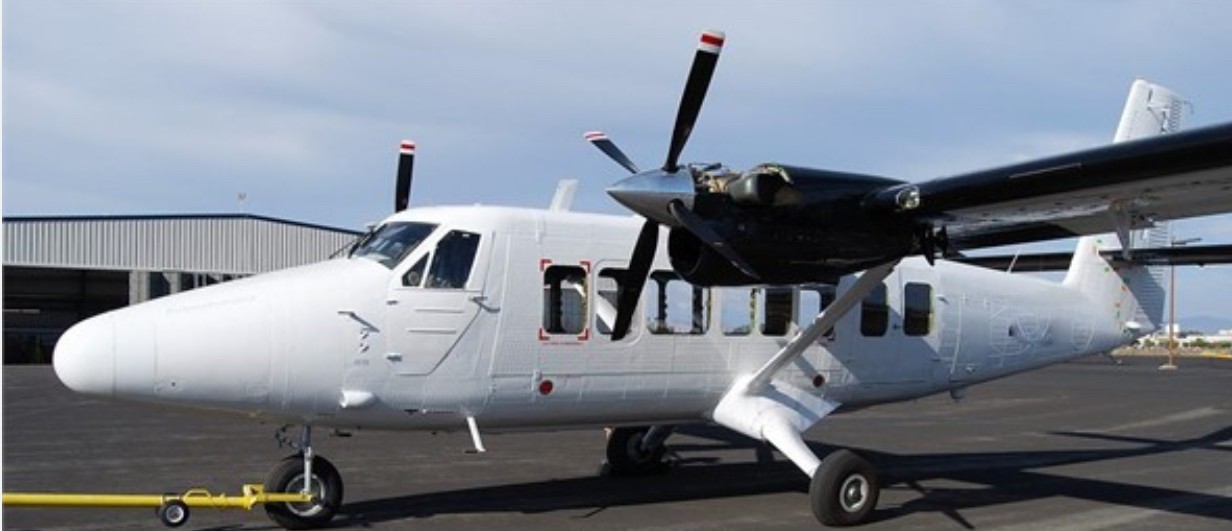
The new aircraft is a Twin Otter airframe that replaces the agency’s long-serving Partenavia P.68 Observer aircraft which is retiring after more than 30 years of service.


“This aircraft represents a major step forward for Oregon’s aviation program,” said Neal Laugle, State Aviation Manager for the Oregon Department of Forestry.


The new $7.8 million dollar aircraft brings improved endurance, range, and payload capacity, allowing it to remain airborne longer, cover more ground, and transport more personnel and equipment when needed. However, the most significant advancement is the integration of $5.4 million in advanced sensing technology and mission systems, transforming the aircraft into a true aerial intelligence platform.


Equipped with Artificial Intelligence (AI)-enabled wide-area mapping, high-definition thermal imaging, augmented reality mapping software, and night operations capability, the aircraft will allow ODF to identify and communicate emerging incidents more quickly, track fire behavior with greater precision, and maintain situational awareness during both daytime and nighttime operations.


“It builds on decades of experience while bringing new capabilities that allow us to detect fires earlier, understand conditions in real time, and provide critical intelligence to firefighters and decision-makers on the ground when every minute matters,” said Laugle.


During a typical wildfire detection mission, crews monitor weather forecasts and lightning activity to anticipate potential fire starts. As storms move through, lightning strike location data is captured and uploaded into the aircraft’s mapping software and mission planning tools. When conditions are safe, the aircraft is deployed to scan affected areas using onboard sensors and night vision goggles to detect new fire starts—often before they are visible to the public or reported through traditional means. Once a fire is identified, dispatch centers are notified so suppression resources can respond.


“What makes ODF’s Multi-Mission Aircraft unique is the combination of advanced mission systems with night vision capability,” said Laugle. “When operating at night, NVGs allow our crews to detect subtle visual cues—like the flicker of a new fire start—that are often difficult or impossible to see with the naked eye. Paired with our onboard sensors, this significantly improves our ability to find and respond to fires at night.”


Beyond wildfire response, the Multi-Mission Aircraft significantly expands Oregon’s all-hazards capabilities. The aircraft can support incidents such as floods, severe storms, search and rescue operations, and disaster damage assessment by rapidly collecting and sharing geospatial intelligence.


“This capability will improve coordination across state agencies, local responders, and incident management teams—helping ensure a faster, more unified response during emergencies,” said Prout.


The aircraft will support a wide range of mission sets, including:

  • Wildfire detection and reconnaissance
  • Real-time situational awareness and mapping
  • Air Tactical Group Supervisor (ATGS) coordination
  • Movement of personnel and equipment
  • Support to non-fire and natural resource missions


It will also generate a suite of data products, including live-streamed video, recorded full-motion video, georeferenced imagery, and mapping data that can be rapidly shared across agencies to support decision-making.


“ODF is coordinating closely with the Oregon Department of Emergency Management, Oregon State Fire Marshal, federal partners, and local agencies to ensure the aircraft is fully integrated into Oregon’s emergency response system,” said Sarah Prout.


The new aircraft will be based at Prineville Airport in central Oregon. 


“We can easily reach all four corners of the state with relatively short flight times from Prineville,” said Laugle.  “Also, lightning storm activity, that the aircraft tracks closely, is typically more frequent in eastern and southern Oregon so it makes operational sense to base it there.”


The aircraft is currently undergoing final integration and testing in California. Once the aircraft is delivered, pilots and aerial observers will complete several weeks of training to ensure the aircraft and its systems are fully operational for the upcoming fire season.


As wildfire seasons grow longer and more complex, continued investments like the Multi-Mission Aircraft will be critical.


“The MMA positions Oregon to better meet evolving challenges—by leveraging advanced technology and decades of operational experience to protect communities, natural resources, and the landscapes that define the state,” said Sarah Prout.


For more on ODF’s wildfire prevention and suppression efforts see: Oregon Department of Forestry : Fire : Fire : State of Oregon
New Multi-mission Aircraft Enhances Oregon’s Wildfire And All-hazards Response (Photo) - 03/24/26

Prineville, Ore—The Oregon Department of Forestry (ODF) is strengthening its statewide wildfire and emergency response capabilities with the addition of a new Multi-Mission Aircraft (MMA). 


“This is a significant advancement in how the agency detects, monitors, and responds to incidents across Oregon,” said Sarah Prout, ODF’s State Aviation Coordinator.


This $13.23 million investment, including $12 million in legislatively approved bonds (2023) and $1.23 million from additional funding sources, builds on ODF’s long-standing aviation program that has enhanced wildfire detection and response for decades.


The new aircraft is a Twin Otter airframe that replaces the agency’s long-serving Partenavia P.68 Observer aircraft which is retiring after more than 30 years of service.


“This aircraft represents a major step forward for Oregon’s aviation program,” said Neal Laugle, State Aviation Manager for the Oregon Department of Forestry.


The new $7.8 million dollar aircraft brings improved endurance, range, and payload capacity, allowing it to remain airborne longer, cover more ground, and transport more personnel and equipment when needed. However, the most significant advancement is the integration of $5.4 million in advanced sensing technology and mission systems, transforming the aircraft into a true aerial intelligence platform.


Equipped with Artificial Intelligence (AI)-enabled wide-area mapping, high-definition thermal imaging, augmented reality mapping software, and night operations capability, the aircraft will allow ODF to identify and communicate emerging incidents more quickly, track fire behavior with greater precision, and maintain situational awareness during both daytime and nighttime operations.


“It builds on decades of experience while bringing new capabilities that allow us to detect fires earlier, understand conditions in real time, and provide critical intelligence to firefighters and decision-makers on the ground when every minute matters,” said Laugle.


During a typical wildfire detection mission, crews monitor weather forecasts and lightning activity to anticipate potential fire starts. As storms move through, lightning strike location data is captured and uploaded into the aircraft’s mapping software and mission planning tools. When conditions are safe, the aircraft is deployed to scan affected areas using onboard sensors and night vision goggles to detect new fire starts—often before they are visible to the public or reported through traditional means. Once a fire is identified, dispatch centers are notified so suppression resources can respond.


“What makes ODF’s Multi-Mission Aircraft unique is the combination of advanced mission systems with night vision capability,” said Laugle. “When operating at night, NVGs allow our crews to detect subtle visual cues—like the flicker of a new fire start—that are often difficult or impossible to see with the naked eye. Paired with our onboard sensors, this significantly improves our ability to find and respond to fires at night.”


Beyond wildfire response, the Multi-Mission Aircraft significantly expands Oregon’s all-hazards capabilities. The aircraft can support incidents such as floods, severe storms, search and rescue operations, and disaster damage assessment by rapidly collecting and sharing geospatial intelligence.


“This capability will improve coordination across state agencies, local responders, and incident management teams—helping ensure a faster, more unified response during emergencies,” said Prout.


The aircraft will support a wide range of mission sets, including:

  • Wildfire detection and reconnaissance
  • Real-time situational awareness and mapping
  • Air Tactical Group Supervisor (ATGS) coordination
  • Movement of personnel and equipment
  • Support to non-fire and natural resource missions


It will also generate a suite of data products, including live-streamed video, recorded full-motion video, georeferenced imagery, and mapping data that can be rapidly shared across agencies to support decision-making.


“ODF is coordinating closely with the Oregon Department of Emergency Management, Oregon State Fire Marshal, federal partners, and local agencies to ensure the aircraft is fully integrated into Oregon’s emergency response system,” said Sarah Prout.


The new aircraft will be based at Prineville Airport in central Oregon. 


“We can easily reach all four corners of the state with relatively short flight times from Prineville,” said Laugle.  “Also, lightning storm activity, that the aircraft tracks closely, is typically more frequent in eastern and southern Oregon so it makes operational sense to base it there.”


The aircraft is currently undergoing final integration and testing in California. Once the aircraft is delivered, pilots and aerial observers will complete several weeks of training to ensure the aircraft and its systems are fully operational for the upcoming fire season.


As wildfire seasons grow longer and more complex, continued investments like the Multi-Mission Aircraft will be critical.


“The MMA positions Oregon to better meet evolving challenges—by leveraging advanced technology and decades of operational experience to protect communities, natural resources, and the landscapes that define the state,” said Sarah Prout.


For more on ODF’s wildfire prevention and suppression efforts see: Oregon Department of Forestry : Fire : Fire : State of Oregon