Oregon Historical Society To Screen New Documentary Capturing Bigfoot At Portland Art Museum (Photo) - 10/07/26
Special pre-release screening explores the enduring mystery of the 1967 Bigfoot footage, followed by a discussion with the filmmakers
Portland, OR — On October 20, 1967, Roger Patterson captured 59 seconds of film showing a creature walking through the Northern California woods — footage that became the most analyzed and debated in history. Fifty-nine years later, a reel of 16mm film discovered in a safe changes everything.
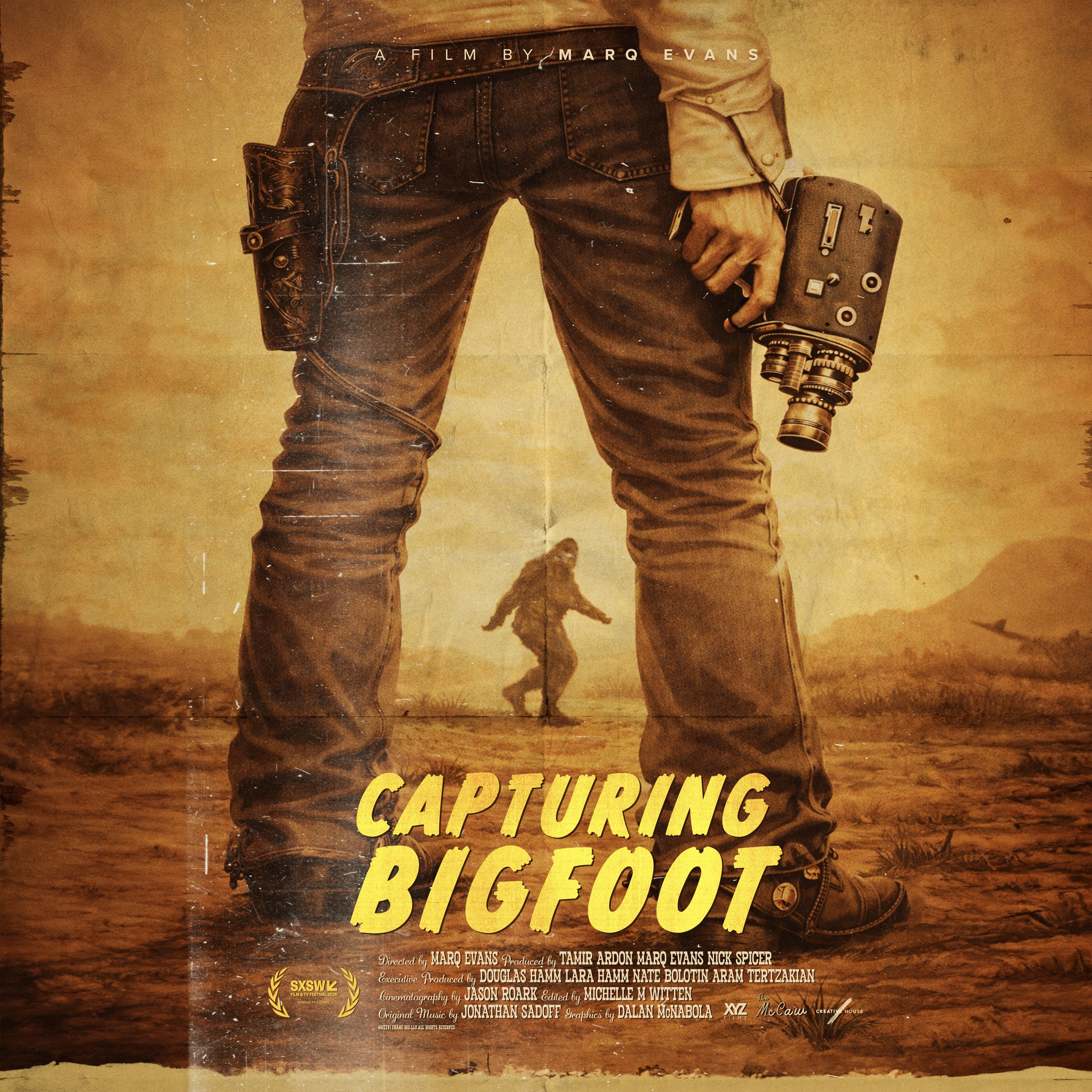
On Wednesday, October 14, the Oregon Historical Society (OHS) invites audiences to explore the enduring question of Bigfoot’s existence at a special screening of Capturing Bigfoot, a new documentary directed by Marq Evans, at the Whitsell Auditorium at the Portland Art Museum.
The screening, which takes place six days before the film’s October 20 general release, will be followed by a panel discussion moderated by OHS Boyle Family Executive Director Kerry Tymchuk featuring Evans, producer Tamir Ardon, and Clint Patterson, son of Roger Patterson, who filmed the famous 1967 footage.
Capturing Bigfoot revisits the story of Sasquatch through newly discovered 16mm footage, interviews with people connected to the original film, and the perspective of Patterson’s son. The documentary considers not only whether the 1967 footage was authentic, but also the family relationships, friendships, financial interests, and deeply held beliefs that grew out of the film’s legacy.
Capturing Bigfoot has received attention since its premiere at the 2026 South by Southwest Film & TV Festival. The Hollywood Reporter described it as a “captivating and revelatory” exploration of cultural mystery and family history, noting that the newly discovered material is compelling not only because of what it may reveal about the footage, but also because of what people’s reactions to it reveal about “the need to believe.”
Bigfoot in Oregon
Long before Patterson’s film footage became a cultural phenomenon, stories of mysterious, hairy, humanlike beings were part of the folklore of the Pacific Northwest.
According to The Oregon Encyclopedia, OHS’s online compendium of Oregon history, Bigfoot is “a large and mysterious humanoid creature purported to inhabit the wild and forested areas of Oregon and the West Coast of North America.” The name Sasquatch is an Anglicization of Sasq’ets, from the Halq’emeylem language spoken by First Nations peoples in southwestern British Columbia.
The historical record of Bigfoot in Oregon dates to 1904, when settlers in the Sixes River area of the Coast Range reported sightings of a hairy “wild man.” Similar accounts followed from miners, hunters, and others, including reports in 1924 of giant “apes” near Mount St. Helens.
By the mid-twentieth century, Bigfoot stories had become deeply embedded in the culture of Oregon’s logging communities, where reports of enormous footprints mixed with jokes, pranks, chainsaw sculptures, and fabricated tracks. In 1970s Oregon, Bigfoot researcher Peter Byrne established the Bigfoot Information Center in The Dalles, helping bring national attention to the search for evidence of the creature.
“Bigfoot is a fascinating example of how history, folklore, popular culture, and our relationship with the natural world can intersect,” said Kerry Tymchuk, OHS Boyle Family Executive Director. “Whether you come to this film as a believer, a skeptic, or simply someone fascinated by one of the Northwest’s most enduring stories, Capturing Bigfoot offers a chance to look behind the legend and ask why this particular mystery has captured our imagination for generations.”
The event begins at 6pm, with doors opening at 5:30pm. Tickets are $20, or $15 for OHS members, and can be purchased at ohs.org/events/capturing-bigfoot.cfm. Seating is general admission. Attendees should check in at Rothko Commons in the main lobby of the Whitsell Auditorium. Because the film contains never-before-seen footage, all recording devices — including phones and Meta glasses — will be prohibited in the theater during the screening.
About the Oregon Historical Society
For more than 125 years, the Oregon Historical Society has served as the state’s collective memory, preserving a vast collection of objects, photographs, maps, manuscript materials, books, films, and oral histories. Our research library, museum, digital platforms, educational programming, and historical journal make Oregon’s history open and accessible to all. We exist because history is powerful, and because a history as deep and complex as Oregon’s cannot be contained within a single story or point of view.