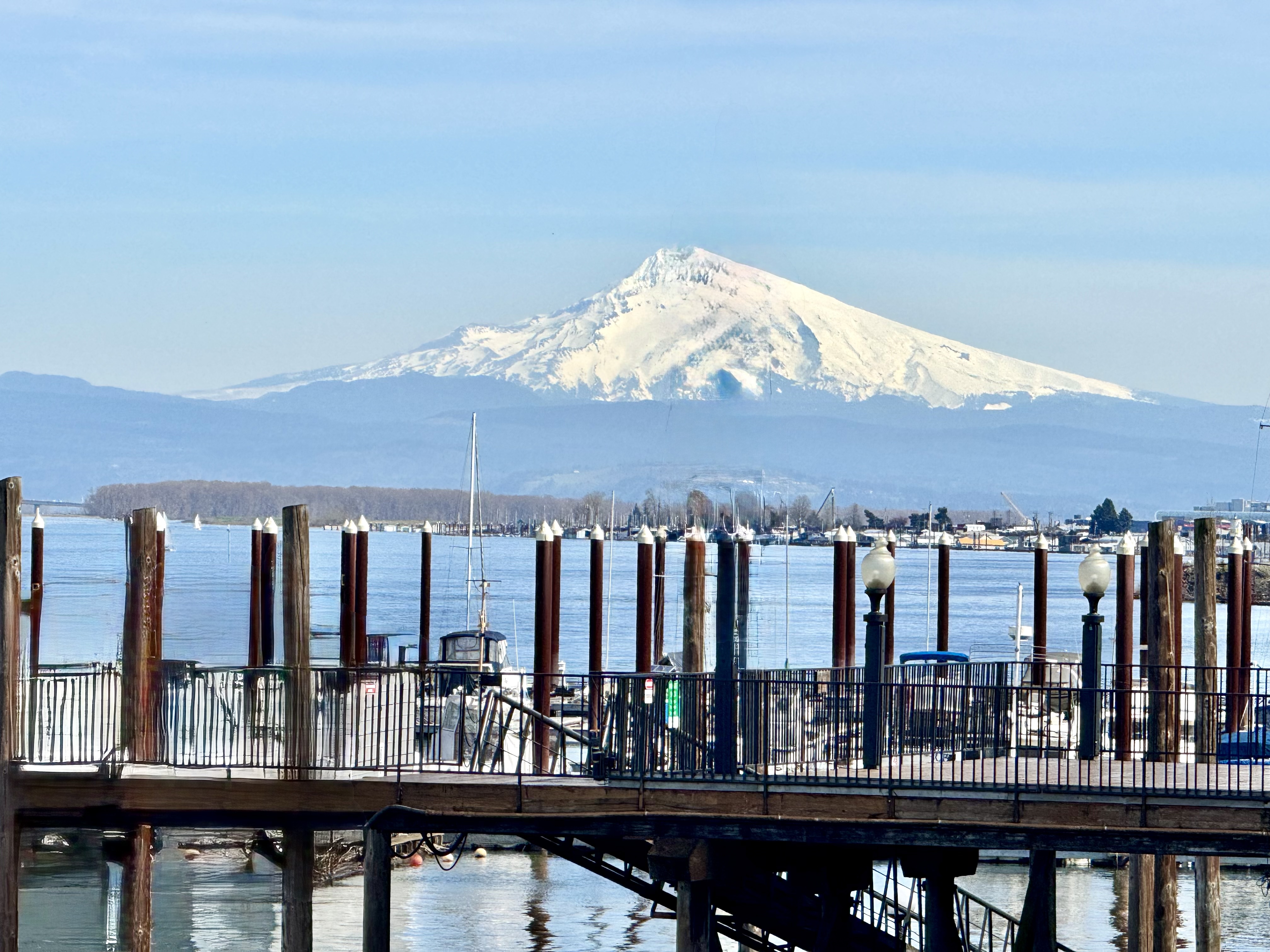
IBR Environmental Review Confirms Significant Impacts To Hayden Island While Leaving Key Safeguards Undefined (Photo) - 05/07/26
IBR Environmental Review Confirms Significant Impacts to Hayden Island While Leaving Key Safeguards Undefined
[Hayden Island, Portland, OR] The Final Supplemental Environmental Impact Statement (SEIS) for the Interstate Bridge Replacement (IBR) program confirms that Hayden Island will experience some of the most significant and prolonged impacts of the project.
Key findings include:
- Permanent displacement of homes and businesses
- 10–15+ years of construction impacts
- Years of high-noise, high-vibration construction activity
- Long-term noise and livability impacts
- Documented impacts to river ecosystems and marine life
- Increased financial burden from tolling for daily users
Despite multiple meetings and repeated requests from representatives of the Hayden Island Neighborhood Network (HINooN), the SEIS does not provide clear, enforceable mechanisms for how impacts will be monitored, reported, or mitigated. Critical protections—particularly related to vibration, structural risk, health impacts, and compensation—remain undefined or deferred.
The SEIS also fails to evaluate real-world secondary impacts associated with major infrastructure projects, including homelessness near transit stations or under elevated structures, and does not use the Hayden Island Community Plan, adopted by the Portland City Council to mitigate impacts on Hayden Island during the Columbia River Crossing project, as a framework to protect the existing community.
Full SEIS document:
https://interstatebridge.org/media/downloads/final_seis/IBR_Final_SEIS_combined.pdf
1. Community Displacement & Land Use Impacts
The project would result in significant permanent displacement on Hayden Island.
- Approximately 59 total residential displacements, including about 39 floating homes located on Hayden Island
- Potential impacts to a 12-unit apartment complex, depending on design
- Approximately 28–58 businesses may be displaced, with an estimated 15–20 located on Hayden Island, representing a significant share of the island’s commercial base
The SEIS acknowledges that while relocation assistance is available, Hayden Island’s limited land availability, zoning constraints, and lack of available moorage space mean that many displaced residents and businesses will not be able to relocate within the island and may be forced to leave the community entirely.
Small, locally owned businesses—particularly restaurants and service-oriented businesses—may not be able to re-establish on the island due to space limitations and land use restrictions.
Even businesses not directly displaced are likely to experience significant revenue loss during construction due to reduced access, detours, tolls, noise, and prolonged disruption. Large-scale construction projects commonly lead to business closures beyond those formally acquired, compounding economic loss across the community.
These impacts extend beyond individual properties and represent a fundamental disruption to the island’s economic ecosystem and identity.
2. Economic & Community Impacts
Beyond direct displacement, the project creates broader economic consequences.
- Regional impacts include effects to approximately 135 businesses and 521 employees, with Hayden Island disproportionately affected
- Loss of local businesses reduces access to services and jobs
- Construction-related disruption is expected to reduce customer access and revenue for many businesses
The SEIS acknowledges impacts to community cohesion, including both temporary disruption and permanent changes to the character of the island.
3. Construction Duration & Intensity
Construction is expected to be long-term and highly disruptive.
- Total construction duration: 10+ years
- Community-level impacts may last up to 15 years
Hayden Island-specific construction timelines include:
- Columbia River bridge construction: 6–8 years
- Interchange and local roadway work: 4–10 years
This represents prolonged, overlapping construction phases that will affect nearly every aspect of daily life on the island.
4. Noise, Vibration & Livability Impacts
Residents will experience significant noise and vibration impacts.
Construction noise:
- Heavy equipment including pile drivers, trucks, and concrete equipment
- Noise levels estimated at 82–94 dBA near residences
- High-noise activities occurring over hundreds of days
Vibration:
- Acknowledged from drilling and pile driving
- No clearly defined vibration thresholds
- No enforceable protections against structural damage
- No defined compensation framework
Floating home residents are particularly vulnerable due to their proximity to in-water construction activities, where noise and vibration impacts may be more intense and prolonged.
In addition to construction impacts, the SEIS identifies long-term operational noise impacts, with some locations expected to exceed highway noise thresholds even after mitigation measures such as sound walls are installed.
These conditions represent both short-term disruption and long-term degradation of livability.
5. Traffic, Access & Daily Life Disruption
Construction and design changes will significantly affect mobility and access.
- Traffic congestion and detours over many years
- Increased truck traffic on local roads
- Sidewalk closures and reduced pedestrian and bicycle access
- Boating delays for floating-home residents due to construction near North Portland Harbor
The use of nearby sites for construction staging will increase noise, congestion, and visual disruption near residential areas.
6. Tolling Impacts
The project includes variable-rate tolling, which will directly impact Hayden Island residents.
- Residents rely on the bridge daily for basic needs such as groceries, work, healthcare, and school
- Tolling introduces ongoing financial burden for daily travel
- No clearly defined, resident-specific mitigation measures are provided
This represents a long-term cost impact layered on top of construction disruption and displacement.
7. Air Quality & Health Impacts
Construction of this scale will result in prolonged exposure to air pollution.
- Dust, diesel exhaust, and emissions from heavy equipment and truck traffic
- Pollutants include particulate matter (PM2.5 and PM10), nitrogen dioxide, and other harmful emissions
- Impacts concentrated near homes, staging areas, and haul routes
- Duration of 9–15 years
These pollutants are associated with increased risks of asthma, respiratory illness, cardiovascular disease, and other long-term health effects.
Residents living near major freeway corridors—particularly within 500–600 feet—face the highest exposure risk. Hayden Island’s proximity to I-5, combined with extended construction duration, creates a prolonged high-exposure environment.
These impacts are cumulative and add to existing air quality concerns in the area, yet the SEIS does not establish a clear health monitoring or mitigation framework specific to residents.
https://doh.wa.gov/sites/default/files/2024-10/334-564.pdf
8. Marine Life & River Ecosystem Impacts
The project will impact the Columbia River ecosystem.
Fish:
- Underwater construction noise and debris will disrupt salmon, steelhead, sturgeon, and other species
- Behavioral impacts include disruption to feeding and migration
Marine mammals:
- Sea lions and harbor seals may be disturbed or displaced
Habitat:
- Increased overwater shading from new bridge structures alters habitat conditions
9. Navigation Impacts
- Temporary closures and restrictions in navigation channels
- Impacts to river traffic and access
- Adjustments required for marine users throughout construction
10. Social & Secondary Impact Gaps
The SEIS does not evaluate several foreseeable impacts, including:
- Homelessness associated with light rail stations
- Encampments under elevated bridge structures
- Public safety implications
- Long-term management of these conditions
These are known real-world impacts of similar infrastructure projects but are not analyzed in this document.
Independent analysis has also raised broader concerns about the project’s impacts and overall viability.
11. Policy & Accountability Gaps
The SEIS acknowledges impacts but leaves critical questions unanswered.
It does not provide:
- A clear reporting system for residents
- Real-time monitoring transparency
- Enforceable protections for noise, vibration, or health impacts
- Defined compensation processes for damages
Additionally:
- Environmental justice analysis is not included
- Climate impacts are not analyzed
- The Hayden Island Community Plan is referenced only to support development, not to protect the existing community
Hayden Island Community Plan:
https://www.portland.gov/sites/default/files/2020-02/hayden-island-community-plan.pdf
12. Legal and Financial Viability Concerns
Independent analysis of the project raises additional concerns regarding legal compliance and financial feasibility.
These concerns raise questions about whether the project currently satisfies key federal requirements, including:
- Alignment between the project being advanced for funding and the scope evaluated in the SEIS
- Identification of sufficient funding to complete the full project, as required under federal fiscal constraint standards
- Compliance with federal “independent utility” requirements, which prohibit reliance on future, unfunded phases
- Whether cost projections and benefit assumptions meet federal cost-effectiveness standards for major infrastructure investments
These issues raise further questions about whether the project, as currently structured, can proceed under existing federal requirements without additional review, updated analysis, or independent audit.
Conclusion
The Final SEIS confirms that Hayden Island will experience:
- Significant displacement of residents and businesses
- More than a decade of disruptive construction
- Long-term noise, vibration, and air quality impacts
- Ongoing financial burden from tolling
- Lasting impacts to the river ecosystem
Hayden Island is home to more than 3,000 residents and supports over 600 jobs, making it a significant and active community—not a marginal project area.
At the same time, the document does not clearly define how these impacts will be managed, monitored, or mitigated for the people who live there.
The SEIS acknowledges significant harm to Hayden Island but does not establish clear, enforceable mechanisms to protect residents, businesses, or the environment. It also fails to evaluate foreseeable secondary impacts associated with transit infrastructure and large elevated structures.
Core Takeaway
Hayden Island bears some of the highest impacts of the IBR project, yet the Final SEIS does not clearly define how those impacts will be addressed, mitigated, or enforced—placing a disproportionate burden on a constrained but vital community.