Neighbors For A Better Crossing Inc

Emergency Messages as of 8:14 AM, Sun. Dec 21

No information currently posted.

Subscribe to receive FlashAlert messages from Neighbors For A Better Crossing Inc.

News Release

IBR Promotes “Giving Away” Historic Interstate Bridges While Withholding Cost Estimate For Replacement Expected By Lawmakers December 15 (Photo) - 12/21/25

IBR Promotes “Giving Away” Historic Interstate Bridges While Withholding Cost Estimate for Replacement Expected by Lawmakers December 15


PORTLAND, OR  The Interstate Bridge Replacement Program’s (IBR) November newsletter lead article—framed as a light-hearted opportunity to “adopt” the historic Interstate 5 bridges—may make for catchy marketing copy, but it glosses over several serious issues that deserve an honest public conversation.


The timing is particularly troubling. While IBR has been promoting the idea of “giving away” the historic bridges, lawmakers were expecting an updated cost estimate for the replacement bridge on December 15. That estimate was not provided, once again.


“There’s a real irony in talking about giving away two historic bridges when there’s no final plan, no cost estimate, no Coast Guard approval, and many funding sources are still pending,” said Kimberly Haslett, Hayden Island resident and volunteer for Neighbors for a Better Crossing (NFBC). “You don’t start dismantling history before you’ve even proven what comes next.”


Historic Bridges Are Not Disposable

The Interstate Bridge opened to traffic in 1917, and according to the National Bridge Inventory as of 2025, there are 262 older roadway bridges currently in service across Oregon and Washington. Oregon alone has 85 bridges built before 1917, and Washington has 177 bridges of similar age—all still in daily use, all with remaining service life.


Against that backdrop, destroying a historic bridge before its time—especially when alternatives exist—would be a tragedy.

These two Interstate Bridges are not simply “fixer-uppers with vintage charm,” as IBR’s newsletter suggests. They are significant pieces of American infrastructure listed on the National Register of Historic Places, constructed using high-quality riveted structural steel manufactured by U.S. Steel, and engineered in a way that has allowed them to remain durable and serviceable for more than a century.


Their longevity is not unusual. Many early 20th-century steel truss bridges across the United States continue to perform well today, which is why so many are successfully retrofitted and converted into pedestrian, bicycle, and community-use structures rather than demolished.

The Interstate Bridge’s 1917 northbound span, now more than 100 years old, remains structurally intact according to historic and engineering documentation, and its survival reflects the long, proven lifespan of well-maintained steel bridges of its era.


Seismic Facts: The Case for Retrofit, Not Demolition

IBR frequently claims that the existing bridges are “seismically unsafe” or “certain to collapse in an earthquake,” IBR’s Seismic Lie. Yet IBR has not produced any recent seismic study or geotechnical analysis to support that conclusion. This is especially concerning given that the last publicly available seismic analysis was conducted in 2006—and that analysis directly contradicts the narrative being pushed today.


The 2006 WSDOT Seismic Vulnerability Study

The 2006 WSDOT/CRC “Panel Assessment of Interstate Bridges Seismic Vulnerabilities,” conducted by structural, geotechnical, and seismic experts, found the following:

  • Retrofit is technically feasible.
    The expert panel concluded the historic bridges can be retrofitted to meet modern seismic standards.
  • Vulnerable elements were identified but repairable.
    The panel outlined specific retrofit strategies for foundations, piers, bearings, lift-span components, and truss elements—all considered upgradeable.
  • Historic character can be preserved.
    The study explicitly notes that retrofit would have minimal visual impact and could maintain the bridges’ historic identity.

The Public Still Has NO Updated Data

Despite spending millions of dollars so far, the IBR program has not released any new seismic modeling, soil liquefaction studies, or engineering reports to support its claim that the bridges must be demolished. NFBC Calls for Current Seismic Study

Until these studies are made public, the claim that the bridges “will collapse in a major earthquake” remains unverified.


Historic Bridges Across the Country are Regularly Retrofitted

Across the United States, historic steel truss bridges have been successfully retrofitted and repurposed for:

  • Pedestrian crossings
  • Bike networks
  • Cultural or scenic overlooks
  • Local community connectors

There is no technical reason our region cannot do the same—except for IBR’s political preference for a pre-determined “locally preferred alternative.”


Demolition Is NOT Environmentally Responsible

Destroying two massive steel structures over the Columbia River—rather than retrofitting them—poses major environmental risks, including:

  • Turbidity and sediment disruption
  • Heavy-metal runoff
  • Habitat impacts to salmon, sturgeon, and other river species
  • Years of in-water construction disturbance

Claiming that demolition is “green” because the steel is recycled is misleading at best. Continued use is the most sustainable option.


“Giving Away the Bridges” Is a Distraction

Federal rules do require WSDOT and ODOT to offer a historic bridge for reuse before demolition. But the notion that a private citizen or organization could realistically relocate or repurpose two half-mile-long, 100-year-old, fixed-in-place steel truss bridges is pure PR theater—a diversion from the real issues this project refuses to confront.


What We Do Know

  • These bridges were built to last
  • Seismic retrofit is possible
  • Relocating them is not realistic
  • The public has never been shown modern seismic data proving demolition is necessary

Which raises the real question:

Why is IBR pushing demolition before showing the public the science?


The Responsible Path Forward

  • Preserve the historic bridges in place
  • Retrofit them for seismic resilience using strategies already outlined in the 2006 engineering panel
  • Repurpose them as bike, pedestrian, and recreation corridors
  • Protect the Columbia River from demolition debris and contamination
  • Require IBR to release updated seismic testing before any irreversible decisions are made

.

The historic Interstate Bridges are not disposable novelties or marketing props. They are irreplaceable pieces of American history that belong to the public—not assets to be casually offered up as souvenirs. While IBR asks, “How many people get to say they own a century-old bridge?” and suggests that “your new (very old) bridge might just be a call away,” the reality is this: before anyone talks about ownership, relocation, or giveaways, IBR must first present a real plan, real seismic data, real permits, real funding, and real approvals for a replacement crossing. History should not be dismantled on the promise of “stay tuned.”
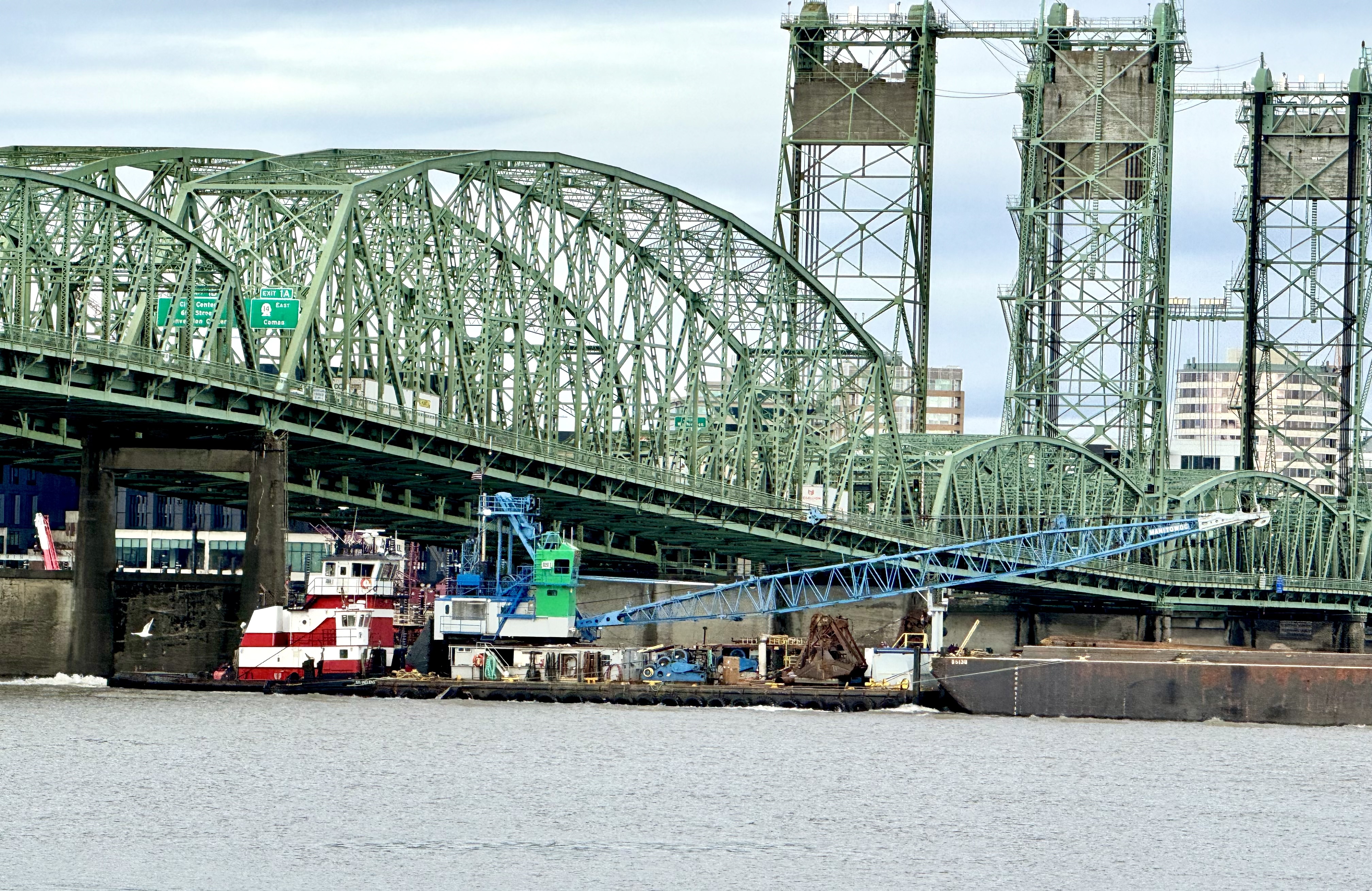


IBR Promotes “Giving Away” Historic Interstate Bridges While Withholding Cost Estimate For Replacement Expected By Lawmakers December 15 (Photo) - 12/21/25

IBR Promotes “Giving Away” Historic Interstate Bridges While Withholding Cost Estimate for Replacement Expected by Lawmakers December 15


PORTLAND, OR  The Interstate Bridge Replacement Program’s (IBR) November newsletter lead article—framed as a light-hearted opportunity to “adopt” the historic Interstate 5 bridges—may make for catchy marketing copy, but it glosses over several serious issues that deserve an honest public conversation.


The timing is particularly troubling. While IBR has been promoting the idea of “giving away” the historic bridges, lawmakers were expecting an updated cost estimate for the replacement bridge on December 15. That estimate was not provided, once again.


“There’s a real irony in talking about giving away two historic bridges when there’s no final plan, no cost estimate, no Coast Guard approval, and many funding sources are still pending,” said Kimberly Haslett, Hayden Island resident and volunteer for Neighbors for a Better Crossing (NFBC). “You don’t start dismantling history before you’ve even proven what comes next.”


Historic Bridges Are Not Disposable

The Interstate Bridge opened to traffic in 1917, and according to the National Bridge Inventory as of 2025, there are 262 older roadway bridges currently in service across Oregon and Washington. Oregon alone has 85 bridges built before 1917, and Washington has 177 bridges of similar age—all still in daily use, all with remaining service life.


Against that backdrop, destroying a historic bridge before its time—especially when alternatives exist—would be a tragedy.

These two Interstate Bridges are not simply “fixer-uppers with vintage charm,” as IBR’s newsletter suggests. They are significant pieces of American infrastructure listed on the National Register of Historic Places, constructed using high-quality riveted structural steel manufactured by U.S. Steel, and engineered in a way that has allowed them to remain durable and serviceable for more than a century.


Their longevity is not unusual. Many early 20th-century steel truss bridges across the United States continue to perform well today, which is why so many are successfully retrofitted and converted into pedestrian, bicycle, and community-use structures rather than demolished.

The Interstate Bridge’s 1917 northbound span, now more than 100 years old, remains structurally intact according to historic and engineering documentation, and its survival reflects the long, proven lifespan of well-maintained steel bridges of its era.


Seismic Facts: The Case for Retrofit, Not Demolition

IBR frequently claims that the existing bridges are “seismically unsafe” or “certain to collapse in an earthquake,” IBR’s Seismic Lie. Yet IBR has not produced any recent seismic study or geotechnical analysis to support that conclusion. This is especially concerning given that the last publicly available seismic analysis was conducted in 2006—and that analysis directly contradicts the narrative being pushed today.


The 2006 WSDOT Seismic Vulnerability Study

The 2006 WSDOT/CRC “Panel Assessment of Interstate Bridges Seismic Vulnerabilities,” conducted by structural, geotechnical, and seismic experts, found the following:

  • Retrofit is technically feasible.
    The expert panel concluded the historic bridges can be retrofitted to meet modern seismic standards.
  • Vulnerable elements were identified but repairable.
    The panel outlined specific retrofit strategies for foundations, piers, bearings, lift-span components, and truss elements—all considered upgradeable.
  • Historic character can be preserved.
    The study explicitly notes that retrofit would have minimal visual impact and could maintain the bridges’ historic identity.

The Public Still Has NO Updated Data

Despite spending millions of dollars so far, the IBR program has not released any new seismic modeling, soil liquefaction studies, or engineering reports to support its claim that the bridges must be demolished. NFBC Calls for Current Seismic Study

Until these studies are made public, the claim that the bridges “will collapse in a major earthquake” remains unverified.


Historic Bridges Across the Country are Regularly Retrofitted

Across the United States, historic steel truss bridges have been successfully retrofitted and repurposed for:

  • Pedestrian crossings
  • Bike networks
  • Cultural or scenic overlooks
  • Local community connectors

There is no technical reason our region cannot do the same—except for IBR’s political preference for a pre-determined “locally preferred alternative.”


Demolition Is NOT Environmentally Responsible

Destroying two massive steel structures over the Columbia River—rather than retrofitting them—poses major environmental risks, including:

  • Turbidity and sediment disruption
  • Heavy-metal runoff
  • Habitat impacts to salmon, sturgeon, and other river species
  • Years of in-water construction disturbance

Claiming that demolition is “green” because the steel is recycled is misleading at best. Continued use is the most sustainable option.


“Giving Away the Bridges” Is a Distraction

Federal rules do require WSDOT and ODOT to offer a historic bridge for reuse before demolition. But the notion that a private citizen or organization could realistically relocate or repurpose two half-mile-long, 100-year-old, fixed-in-place steel truss bridges is pure PR theater—a diversion from the real issues this project refuses to confront.


What We Do Know

  • These bridges were built to last
  • Seismic retrofit is possible
  • Relocating them is not realistic
  • The public has never been shown modern seismic data proving demolition is necessary

Which raises the real question:

Why is IBR pushing demolition before showing the public the science?


The Responsible Path Forward

  • Preserve the historic bridges in place
  • Retrofit them for seismic resilience using strategies already outlined in the 2006 engineering panel
  • Repurpose them as bike, pedestrian, and recreation corridors
  • Protect the Columbia River from demolition debris and contamination
  • Require IBR to release updated seismic testing before any irreversible decisions are made

.

The historic Interstate Bridges are not disposable novelties or marketing props. They are irreplaceable pieces of American history that belong to the public—not assets to be casually offered up as souvenirs. While IBR asks, “How many people get to say they own a century-old bridge?” and suggests that “your new (very old) bridge might just be a call away,” the reality is this: before anyone talks about ownership, relocation, or giveaways, IBR must first present a real plan, real seismic data, real permits, real funding, and real approvals for a replacement crossing. History should not be dismantled on the promise of “stay tuned.”