Marion County

Emergency Messages as of 1:56 PM, Sun. Feb 1

No information currently posted.

Subscribe to receive FlashAlert messages from Marion County.

News Release

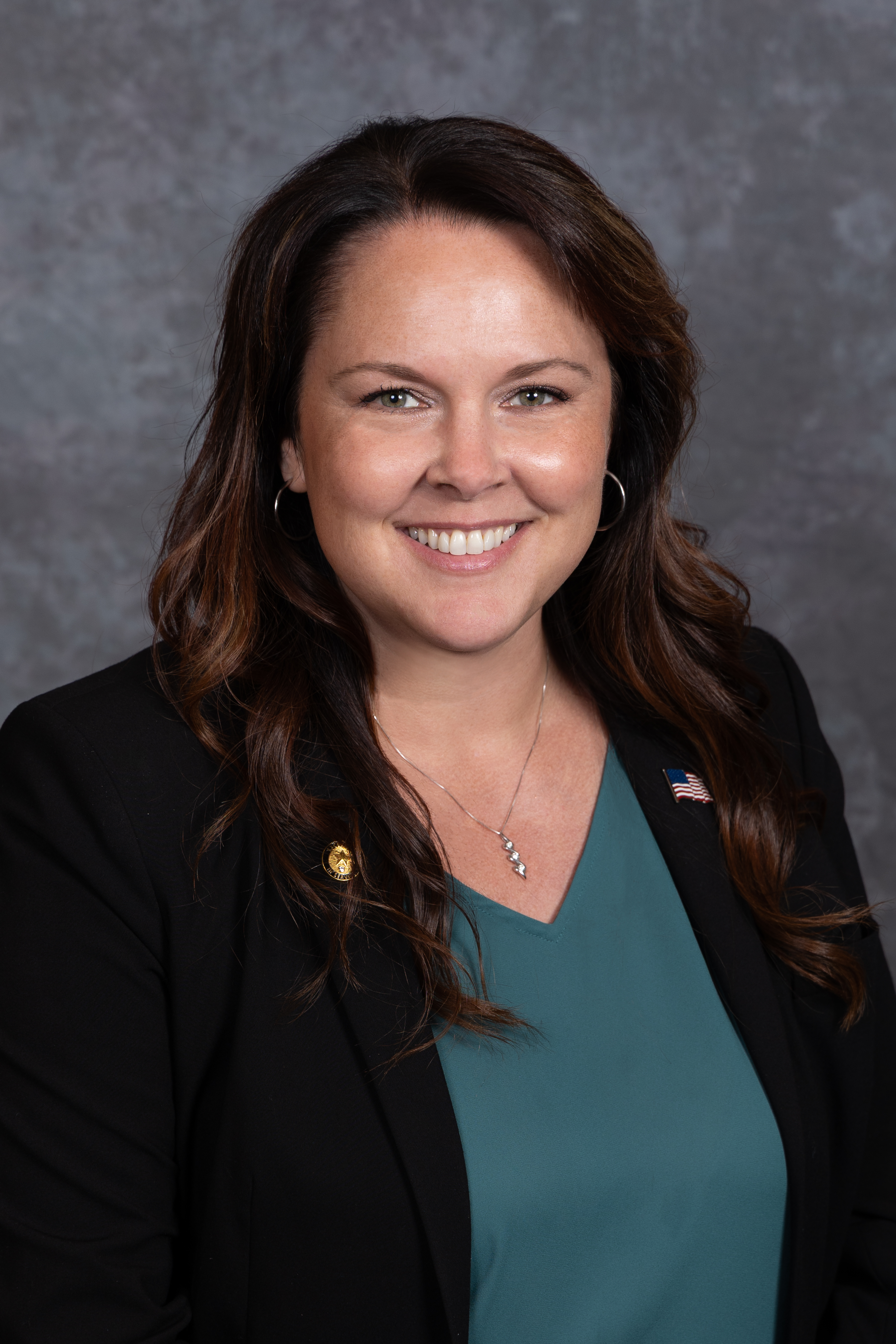
Marion County Justice Of The Peace Receives Carson Award (Photo) - 01/30/26

SALEM, OR — Jan 30, 2026 — The Marion County Bar Association (MCBA) has selected Marion County Justice of the Peace Justin Kidd as the recipient of the Carson Award for service to the community, recognizing his sustained commitment to public service.


The Carson Award is presented annually to an MCBA member whose work reflects exceptional dedication to the legal profession and to the broader community it serves. The award honors individuals who demonstrate integrity, leadership, and a deep sense of responsibility beyond the courtroom.


Judge Kidd was recognized for his contributions to the Marion County community through his professional service, mentorship, civic engagement, and commitment to ensuring access to justice. Colleagues noted his exceptional commitment to serving Spanish and Russian speaking communities in Marion County. The Justice Court provides hearing completely in Spanish, where appropriate, and Judge Kidd conducts courthouse weddings in English, French, Spanish, and Russian.


“I deeply appreciate Judge Kidd’s commitment to Marion County residents and his enthusiasm for expanding community access to the Justice Court,” said Commissioner Danielle Bethell. “He meets people where they're at and works hard to help them navigate the legal process smoothly. I think that reflects the best service we seek to provide here at the County.”


Under Kidd's leadership the Marin County Justice Court has grown. When he was appointed in 2021, the court heard about 16,000 cases per year. Now, the court hears more than 30,000 cases per year. The additional cases had been heard at the circuit court. Moving these cases to the Justice Court frees up the circuit court to focus on public safety concerns.


"Show up. Do the work. Open the Courthouse door," said Judge Kidd.  "Those are the guiding principles of my work—both in the court and the community.  I'm thankful to MCBA. I'm also thankful to the County Commissioners for providing the court with the resources that make my work possible."


Judge Kidd coaches mock trial at both Salem—Keizer Public Schools and also for Willamette University.  Willamette's moot court board awarded him the 2025 award for Outstanding Legal Professional.  He also serves as a law student mentor, having previously earned Willamette University's Mentor of the Year award.

Judge Kidd's service extends to the community.  He has a special heart for foster children, having served as resource parent.  He is the adoptive father of two former foster children, and he has served on the board of Marion County CASA and Kindred Matters, an organization that works to reunite foster children separated from their siblings by the foster care system.


MCBA also honored Tiffany Humphrey with the Carson award to Service for the Bar, as well as Hunter Emerick and Ron Hellewell with the De Muniz award for outstanding professionalism, integrity, fairness, and service to the legal system and the community. The awards will be celebrated with a dinner at the Salem Convention Center February 5, 2026.

Attached Media Files: Justin E. Kidd,

Marion County Justice Of The Peace Receives Carson Award (Photo) - 01/30/26

SALEM, OR — Jan 30, 2026 — The Marion County Bar Association (MCBA) has selected Marion County Justice of the Peace Justin Kidd as the recipient of the Carson Award for service to the community, recognizing his sustained commitment to public service.


The Carson Award is presented annually to an MCBA member whose work reflects exceptional dedication to the legal profession and to the broader community it serves. The award honors individuals who demonstrate integrity, leadership, and a deep sense of responsibility beyond the courtroom.


Judge Kidd was recognized for his contributions to the Marion County community through his professional service, mentorship, civic engagement, and commitment to ensuring access to justice. Colleagues noted his exceptional commitment to serving Spanish and Russian speaking communities in Marion County. The Justice Court provides hearing completely in Spanish, where appropriate, and Judge Kidd conducts courthouse weddings in English, French, Spanish, and Russian.


“I deeply appreciate Judge Kidd’s commitment to Marion County residents and his enthusiasm for expanding community access to the Justice Court,” said Commissioner Danielle Bethell. “He meets people where they're at and works hard to help them navigate the legal process smoothly. I think that reflects the best service we seek to provide here at the County.”


Under Kidd's leadership the Marin County Justice Court has grown. When he was appointed in 2021, the court heard about 16,000 cases per year. Now, the court hears more than 30,000 cases per year. The additional cases had been heard at the circuit court. Moving these cases to the Justice Court frees up the circuit court to focus on public safety concerns.


"Show up. Do the work. Open the Courthouse door," said Judge Kidd.  "Those are the guiding principles of my work—both in the court and the community.  I'm thankful to MCBA. I'm also thankful to the County Commissioners for providing the court with the resources that make my work possible."


Judge Kidd coaches mock trial at both Salem—Keizer Public Schools and also for Willamette University.  Willamette's moot court board awarded him the 2025 award for Outstanding Legal Professional.  He also serves as a law student mentor, having previously earned Willamette University's Mentor of the Year award.

Judge Kidd's service extends to the community.  He has a special heart for foster children, having served as resource parent.  He is the adoptive father of two former foster children, and he has served on the board of Marion County CASA and Kindred Matters, an organization that works to reunite foster children separated from their siblings by the foster care system.


MCBA also honored Tiffany Humphrey with the Carson award to Service for the Bar, as well as Hunter Emerick and Ron Hellewell with the De Muniz award for outstanding professionalism, integrity, fairness, and service to the legal system and the community. The awards will be celebrated with a dinner at the Salem Convention Center February 5, 2026.

Attached Media Files: Justin E. Kidd,

Marion County And City Of Salem Launch REACH Team To Improve 911 Response For Behavioral Health And Complex Needs - 01/21/26

SALEM, OR — Marion County Health & Human Services (MCHHS) and the Salem Fire Department officially launched the Rapid Engagement, Assessment & Community Health (REACH) team yesterday morning at a joint press conference at Salem Fire Station 1. Starting January 20, residents may see new REACH vehicles on Salem’s streets as the data-driven pilot program begins responding to eligible community calls.


REACH was created to address the growing number of 911 calls driven by behavioral health, substance use, and other complex social needs. The team pairs a Marion County Qualified Mental Health Associate (QMHA) with a Salem Fire paramedic and EMT to reach people in the field with early engagement, on-scene assessment, immediate support, and connection to services. REACH is dispatched through 911, and 911 operators will determine the most appropriate response, which will now include the REACH team. The program also complements the national 988 Suicide & Crisis Lifeline, offering another pathway for residents experiencing behavioral health crises to access timely support.

“REACH builds on the work already underway through our Behavioral Health Crisis Center mobile response programs,” said Commissioner Danielle Bethell, who spoke at the event. “By integrating with Salem Fire, we can respond more effectively in the moment and connect people to the services that support longer-term stability.”


This approach is intended to:

  • Improve outcomes for community members in crisis

  • Reduce unnecessary emergency room referrals

  • Help keep Fire and EMS crews available for the most serious emergencies

The REACH pilot will operate for six months, during which Marion County and the City of Salem will track key metrics, including reductions in repeat 911 calls, successful navigation of residents to stabilizing services, and decreased strain on law enforcement and emergency departments.


REACH builds on Marion County’s Behavioral Health Crisis Center (BHCC) mobile response programs, which bring crisis support directly to people in the community and connect individuals and families to stabilizing services.


REACH is part of the City of Salem’s Safe, Clean and Healthy Initiative, funded in October 2025 to enhance safety, cleanliness, and health in downtown and northeast Salem. These areas experience higher volumes of emergency response calls.

Marion County And City Of Salem Launch REACH Team To Improve 911 Response For Behavioral Health And Complex Needs - 01/21/26

SALEM, OR — Marion County Health & Human Services (MCHHS) and the Salem Fire Department officially launched the Rapid Engagement, Assessment & Community Health (REACH) team yesterday morning at a joint press conference at Salem Fire Station 1. Starting January 20, residents may see new REACH vehicles on Salem’s streets as the data-driven pilot program begins responding to eligible community calls.


REACH was created to address the growing number of 911 calls driven by behavioral health, substance use, and other complex social needs. The team pairs a Marion County Qualified Mental Health Associate (QMHA) with a Salem Fire paramedic and EMT to reach people in the field with early engagement, on-scene assessment, immediate support, and connection to services. REACH is dispatched through 911, and 911 operators will determine the most appropriate response, which will now include the REACH team. The program also complements the national 988 Suicide & Crisis Lifeline, offering another pathway for residents experiencing behavioral health crises to access timely support.

“REACH builds on the work already underway through our Behavioral Health Crisis Center mobile response programs,” said Commissioner Danielle Bethell, who spoke at the event. “By integrating with Salem Fire, we can respond more effectively in the moment and connect people to the services that support longer-term stability.”


This approach is intended to:

  • Improve outcomes for community members in crisis

  • Reduce unnecessary emergency room referrals

  • Help keep Fire and EMS crews available for the most serious emergencies

The REACH pilot will operate for six months, during which Marion County and the City of Salem will track key metrics, including reductions in repeat 911 calls, successful navigation of residents to stabilizing services, and decreased strain on law enforcement and emergency departments.


REACH builds on Marion County’s Behavioral Health Crisis Center (BHCC) mobile response programs, which bring crisis support directly to people in the community and connect individuals and families to stabilizing services.


REACH is part of the City of Salem’s Safe, Clean and Healthy Initiative, funded in October 2025 to enhance safety, cleanliness, and health in downtown and northeast Salem. These areas experience higher volumes of emergency response calls.

The Great Kokanee Massacre: Marion County Warns Of Severe Fish Mortality If Detroit Lake Is Drained (Photo) - 01/16/26

SALEM, OR — Marion County has submitted two additional comment letters urging the U.S. Army Corps of Engineers to revise its Draft Supplemental Environmental Impact Statement (SEIS) for the Willamette Valley System, citing major deficiencies in the agency’s analysis of water quality, local infrastructure impacts, and fish mortality if Detroit Lake is drained below normal levels. This includes the risk of a kokanee salmon die‑off similar to the mass mortality event at Green Peter Reservoir in 2023.


In its January 13 submissions, the County emphasized that the Army Corps’ plans in the SEIS fail to fully assess and mitigate the foreseeable environmental consequences of a draining Detroit Lake. One of the letters focuses on the severe impacts to municipal drinking‑water systems, particularly slow‑sand filtration systems used by the cities of Salem and Stayton. The County warned that the fine sediment released during a “deep drawdown” that drains the lake below normal levels could cause irreversible damage to these systems, potentially shutting down potable water production for entire cities.


A second letter highlighted the severe fish mortality risks associated with draining—risks the SEIS acknowledges but does not prevent. The County pointed to the 2023 Green Peter Reservoir drawdown, where more than one million kokanee salmon were killed due to barotrauma as fish were forced through drastic pressure changes at the dam due to low water levels.


“The Corps’ own fisheries biologists have already documented the catastrophic consequences of deep drawdowns,” the County wrote. “The SEIS must fully account for these impacts before any similar action is taken at Detroit Lake.”


The County also noted that the Army Corps did not evaluate how large‑scale fish death could affect ESA‑listed species that rely on those fish as part of their diet, including the endangered gray wolf, which is a required component of federal environmental review.


“The loss of over a million Kokanee salmon at Green Peter wasn’t theoretical,” said Commissioner Colm Willis, Chair. “It was real, it was catastrophic, and it was preventable.


“Detroit Lake should not be the next site for a preventable kokanee massacre. The Corps should revise its plans to ensure our communities and environment are protected.” 

The Great Kokanee Massacre: Marion County Warns Of Severe Fish Mortality If Detroit Lake Is Drained (Photo) - 01/16/26

SALEM, OR — Marion County has submitted two additional comment letters urging the U.S. Army Corps of Engineers to revise its Draft Supplemental Environmental Impact Statement (SEIS) for the Willamette Valley System, citing major deficiencies in the agency’s analysis of water quality, local infrastructure impacts, and fish mortality if Detroit Lake is drained below normal levels. This includes the risk of a kokanee salmon die‑off similar to the mass mortality event at Green Peter Reservoir in 2023.


In its January 13 submissions, the County emphasized that the Army Corps’ plans in the SEIS fail to fully assess and mitigate the foreseeable environmental consequences of a draining Detroit Lake. One of the letters focuses on the severe impacts to municipal drinking‑water systems, particularly slow‑sand filtration systems used by the cities of Salem and Stayton. The County warned that the fine sediment released during a “deep drawdown” that drains the lake below normal levels could cause irreversible damage to these systems, potentially shutting down potable water production for entire cities.


A second letter highlighted the severe fish mortality risks associated with draining—risks the SEIS acknowledges but does not prevent. The County pointed to the 2023 Green Peter Reservoir drawdown, where more than one million kokanee salmon were killed due to barotrauma as fish were forced through drastic pressure changes at the dam due to low water levels.


“The Corps’ own fisheries biologists have already documented the catastrophic consequences of deep drawdowns,” the County wrote. “The SEIS must fully account for these impacts before any similar action is taken at Detroit Lake.”


The County also noted that the Army Corps did not evaluate how large‑scale fish death could affect ESA‑listed species that rely on those fish as part of their diet, including the endangered gray wolf, which is a required component of federal environmental review.


“The loss of over a million Kokanee salmon at Green Peter wasn’t theoretical,” said Commissioner Colm Willis, Chair. “It was real, it was catastrophic, and it was preventable.


“Detroit Lake should not be the next site for a preventable kokanee massacre. The Corps should revise its plans to ensure our communities and environment are protected.” 

Marion County Urges Pause To Planned Draining Of Detroit Lake - 01/07/26

SALEM, OR — Marion County called on the U.S. Army Corps of Engineers to strengthen its analysis of turbidity, drinking water impacts, and community risks associated with the proposed deep drawdown of Detroit Lake.


In the letter dated January 6, 2026, the County noted that a turbidity report required by federal law has not yet been completed, despite Congress directing the Army Corps to publish it by January 4, 2026. Because that report is expected to directly inform the environmental effects of a deep drawdown, including learning from mistakes in recent deep drawdowns at nearby lakes, the County argued that the public cannot meaningfully evaluate the Draft Supplemental Environmental Impact Statement (SEIS) without it and urged the Corps to extend the public comment period.


“The Army Corps must complete and publish the turbidity report required by federal law,” the January 6 letter stated. It further stated that the Army Corps’ draft analysis “does not include sufficient evaluation of how turbidity from a deep drawdown at Detroit Lake will harm numerous aspects of the environment.”


The letter follows a previous letter sent on December 16, 2025, where the Marion County Board of Commissioners raised significant concerns about the SEIS for the Willamette Valley System. The Board highlighted the potential for severe turbidity and sediment impacts to drinking water systems downstream that serve more than 200,000 residents. There is also a lack of scientific evidence demonstrating that a deep drawdown at Detroit Lake would achieve its intended biological benefits instead of harming both the environment and the surrounding communities.


“Our residents depend on clean, reliable drinking water,” said Commissioner Kevin Cameron. “The Army Corp should complete the required analysis before taking on any risks that could harm our community’s drinking water.


“We’re simply asking the Corps to follow the law, finish the required work, and give residents a fair chance to review it.”

Marion County Urges Pause To Planned Draining Of Detroit Lake - 01/07/26

SALEM, OR — Marion County called on the U.S. Army Corps of Engineers to strengthen its analysis of turbidity, drinking water impacts, and community risks associated with the proposed deep drawdown of Detroit Lake.


In the letter dated January 6, 2026, the County noted that a turbidity report required by federal law has not yet been completed, despite Congress directing the Army Corps to publish it by January 4, 2026. Because that report is expected to directly inform the environmental effects of a deep drawdown, including learning from mistakes in recent deep drawdowns at nearby lakes, the County argued that the public cannot meaningfully evaluate the Draft Supplemental Environmental Impact Statement (SEIS) without it and urged the Corps to extend the public comment period.


“The Army Corps must complete and publish the turbidity report required by federal law,” the January 6 letter stated. It further stated that the Army Corps’ draft analysis “does not include sufficient evaluation of how turbidity from a deep drawdown at Detroit Lake will harm numerous aspects of the environment.”


The letter follows a previous letter sent on December 16, 2025, where the Marion County Board of Commissioners raised significant concerns about the SEIS for the Willamette Valley System. The Board highlighted the potential for severe turbidity and sediment impacts to drinking water systems downstream that serve more than 200,000 residents. There is also a lack of scientific evidence demonstrating that a deep drawdown at Detroit Lake would achieve its intended biological benefits instead of harming both the environment and the surrounding communities.


“Our residents depend on clean, reliable drinking water,” said Commissioner Kevin Cameron. “The Army Corp should complete the required analysis before taking on any risks that could harm our community’s drinking water.


“We’re simply asking the Corps to follow the law, finish the required work, and give residents a fair chance to review it.”