Lincoln Co. Sheriff's Office

Emergency Messages as of 9:50 PM, Fri. Jun 19

No information currently posted.

logo

Subscribe to receive FlashAlert messages from Lincoln Co. Sheriff's Office.

News Release

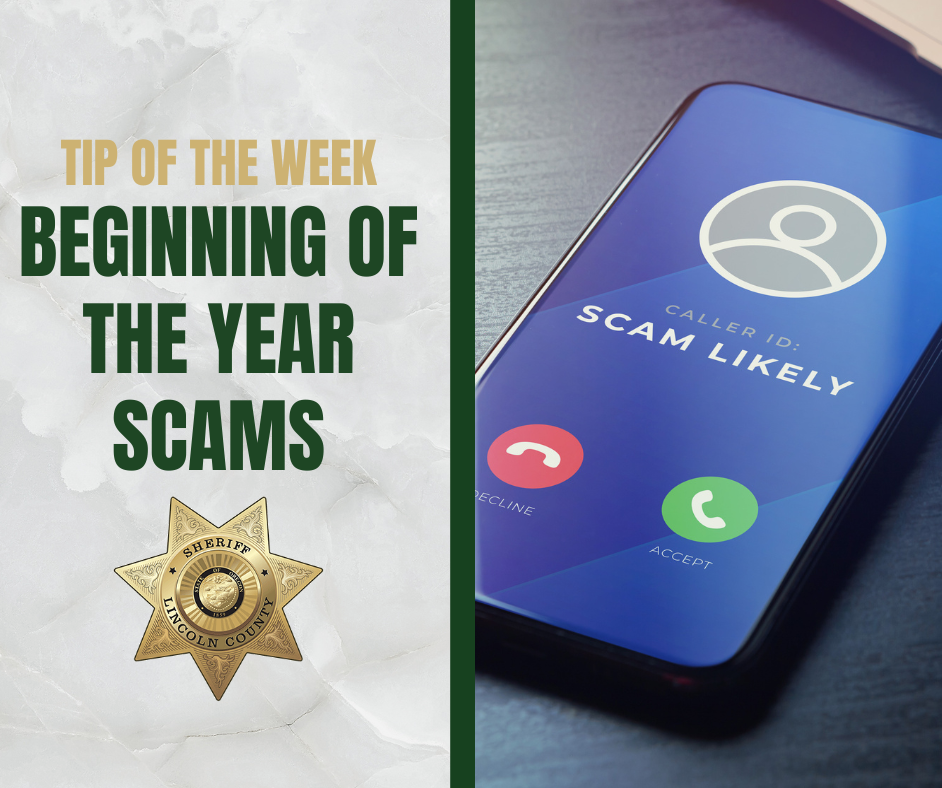
Tip Of The Week For January 15, 2024 - Beginning Of The Year Scams (Photo) - 01/11/24

BEGINNING OF THE YEAR SCAMS

As we get into tax season, be on the lookout for scams which often come through emails, texts, and phone calls aimed at tricking you into disclosing personal and financial information. Common scams may also threaten you with late fees, missed jury duty, or other penalties which “require” you to pay immediately or in untraditional payment types such as gift cards, BitCoin, money orders, and others. There are several things to keep in mind as you prepare your taxes and throughout the year.

Specific to the Internal Revenue Service (IRS)
Scammers claiming to be from the IRS, may tell you that you are due a federal tax refund, and direct you to a website that appears to be a genuine IRS site. The bogus sites are designed to steal your information and contain forms or interactive web pages similar to IRS forms and web pages. Don’t be fooled! These sites and forms have been modified to request detailed personal and financial information from the recipients. Email addresses involving users in professional and educational communities are also often targeted. Once this information is collected, it can be used to steal the person’s identity and financial assets.

The IRS does not send out unsolicited emails or ask for detailed personal information. Additionally, the IRS does not ask people for their PIN numbers, passwords or similar secret access information for their credit card, bank, or other financial accounts. The IRS primarily uses the mail when they need to notify you regarding any tax-related matter. They do not phone you late at night, or text you.

Protect Yourself Throughout the Year
Although some scams target specific times of the year, such as tax season or open enrollment, scams are happening throughout the year. Scammers are creative and resourceful; they will try to convince you they are with a legitimate agency. They will sometimes create a fake, professional-looking profile or a website that looks very similar to the organization’s actual page. Scammers may try to use your emotions against you, such as pretending to be a family member in jail or threaten legal consequences if you do not pay immediately. When in doubt, hang up without providing personal or payment information and contact the real organization to verify the request is really coming from their office.

Some things you can do to protect yourself and loved ones from scams:

  • Confirm an agency is legitimate (and the contact is really with the agency) before sending sensitive information or payment. Do not click on links or call phone numbers sent to you in suspicious communications. Instead, look up the agency’s contact information by searching the web or in a phone book.
  • When you set up an account with an agency (bank, utilities, healthcare, etc.) bookmark their website and save their office number. This will make it easy to follow up with them if you receive a call, text, email, or letter requesting payment or sensitive information.
  • Be wary of social media comments. Do not click on links from other users or share sensitive information with them.
  • Help your friends and family members recognize scams and suspicious communications.
  • Remember, in general agencies such as law enforcement, healthcare, and financial institutes will not ask you for your account login and password information.
  • Remember what agencies will contact you about.
    • Our office will not call you regarding federal jury duty, local jury duty, etc.
    • We will not ask for payment over the phone.
    • Our office and other government agencies will not ask you to pay fines or fees with gift cards, money orders, bitcoin, etc
    • Our office will not try to sell you merchandise or swag over social media through third party comments. Bookmark our pages below to know which pages are official.

How do I know if information is really from the Lincoln County Sheriff’s Office or not?

  • It comes directly from one of our Facebook accounts, not a third party comment: Lincoln County Sheriff’s Office – Oregon or Lincoln County Animal Shelter or Lincoln County Oregon Emergency Management
  • It is on our official website: www.co.lincoln.or.us/sheriff
  • Our staff can verify the information is true. Give us a call at 541-265-4277 if you have questions about a service or need to connect with someone in our Office.

More Information and Resources

  • For more information on phishing (suspicious emails) and identity theft, visit the IRS website at www.irs.gov.
  • For information on preventing or handling the aftermath of identity theft, visit the Federal Trade Commission Web sites at http://www.consumer.gov/idtheft and www.OnGuardOnline.gov.
  • Report Fraud - Federal Trade Commission: https://reportfraud.ftc.gov./#/
  • Report Scams and Fraud - Oregon Department of Justice: https://www.doj.state.or.us/consumer-protection/sales-scams-fraud/report-scams-fraud/
  • Internet Crime Compliant Center - FBI: https://www.ic3.gov/
     

For more information and tips visit our website at www.lincolncountysheriff.net and like us on Facebook at Lincoln County Sheriff’s Office – Oregon.


###
 

Tip Of The Week For January 15, 2024 - Beginning Of The Year Scams (Photo) - 01/11/24

BEGINNING OF THE YEAR SCAMS

As we get into tax season, be on the lookout for scams which often come through emails, texts, and phone calls aimed at tricking you into disclosing personal and financial information. Common scams may also threaten you with late fees, missed jury duty, or other penalties which “require” you to pay immediately or in untraditional payment types such as gift cards, BitCoin, money orders, and others. There are several things to keep in mind as you prepare your taxes and throughout the year.

Specific to the Internal Revenue Service (IRS)
Scammers claiming to be from the IRS, may tell you that you are due a federal tax refund, and direct you to a website that appears to be a genuine IRS site. The bogus sites are designed to steal your information and contain forms or interactive web pages similar to IRS forms and web pages. Don’t be fooled! These sites and forms have been modified to request detailed personal and financial information from the recipients. Email addresses involving users in professional and educational communities are also often targeted. Once this information is collected, it can be used to steal the person’s identity and financial assets.

The IRS does not send out unsolicited emails or ask for detailed personal information. Additionally, the IRS does not ask people for their PIN numbers, passwords or similar secret access information for their credit card, bank, or other financial accounts. The IRS primarily uses the mail when they need to notify you regarding any tax-related matter. They do not phone you late at night, or text you.

Protect Yourself Throughout the Year
Although some scams target specific times of the year, such as tax season or open enrollment, scams are happening throughout the year. Scammers are creative and resourceful; they will try to convince you they are with a legitimate agency. They will sometimes create a fake, professional-looking profile or a website that looks very similar to the organization’s actual page. Scammers may try to use your emotions against you, such as pretending to be a family member in jail or threaten legal consequences if you do not pay immediately. When in doubt, hang up without providing personal or payment information and contact the real organization to verify the request is really coming from their office.

Some things you can do to protect yourself and loved ones from scams:

  • Confirm an agency is legitimate (and the contact is really with the agency) before sending sensitive information or payment. Do not click on links or call phone numbers sent to you in suspicious communications. Instead, look up the agency’s contact information by searching the web or in a phone book.
  • When you set up an account with an agency (bank, utilities, healthcare, etc.) bookmark their website and save their office number. This will make it easy to follow up with them if you receive a call, text, email, or letter requesting payment or sensitive information.
  • Be wary of social media comments. Do not click on links from other users or share sensitive information with them.
  • Help your friends and family members recognize scams and suspicious communications.
  • Remember, in general agencies such as law enforcement, healthcare, and financial institutes will not ask you for your account login and password information.
  • Remember what agencies will contact you about.
    • Our office will not call you regarding federal jury duty, local jury duty, etc.
    • We will not ask for payment over the phone.
    • Our office and other government agencies will not ask you to pay fines or fees with gift cards, money orders, bitcoin, etc
    • Our office will not try to sell you merchandise or swag over social media through third party comments. Bookmark our pages below to know which pages are official.

How do I know if information is really from the Lincoln County Sheriff’s Office or not?

  • It comes directly from one of our Facebook accounts, not a third party comment: Lincoln County Sheriff’s Office – Oregon or Lincoln County Animal Shelter or Lincoln County Oregon Emergency Management
  • It is on our official website: www.co.lincoln.or.us/sheriff
  • Our staff can verify the information is true. Give us a call at 541-265-4277 if you have questions about a service or need to connect with someone in our Office.

More Information and Resources

  • For more information on phishing (suspicious emails) and identity theft, visit the IRS website at www.irs.gov.
  • For information on preventing or handling the aftermath of identity theft, visit the Federal Trade Commission Web sites at http://www.consumer.gov/idtheft and www.OnGuardOnline.gov.
  • Report Fraud - Federal Trade Commission: https://reportfraud.ftc.gov./#/
  • Report Scams and Fraud - Oregon Department of Justice: https://www.doj.state.or.us/consumer-protection/sales-scams-fraud/report-scams-fraud/
  • Internet Crime Compliant Center - FBI: https://www.ic3.gov/
     

For more information and tips visit our website at www.lincolncountysheriff.net and like us on Facebook at Lincoln County Sheriff’s Office – Oregon.


###