Lincoln Co. Sheriff's Office

Emergency Messages as of 3:35 PM, Thu. Mar 26

No information currently posted.

logo

Subscribe to receive FlashAlert messages from Lincoln Co. Sheriff's Office.

News Release

March 26, 2026, Tip Of The Week - Safety Tips For Runners (Photo) - 03/26/26

SAFETY TIPS FOR RUNNERS


The Newport Marathon is just around the corner, so we can expect to see local and guest runners hitting the road on May 31st. Motorists should use extra caution, not only during special events like this, but throughout the year. Whether you are a well-seasoned runner or just beginning your running activities, there are some things you should consider to keep yourself safe while running. The time of day and weather impact not only how you feel on your run but can also be more dangerous depending on the situation. Before heading out on your next run, consider these tips.

Before the Run

  • Run with another person or a group.
  • Let someone know when and where you are running and when you will return.
  • Carry ID and a cell phone. Consider adding a small card with an emergency contact and any allergies or known medical conditions.
  • Take a whistle with you.
  • Dress for the weather and running conditions. Wear layers and sturdy shoes.
  • Wear reflective clothing or gear regardless of the time of day.
  • Don’t wear headphones or anything that distracts you. This will help keep you aware of cars passing by and animals you may encounter on your route.
  • Vary the route and the time of day that you run.
  • If you must run at night, remember to wear a headlamp and a flashing red light on your back. Consider additional reflective gear.
  • Remember to stretch! Stretching before running and regular flexibility and strength training help prevent future injuries.

During the Run


  • Run against traffic so that you can observe the approach of automobiles.
  • When possible, run on sidewalks or designated trails/pedestrian paths.
  • Remember to hydrate. Runner’s belts and vests make it easier to carry water and snacks.
  • Keep an eye on the temperature and how your body feels. If you start to overheat, feel dizzy, or otherwise unwell, take a break in the shade and drink water.
  • Stay alert. When in doubt, follow your intuition. If something seems suspicious, do not panic, but run in a different direction.
  • Do not approach a car to give directions. If you feel you must respond, do it while moving.
  • Run in familiar areas. Note the location of neighbors or open businesses along the route.
  • When in doubt call for help. For an emergency, call 911. Non-emergency dispatch can be reached at 541-265-0777, or call a friend and keep them on the phone until you feel safe again.

For more information and tips, visit our website at www.lincolncountysheriff.net and Like us on Facebook at Lincoln County Sheriff’s Office – Oregon.


###

March 26, 2026, Tip Of The Week - Safety Tips For Runners (Photo) - 03/26/26

SAFETY TIPS FOR RUNNERS


The Newport Marathon is just around the corner, so we can expect to see local and guest runners hitting the road on May 31st. Motorists should use extra caution, not only during special events like this, but throughout the year. Whether you are a well-seasoned runner or just beginning your running activities, there are some things you should consider to keep yourself safe while running. The time of day and weather impact not only how you feel on your run but can also be more dangerous depending on the situation. Before heading out on your next run, consider these tips.

Before the Run

  • Run with another person or a group.
  • Let someone know when and where you are running and when you will return.
  • Carry ID and a cell phone. Consider adding a small card with an emergency contact and any allergies or known medical conditions.
  • Take a whistle with you.
  • Dress for the weather and running conditions. Wear layers and sturdy shoes.
  • Wear reflective clothing or gear regardless of the time of day.
  • Don’t wear headphones or anything that distracts you. This will help keep you aware of cars passing by and animals you may encounter on your route.
  • Vary the route and the time of day that you run.
  • If you must run at night, remember to wear a headlamp and a flashing red light on your back. Consider additional reflective gear.
  • Remember to stretch! Stretching before running and regular flexibility and strength training help prevent future injuries.

During the Run


  • Run against traffic so that you can observe the approach of automobiles.
  • When possible, run on sidewalks or designated trails/pedestrian paths.
  • Remember to hydrate. Runner’s belts and vests make it easier to carry water and snacks.
  • Keep an eye on the temperature and how your body feels. If you start to overheat, feel dizzy, or otherwise unwell, take a break in the shade and drink water.
  • Stay alert. When in doubt, follow your intuition. If something seems suspicious, do not panic, but run in a different direction.
  • Do not approach a car to give directions. If you feel you must respond, do it while moving.
  • Run in familiar areas. Note the location of neighbors or open businesses along the route.
  • When in doubt call for help. For an emergency, call 911. Non-emergency dispatch can be reached at 541-265-0777, or call a friend and keep them on the phone until you feel safe again.

For more information and tips, visit our website at www.lincolncountysheriff.net and Like us on Facebook at Lincoln County Sheriff’s Office – Oregon.


###

March 19, 2026, Tip Of The Week - Distracted Driving (Photo) - 03/19/26

DISTRACTED DRIVING


The National Highway Traffic Safety Administration (NHTSA) has declared April as Distracted Driving Awareness Month. Distracted driving is any activity that takes the driver’s attention away from driving. Cell phone use including texting, talking on the phone, or using social media are some of the activities that are the most dangerous. This is because cell phone use takes your visual, manual, cognitive, and auditory attention away from driving.


While cell phones are some of the most dangerous distractions, other activities such as eating, talking with passengers, grooming, and reading can be dangerous and deadly. According to the NHTSA, 3,522 people were killed by distracted driving in 2021. You can learn more about the dangers of distracted driving by visiting the National Highway Traffic Safety Administration’s “April is Distracted Driving Awareness Month” webpage.


Use these tips to help keep your car distraction free:


  • Don’t call or text while driving. Instead, pull over in a safe place to read and send texts or make a phone call.
  • Establish a “co-pilot” passenger to manage your cell phone, GPS, and other distractions.
  • Look up your destination ahead of time and become familiar with the area. This will help prevent the need to look at GPS while driving.
  • Enjoy your meal at home, in the restaurant, or while parked safely. Eating while driving increases your risk of traffic collisions and the likelihood of choking.
  • Keep pets crated or otherwise secured for safety. This will help keep your furry friend safer in the event of a crash and prevents them from crawling onto your lap or other distracting activities.
  • Recruit the whole family for distraction-free driving. Teach your children the importance of keeping your attention on the road even before they can drive.
  • If your children need help, pull over to help address their needs instead of reaching to the backseat while driving. 
  • Encourage friends and family to drive distraction-free. By speaking up, you may save their life and others on the road.


For more information and tips visit our website at www.lincolncountysheriff.net and like us on Facebook at Lincoln County Sheriff’s Office – Oregon.


###

March 19, 2026, Tip Of The Week - Distracted Driving (Photo) - 03/19/26

DISTRACTED DRIVING


The National Highway Traffic Safety Administration (NHTSA) has declared April as Distracted Driving Awareness Month. Distracted driving is any activity that takes the driver’s attention away from driving. Cell phone use including texting, talking on the phone, or using social media are some of the activities that are the most dangerous. This is because cell phone use takes your visual, manual, cognitive, and auditory attention away from driving.


While cell phones are some of the most dangerous distractions, other activities such as eating, talking with passengers, grooming, and reading can be dangerous and deadly. According to the NHTSA, 3,522 people were killed by distracted driving in 2021. You can learn more about the dangers of distracted driving by visiting the National Highway Traffic Safety Administration’s “April is Distracted Driving Awareness Month” webpage.


Use these tips to help keep your car distraction free:


  • Don’t call or text while driving. Instead, pull over in a safe place to read and send texts or make a phone call.
  • Establish a “co-pilot” passenger to manage your cell phone, GPS, and other distractions.
  • Look up your destination ahead of time and become familiar with the area. This will help prevent the need to look at GPS while driving.
  • Enjoy your meal at home, in the restaurant, or while parked safely. Eating while driving increases your risk of traffic collisions and the likelihood of choking.
  • Keep pets crated or otherwise secured for safety. This will help keep your furry friend safer in the event of a crash and prevents them from crawling onto your lap or other distracting activities.
  • Recruit the whole family for distraction-free driving. Teach your children the importance of keeping your attention on the road even before they can drive.
  • If your children need help, pull over to help address their needs instead of reaching to the backseat while driving. 
  • Encourage friends and family to drive distraction-free. By speaking up, you may save their life and others on the road.


For more information and tips visit our website at www.lincolncountysheriff.net and like us on Facebook at Lincoln County Sheriff’s Office – Oregon.


###

03.12.26 - 2025 Annual Report Published (Photo) - 03/12/26

2025 ANNUAL REPORT PUBLISHED
 

3/11/26 – Lincoln County, Oregon
 

The Lincoln County Sheriff’s Office (LCSO) is pleased to share our 2025 Annual Report. In 2025, Sheriff Shanks motivated the LCSO team to refine our basic and core functions, so our teams will be ready to tackle bigger and better things for our communities. The Sheriff’s Office also created a new strategic plan for 2025 – 2028 to help steer efforts while we continue to address community concerns, rise to meet new challenges, and serve all of our communities.
 

Although it is hard to capture all accomplishments over the last year, our team has tried to summarize major activities and services completed by your Sheriff’s Office.

The full report can be found at: www.co.lincoln.or.us/Archive.aspx?AMID=52


###


03.12.26 - 2025 Annual Report Published (Photo) - 03/12/26

2025 ANNUAL REPORT PUBLISHED
 

3/11/26 – Lincoln County, Oregon
 

The Lincoln County Sheriff’s Office (LCSO) is pleased to share our 2025 Annual Report. In 2025, Sheriff Shanks motivated the LCSO team to refine our basic and core functions, so our teams will be ready to tackle bigger and better things for our communities. The Sheriff’s Office also created a new strategic plan for 2025 – 2028 to help steer efforts while we continue to address community concerns, rise to meet new challenges, and serve all of our communities.
 

Although it is hard to capture all accomplishments over the last year, our team has tried to summarize major activities and services completed by your Sheriff’s Office.

The full report can be found at: www.co.lincoln.or.us/Archive.aspx?AMID=52


###


March 12, 2026, Tip Of The Week - Spring Safety (Photo) - 03/12/26


SPRING SAFETY  
 

With the beginning of spring, many find themselves “spring cleaning” and spending more time outdoors. Spring is a great time to review a safety checklist for your home and complete a few updates that could save your life.


Smoke Alarms


  1. Smoke alarms save lives – if they are powered by a fresh battery. Test smoke alarm batteries monthly and replace the battery at least once a year. Anytime the alarm makes a "chirping" sound, replace the batteries immediately.
  2. Smoke alarms should be located in every bedroom and in the common areas on each floor of a home. Mount them at least 10 feet from the stove to reduce false alarms, less than 12 inches from the ceiling, and away from windows, doors, and ducts.
  3. Smoke alarms can be interconnected wirelessly which means when one sounds, they all sound. This is a quick way to notify everyone in a home if there is a fire.
  4. When installing or replacing smoke alarms, purchase and install new alarms.
  5. Practice how your family will react if smoke alarms go off and consider how that looks at different times through the day or at night. Do not forget to plan your escape from each room and include pets in the process.
  6. The National Fire Protection Association has additional resources on smoke alarm safety.


Carbon Monoxide Detectors


  1. Carbon monoxide (CO) is an invisible, odorless gas, that can kill you. Anything that burns fuel can potentially become a source of carbon monoxide. CO detectors should be installed in a central location outside each bedroom and on every level of the home.
  2. Similar to smoke alarms, test CO detectors’ batteries monthly and replace them at least once a year or sooner if needed.
  3. Consider interconnecting the detectors to alert the entire household at once.
  4. Make sure vents for your gas appliances (fireplace, dryer, stove, furnace, etc.) are free and clear of snow and debris.
  5. Only use gas powered grills and generators outside and away from doors, window, or air intakes.


Household Emergency Plan


Every household needs an emergency plan, especially in the event of a natural disaster or other catastrophic event. Take time to create and review that plan with family, household members, and any neighbors that may have a part in the plan. Consider how your household will react to different emergencies, plan for evacuation routes and alternative routes, and review your emergency supplies. Remember, disasters can strike at any time. Consider what your actions will be if something happens at work, school, the grocery store, and in other areas you frequent.


Emergency plan necessities:


  1. A communications plan to outline how your family/household members will contact each another and where you will meet if you need to evacuate.
  2. A shelter-in-place plan. This is often necessary during events where outside air is contaminated and unsafe. Remember to prepare supplies for sealing windows, doors, and air vents with plastic sheeting.
  3. An evacuation plan with various routes and destinations. If your household has access and functional needs, pets, livestock, or expensive equipment, plan on evacuating sooner so there is more time to safely leave the area. Before there is a disaster, research what friends, family, or hotels can accommodate your pets and livestock during an emergency.
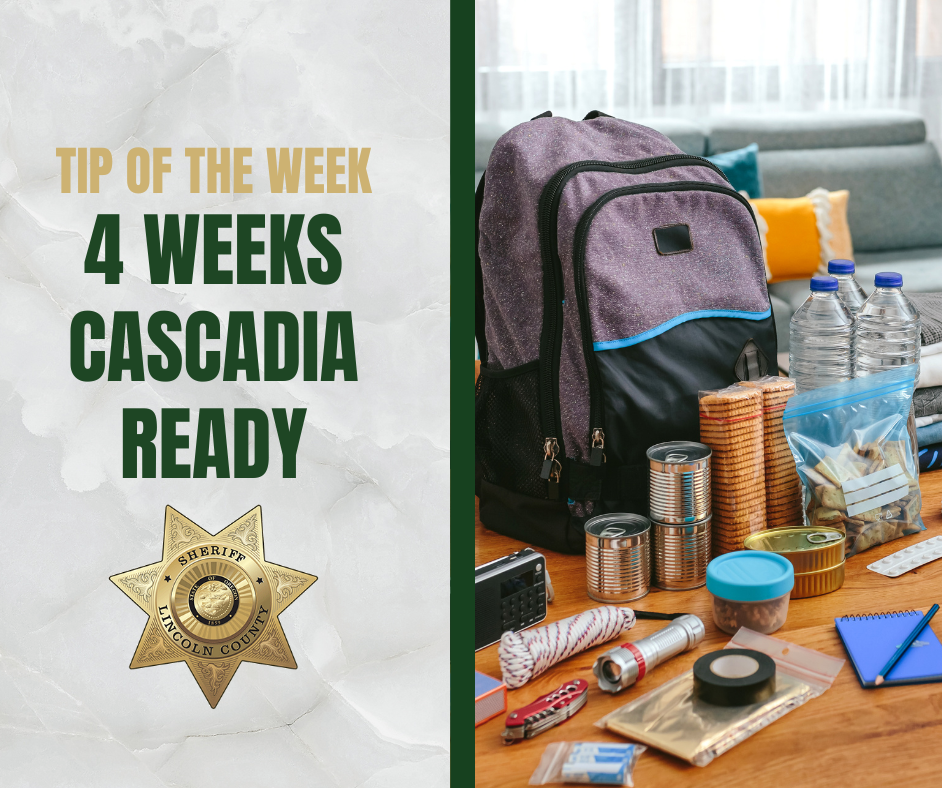
  4. A home and car emergency kit. Your emergency kit should include at least one gallon of water per day for each person, at least a 3-day* supply of non-perishable food, flashlight or headlamp and batteries, first aid kit, filter mask, plastic sheeting and duct tape, and medicines. *On the Oregon coast, it is recommended that households have enough supplies to be self-sufficient for at least 3-weeks. Unable to prepare 3-weeks of supplies? Some emergency supplies are still better than no emergency supplies.
  5. A plan and supplies for your household’s unique needs. Don’t forget to plan for special circumstances such as mobility challenges, medical conditions, allergies, and other things that impact your household’s comfort, health, and safety.


Be prepared, not scared. Visit Ready.gov for a complete list and other tips for making your family’s emergency plan.


For more information and tips visit our website at www.lincolncountysheriff.net and like us on Facebook at Lincoln County Sheriff’s Office – Oregon.


###

March 12, 2026, Tip Of The Week - Spring Safety (Photo) - 03/12/26


SPRING SAFETY  
 

With the beginning of spring, many find themselves “spring cleaning” and spending more time outdoors. Spring is a great time to review a safety checklist for your home and complete a few updates that could save your life.


Smoke Alarms


  1. Smoke alarms save lives – if they are powered by a fresh battery. Test smoke alarm batteries monthly and replace the battery at least once a year. Anytime the alarm makes a "chirping" sound, replace the batteries immediately.
  2. Smoke alarms should be located in every bedroom and in the common areas on each floor of a home. Mount them at least 10 feet from the stove to reduce false alarms, less than 12 inches from the ceiling, and away from windows, doors, and ducts.
  3. Smoke alarms can be interconnected wirelessly which means when one sounds, they all sound. This is a quick way to notify everyone in a home if there is a fire.
  4. When installing or replacing smoke alarms, purchase and install new alarms.
  5. Practice how your family will react if smoke alarms go off and consider how that looks at different times through the day or at night. Do not forget to plan your escape from each room and include pets in the process.
  6. The National Fire Protection Association has additional resources on smoke alarm safety.


Carbon Monoxide Detectors


  1. Carbon monoxide (CO) is an invisible, odorless gas, that can kill you. Anything that burns fuel can potentially become a source of carbon monoxide. CO detectors should be installed in a central location outside each bedroom and on every level of the home.
  2. Similar to smoke alarms, test CO detectors’ batteries monthly and replace them at least once a year or sooner if needed.
  3. Consider interconnecting the detectors to alert the entire household at once.
  4. Make sure vents for your gas appliances (fireplace, dryer, stove, furnace, etc.) are free and clear of snow and debris.
  5. Only use gas powered grills and generators outside and away from doors, window, or air intakes.


Household Emergency Plan


Every household needs an emergency plan, especially in the event of a natural disaster or other catastrophic event. Take time to create and review that plan with family, household members, and any neighbors that may have a part in the plan. Consider how your household will react to different emergencies, plan for evacuation routes and alternative routes, and review your emergency supplies. Remember, disasters can strike at any time. Consider what your actions will be if something happens at work, school, the grocery store, and in other areas you frequent.


Emergency plan necessities:


  1. A communications plan to outline how your family/household members will contact each another and where you will meet if you need to evacuate.
  2. A shelter-in-place plan. This is often necessary during events where outside air is contaminated and unsafe. Remember to prepare supplies for sealing windows, doors, and air vents with plastic sheeting.
  3. An evacuation plan with various routes and destinations. If your household has access and functional needs, pets, livestock, or expensive equipment, plan on evacuating sooner so there is more time to safely leave the area. Before there is a disaster, research what friends, family, or hotels can accommodate your pets and livestock during an emergency.
  4. A home and car emergency kit. Your emergency kit should include at least one gallon of water per day for each person, at least a 3-day* supply of non-perishable food, flashlight or headlamp and batteries, first aid kit, filter mask, plastic sheeting and duct tape, and medicines. *On the Oregon coast, it is recommended that households have enough supplies to be self-sufficient for at least 3-weeks. Unable to prepare 3-weeks of supplies? Some emergency supplies are still better than no emergency supplies.
  5. A plan and supplies for your household’s unique needs. Don’t forget to plan for special circumstances such as mobility challenges, medical conditions, allergies, and other things that impact your household’s comfort, health, and safety.


Be prepared, not scared. Visit Ready.gov for a complete list and other tips for making your family’s emergency plan.


For more information and tips visit our website at www.lincolncountysheriff.net and like us on Facebook at Lincoln County Sheriff’s Office – Oregon.


###

March 5, 2026, Tip Of The Week - Data Privacy (Photo) - 03/05/26

DATA PRIVACY
 

Unfortunately, every year thousands of Oregonians fall victim to online criminals who disguise themselves as established organizations or businesses. Internet scams continue to evolve and become harder to recognize. The term cyber-criminal, generally refers to someone using internet services or software to take advantage of victims. Cyber-criminals and other scammers have become quite skilled in getting you to provide your personal information in a variety of ways. Some scammers are selling “official merchandise” while others ask you to pay fees urgently to avoid serious consequences (which are not real). Another popular scam is the click-bait link or file attachment that collects your data by inviting you to open it from a message such as “I think you know this person that was in this car accident” or “Your account has been suspended, click here to reset your password”. But of course, when you click these links you get viruses or are directed to give your personal information to “reset your account” or login. When in doubt don’t open the link, instead open a new browser and pull up the organization’s official website or call their official number.


Here are a few tips to keep you safer from scams and cybercrimes:


  • Use caution, especially with those you are not familiar with.
    • When you receive uninvited contacts from people or businesses, whether it's over the phone, by mail, email, in person, or on social media, always consider the possibility that the interaction may be a scam.
    • Remember to call or log on to the organization’s real website to verify the information you’ve been given is accurate.


  • Protect your passwords and personal information.
    • Always use password protection.
    • Don’t share account or password information with others.
    • Update security software and back up content regularly.
    • Protect your WiFi network with a password.
    • Avoid using public computers or WiFi hotspots to access online banking or to provide personal information for services.


  • Ignore unfamiliar attachments or links.
    • Don’t click on links, open attachments, attempt to unsubscribe, or call any telephone number listed in suspicious messages.
    • Do NOT give any money, credit card info, or other personal details.
    • When in doubt, look up the organization’s website or phone number and contact them directly.


If you have information about or have fallen victim to a scam, please contact the Oregon Attorney General's Consumer Hotline at 1-877-877-9392 or online at www.oregonconsumer.gov


For more information and tips visit our website at www.lincolncountysheriff.net and like us on Facebook at Lincoln County Sheriff’s Office – Oregon.


###

March 5, 2026, Tip Of The Week - Data Privacy (Photo) - 03/05/26

DATA PRIVACY
 

Unfortunately, every year thousands of Oregonians fall victim to online criminals who disguise themselves as established organizations or businesses. Internet scams continue to evolve and become harder to recognize. The term cyber-criminal, generally refers to someone using internet services or software to take advantage of victims. Cyber-criminals and other scammers have become quite skilled in getting you to provide your personal information in a variety of ways. Some scammers are selling “official merchandise” while others ask you to pay fees urgently to avoid serious consequences (which are not real). Another popular scam is the click-bait link or file attachment that collects your data by inviting you to open it from a message such as “I think you know this person that was in this car accident” or “Your account has been suspended, click here to reset your password”. But of course, when you click these links you get viruses or are directed to give your personal information to “reset your account” or login. When in doubt don’t open the link, instead open a new browser and pull up the organization’s official website or call their official number.


Here are a few tips to keep you safer from scams and cybercrimes:


  • Use caution, especially with those you are not familiar with.
    • When you receive uninvited contacts from people or businesses, whether it's over the phone, by mail, email, in person, or on social media, always consider the possibility that the interaction may be a scam.
    • Remember to call or log on to the organization’s real website to verify the information you’ve been given is accurate.


  • Protect your passwords and personal information.
    • Always use password protection.
    • Don’t share account or password information with others.
    • Update security software and back up content regularly.
    • Protect your WiFi network with a password.
    • Avoid using public computers or WiFi hotspots to access online banking or to provide personal information for services.


  • Ignore unfamiliar attachments or links.
    • Don’t click on links, open attachments, attempt to unsubscribe, or call any telephone number listed in suspicious messages.
    • Do NOT give any money, credit card info, or other personal details.
    • When in doubt, look up the organization’s website or phone number and contact them directly.


If you have information about or have fallen victim to a scam, please contact the Oregon Attorney General's Consumer Hotline at 1-877-877-9392 or online at www.oregonconsumer.gov


For more information and tips visit our website at www.lincolncountysheriff.net and like us on Facebook at Lincoln County Sheriff’s Office – Oregon.


###

February 26, 2026, Tip Of The Week - Problem Gambling Awareness Month (Photo) - 02/26/26


PROBLEM GAMBLING AWARENESS MONTH       


March is Problem Gambling Awareness Month (PGAM) and it’s a great reminder that activities, like gambling, can become a problem and impact our communities in different ways. Gambling can be an activity that is used for recreation and fun, but gambling interacts with our brains in the same way alcohol, drugs, and other "low-effort, high-reward" activities do. Because of this, gambling can become an addiction. Problem gambling is the continuation of gambling activities despite personal, social, or financial consequences. 

Gambling problems are more than just a money issue. Each year problem gambling effects our communities with social impacts such as gambling-related crime which can include embezzling money or burglaries and thefts to help pay gambling debts. Aside from the financial and criminal consequences, problem gambling also negatively impacts relationships. For every one person with a gambling disorder, it is estimated that an additional eight to ten others are affected. Workplaces may see a decrease in productivity, an increase in absences, and other issues if an employee has a gambling disorder. Family and friends often feel replaced by someone’s gambling and can bear the burden of picking up additional responsibilities -both financially (like paying bills on time) and socially (such as increased responsibilities with family, pets, or homecare).

Problem gambling is often referred to as the “hidden addiction” because it is easy to hide and can be difficult for others to notice, but there are some warning signs you can look for.

Problem Gambling Warning Signs:

  • Distracted with thoughts of gambling
  • Spending more time and money gambling
  • Lying or hiding gambling activity
  • Risking or damaging relationships
  • Being irritable when not gambling
  • Gambling to win back losses (this is also known as chasing losses)
  • Exaggerating wins and minimizing losses
  • Borrowing money
  • Gambling debts
  • Missing work or other responsibilities

If you choose to gamble, there are ways to reduce the risk of gambling becoming a problem. Setting a time limit, balancing life with other social and recreational activities, and avoiding alcohol while gambling are some of the recommended responsible gambling guidelines. You can find more responsible gambling guidelines by visiting www.opgr.org/prevention-resources/.

In Oregon, FREE problem gambling treatment and support is available for someone with a gambling disorder and those that may be affected by someone’s problem gambling.

Free Problem Gambling Treatment and Support:

  • Oregon Problem Gambling Resource 
    • Phone: 1-877-695-4648
    • Text: 503-713-6000
    • Chat on website: OPGR.org

For more information and tips visit our website at www.lincolncountysheriff.net and like us on Facebook at Lincoln County Sheriff’s Office – Oregon.


###

February 26, 2026, Tip Of The Week - Problem Gambling Awareness Month (Photo) - 02/26/26


PROBLEM GAMBLING AWARENESS MONTH       


March is Problem Gambling Awareness Month (PGAM) and it’s a great reminder that activities, like gambling, can become a problem and impact our communities in different ways. Gambling can be an activity that is used for recreation and fun, but gambling interacts with our brains in the same way alcohol, drugs, and other "low-effort, high-reward" activities do. Because of this, gambling can become an addiction. Problem gambling is the continuation of gambling activities despite personal, social, or financial consequences. 

Gambling problems are more than just a money issue. Each year problem gambling effects our communities with social impacts such as gambling-related crime which can include embezzling money or burglaries and thefts to help pay gambling debts. Aside from the financial and criminal consequences, problem gambling also negatively impacts relationships. For every one person with a gambling disorder, it is estimated that an additional eight to ten others are affected. Workplaces may see a decrease in productivity, an increase in absences, and other issues if an employee has a gambling disorder. Family and friends often feel replaced by someone’s gambling and can bear the burden of picking up additional responsibilities -both financially (like paying bills on time) and socially (such as increased responsibilities with family, pets, or homecare).

Problem gambling is often referred to as the “hidden addiction” because it is easy to hide and can be difficult for others to notice, but there are some warning signs you can look for.

Problem Gambling Warning Signs:

  • Distracted with thoughts of gambling
  • Spending more time and money gambling
  • Lying or hiding gambling activity
  • Risking or damaging relationships
  • Being irritable when not gambling
  • Gambling to win back losses (this is also known as chasing losses)
  • Exaggerating wins and minimizing losses
  • Borrowing money
  • Gambling debts
  • Missing work or other responsibilities

If you choose to gamble, there are ways to reduce the risk of gambling becoming a problem. Setting a time limit, balancing life with other social and recreational activities, and avoiding alcohol while gambling are some of the recommended responsible gambling guidelines. You can find more responsible gambling guidelines by visiting www.opgr.org/prevention-resources/.

In Oregon, FREE problem gambling treatment and support is available for someone with a gambling disorder and those that may be affected by someone’s problem gambling.

Free Problem Gambling Treatment and Support:

  • Oregon Problem Gambling Resource 
    • Phone: 1-877-695-4648
    • Text: 503-713-6000
    • Chat on website: OPGR.org

For more information and tips visit our website at www.lincolncountysheriff.net and like us on Facebook at Lincoln County Sheriff’s Office – Oregon.


###

02.25.26 - Toledo Vehicle Crash 0 Update 02 - Final Update (Photo) - 02/25/26

TOLEDO VEHICLE CRASH – UPDATE 02 – FINAL UPDATE
 

February 25, 2026 – Toledo, OR
 

At approximately 4:40 PM, the Lincoln County Sheriff’s Office was notified of a rollover crash between the 100 and 200 blocks of NE Sturdevant road. The single vehicle, operated by a juvenile, crashed into a power pole resulting in significant damage. Although the juvenile was transported for medical care, there are no known injuries at this time.
 

Central Lincoln PUD and Consumers Power are on scene and working to restore power. For power updates:

  • Central Lincoln PUD outage updates: clpud.org/customer-information/outages/outage-information
  • Consumers Power: cpi.coop/

Traffic is being diverted until the area is safe and clear.
 

###

02.25.26 - Toledo Vehicle Crash 0 Update 02 - Final Update (Photo) - 02/25/26

TOLEDO VEHICLE CRASH – UPDATE 02 – FINAL UPDATE
 

February 25, 2026 – Toledo, OR
 

At approximately 4:40 PM, the Lincoln County Sheriff’s Office was notified of a rollover crash between the 100 and 200 blocks of NE Sturdevant road. The single vehicle, operated by a juvenile, crashed into a power pole resulting in significant damage. Although the juvenile was transported for medical care, there are no known injuries at this time.
 

Central Lincoln PUD and Consumers Power are on scene and working to restore power. For power updates:

  • Central Lincoln PUD outage updates: clpud.org/customer-information/outages/outage-information
  • Consumers Power: cpi.coop/

Traffic is being diverted until the area is safe and clear.
 

###

02.25.26 - Toledo Vehicle Crash - Update 01 (Photo) - 02/25/26

TOLEDO VEHICLE CRASH – UPDATE 01


February 25, 2026 – Toledo, OR


At approximately 4:40 PM, the Lincoln County Sheriff’s Office was notified of a rollover crash between the 100 and 200 blocks of NE Sturdevant road. The single vehicle crashed into a power pole resulting in significant damage. Central Lincon PUD is on scene assessing damage and addressing the power outage. Traffic is being diverted from the area.


Due to safety concerns and downed powerlines, the public is asked to stay out of the area.


More information will be shared as the situation develops.
 

###

Attached Media Files: 02.25.26-ToledoCrash.Update01.docx,

02.25.26 - Toledo Vehicle Crash - Update 01 (Photo) - 02/25/26

TOLEDO VEHICLE CRASH – UPDATE 01


February 25, 2026 – Toledo, OR


At approximately 4:40 PM, the Lincoln County Sheriff’s Office was notified of a rollover crash between the 100 and 200 blocks of NE Sturdevant road. The single vehicle crashed into a power pole resulting in significant damage. Central Lincon PUD is on scene assessing damage and addressing the power outage. Traffic is being diverted from the area.


Due to safety concerns and downed powerlines, the public is asked to stay out of the area.


More information will be shared as the situation develops.
 

###

Attached Media Files: 02.25.26-ToledoCrash.Update01.docx,

02.25.26 - Quarterly Coffee With A Deputy - Newport (Photo) - 02/25/26

QUARTERLY COFFEE WITH A DEPUTY – NEWPORT
 

The next Quarterly Coffee with a Deputy event with the Lincoln County Sheriff’s Office is just around the corner. Join us on Tuesday, March 10, 2026, from 9:30am – 11am for a cup of coffee and a conversation at Ultralife Cafe (located at 715 NW Beach Drive Newport, OR 97365).

More about these quarterly events:
Every three months our office partners with a local coffee shop in Lincoln County to provide a time, space, and coffee for community members to meet our team and share what’s on their minds. Coffee with a cop events are a friendly and relaxed way for our communities to connect with the deputies that serve them.

These events offer a unique opportunity for community members to directly engage with law enforcement, ask questions, voice concerns, and build positive relationships. Whether you're a regular coffee drinker or simply curious about the work of law enforcement, this is a chance to connect with our team on a personal level, learn about each other’s experiences, and share local feedback.
 

###

02.25.26 - Quarterly Coffee With A Deputy - Newport (Photo) - 02/25/26

QUARTERLY COFFEE WITH A DEPUTY – NEWPORT
 

The next Quarterly Coffee with a Deputy event with the Lincoln County Sheriff’s Office is just around the corner. Join us on Tuesday, March 10, 2026, from 9:30am – 11am for a cup of coffee and a conversation at Ultralife Cafe (located at 715 NW Beach Drive Newport, OR 97365).

More about these quarterly events:
Every three months our office partners with a local coffee shop in Lincoln County to provide a time, space, and coffee for community members to meet our team and share what’s on their minds. Coffee with a cop events are a friendly and relaxed way for our communities to connect with the deputies that serve them.

These events offer a unique opportunity for community members to directly engage with law enforcement, ask questions, voice concerns, and build positive relationships. Whether you're a regular coffee drinker or simply curious about the work of law enforcement, this is a chance to connect with our team on a personal level, learn about each other’s experiences, and share local feedback.
 

###