High Desert Museum

Emergency Messages as of 11:04 AM, Wed. Apr 29

No information currently posted.

logo

Subscribe to receive FlashAlert messages from High Desert Museum.

News Release

Northwestern Band Of The Shoshone Nation’s Vice Chairman Brad Parry Named Inaugural Winner Of Schnitzer Prize Of The West (Photo) - 04/29/26

Leading one of the largest ecological and cultural restoration projects in the American West, Parry receives the pre-eminent prize awarding collaboration in solving environmental challenges in the region


Press Kit Link - Images and Messaging


Bend, OR — April 29, 2026 — The inaugural Schnitzer Prize of the West was awarded to Brad Parry, the Vice Chairman of the Northwestern Band of the Shoshone Nation in Ogden, UT and leader of the Wuda Ogwa Cultural and Land Restoration Project. The $50,000 award granted by the High Desert Museum in Bend, OR is the first of its kind in the American West, celebrating and honoring uncommon collaboration and innovation in solving the legacy challenges of the region. Parry will receive the prize during a ceremony in Portland, OR on May 16, 2026.


Parry was awarded for his leadership transforming the site of the 1863 Bear River Massacre in Preston, Idaho, where more than 400 tribal members were killed in one of the deadliest acts of violence against Native Americans in U.S. history, into a place of ecological and cultural healing. When the Tribe purchased the 350-acre site from private owners in 2018, it also became an opportunity to bring wider awareness to a long-overlooked piece of history.


“How we view the restoration is a project not just of restoring the land, but restoring the spirit of forgiveness, and that starts with a small seed. We bring volunteers that come out to plant those seeds, and when they plant it, they bring new friends and family with them. Restoration brings brightness, hope, resilience, and remembrance, but most of all, it brings forgiveness of the past to continue forward in the future. And that’s what this project is,” says Rios Pacheco, Northwestern Shoshone spiritual leader.


Through his collaborations with Tribal members, local farmers and ranchers, academics, state and local governments, and community groups, Parry has built one of the most efficient models of watershed restoration in the American West. Despite scarce resources, ongoing institutional and local tensions, and financial restraints, Parry’s work is successfully restoring the land to its natural state by putting the creek back in its historic path and removing what didn't belong. Under his leadership, the project is removing invasive species, planting more than 70,000 native plants, restoring wetlands, and freeing the flow of a Bear River tributary. Water is now able to flow more freely downstream, benefitting local farmers, neighboring communities, and ultimately the Great Salt Lake—returning an estimated 10,000 acre-feet of water annually to the lake, which is in its own ecological crisis due to a climate-driven drought. Also central to the restoration project is Parry’s vision for a Cultural Interpretive Center, which will memorialize the site’s history as a landmark to the Northwestern Shoshone’s resilience and their long journey to federal recognition.


“Brad’s visionary leadership is critical to this project's success. He’s deeply engaged with local biologists, ecologists, and engineers, as well as community groups like the Youth Coalition for Great Salt Lake. He understands that this work is intersectional, and he's brought together a coalition of stakeholders to make this ambitious project possible,” says Katie Newburn, Education Director of FRIENDS of Great Salt Lake


Launched in partnership with Jordan D. Schnitzer and the Harold and Arlene Schnitzer CARE Foundation, the inaugural Schnitzer Prize of the West celebrates Parry, his uncommon collaborations, and his innovative response to the urgent issues of sovereignty, ecological restoration, and water security. As the 2026 Prize Winner, Parry’s work illustrates a model for others across the region and the nation to follow.


“I am deeply honored and humbled to be the inaugural recipient of the Schnitzer Prize of the West, a recognition I proudly accept on behalf of the Wuda Ogwa project. This achievement embodies the resilience and unity of our Tribe, our people, and our community, building upon the legacy of those who came before us. At its heart, this work is driven by a steadfast commitment to caring for our land, revitalizing our connection to history and culture, and building bridges with other communities—an essential responsibility we must uphold for our future generations,” said Schnitzer Prize of the West 2026 Winner Brad Parry.


“The Schnitzer Prize of the West celebrates remarkable individuals working together collaboratively to compromise and forge policies that benefit us all, and not just for us and our children, but generations to come,” said Jordan D. Schnitzer, President of Schnitzer Properties and the Harold & Arlene Schnitzer CARE Foundation.


Parry’s nomination was selected by an esteemed panel of 13 advisors with deep backgrounds in tribal leadership, ranching and farming, water policy and river restoration, and prominent academic centers focused on the American West. The panel evaluated nearly 100 nominations across 12 states. 


Among the nominations, the Advisory Committee also recognized four finalists—Amy Bowers Cordalis, Talent, OR; Kelley Delpit, Bend, OR; Julie Rentner, Chico, CA; and Laura Van Riper, Bend, OR—who will each receive a $2,500 cash prize during the Portland ceremony on May 16. More information on the selection committee and finalists are available on the High Desert Museum’s website.


Administered through the High Desert Museum, the Schnitzer Prize of the West will begin accepting new nominations in May 2026. Nominations for consideration for the 2027 Prize must be received by December 31, 2026 to be eligible. Nominees not selected in one cycle remain eligible in future cycles.


For more information on the Schnitzer Prize of the West, nominations, eligibility, and award cycles, please visit highdesertmuseum.org/schnitzer-prize.


###


About Schnitzer Prize of the West 2026 Winner Brad Parry

Brad Parry is the Vice Chairman for the Northwestern Band of the Shoshone Nation, where he also serves as the Tribe’s natural resource officer, currently managing and directing the Wuda Ogwa restoration project.  He is actively involved as a member of the Weber River Commission, the Bear River Commission, the Jordan River Commission, the Great Salt Lake Advisory, and the University of Utah’s Board for Native Excellence and Tribal Engagement.  Brad spent over 16 years with the Department of the Interior’s Bureau of Reclamation, focusing on water quality improvement and Colorado River Basin salinity control. Brad spent his formative years in Syracuse, Utah, near the Great Salt Lake, and earned a Bachelor of Science in Speech Communication from the University of Utah.  In his spare time, he enjoys golf, fishing, music, spending time with his family, and teaching about his cultural heritage.


About Jordan D. Schnitzer and the Harold & Arlene Schnitzer CARE Foundation

Jordan Schnitzer has a vibrant legacy supporting the High Desert Museum. He is the visionary and sponsor of the Schnitzer Prize of the West.


Through the Harold & Arlene Schnitzer CARE Foundation, Jordan carries on the legacy of his late parents and their belief that “to whom much is given, much is expected.” Headquartered in Portland, Oregon, the CARE Foundation and its leaders have given over $300 million to fund hundreds of nonprofit projects that touch lives and enrich communities.


Schnitzer is also a prominent West Coast businessman. He is President and CEO of Schnitzer Properties, one of the West Coast’s Top 10 private real estate owners with offices in six Western states. Schnitzer is also an ARTnews Top 200 Art Collector globally and shares his vast contemporary art collections at no charge to museums and institutions and supports accompanying programming, educational opportunities and publications.


About the High Desert Museum

The High Desert Museum opened in Bend, Oregon in 1982. It brings together wildlife, cultures, art, history and the natural world to convey the wonder of North America’s High Desert. The Museum is a 501(c)3 nonprofit organization accredited by the American Alliance of Museums and the Association of Zoos and Aquariums, is a Smithsonian Affiliate, was the 2019 recipient of the Western Museums Association’s Charles Redd Award for Exhibition Excellence and was a 2021 recipient of the National Medal for Museum and Library Service. To learn more, visit highdesertmuseum.org and follow us on Facebook and Instagram.
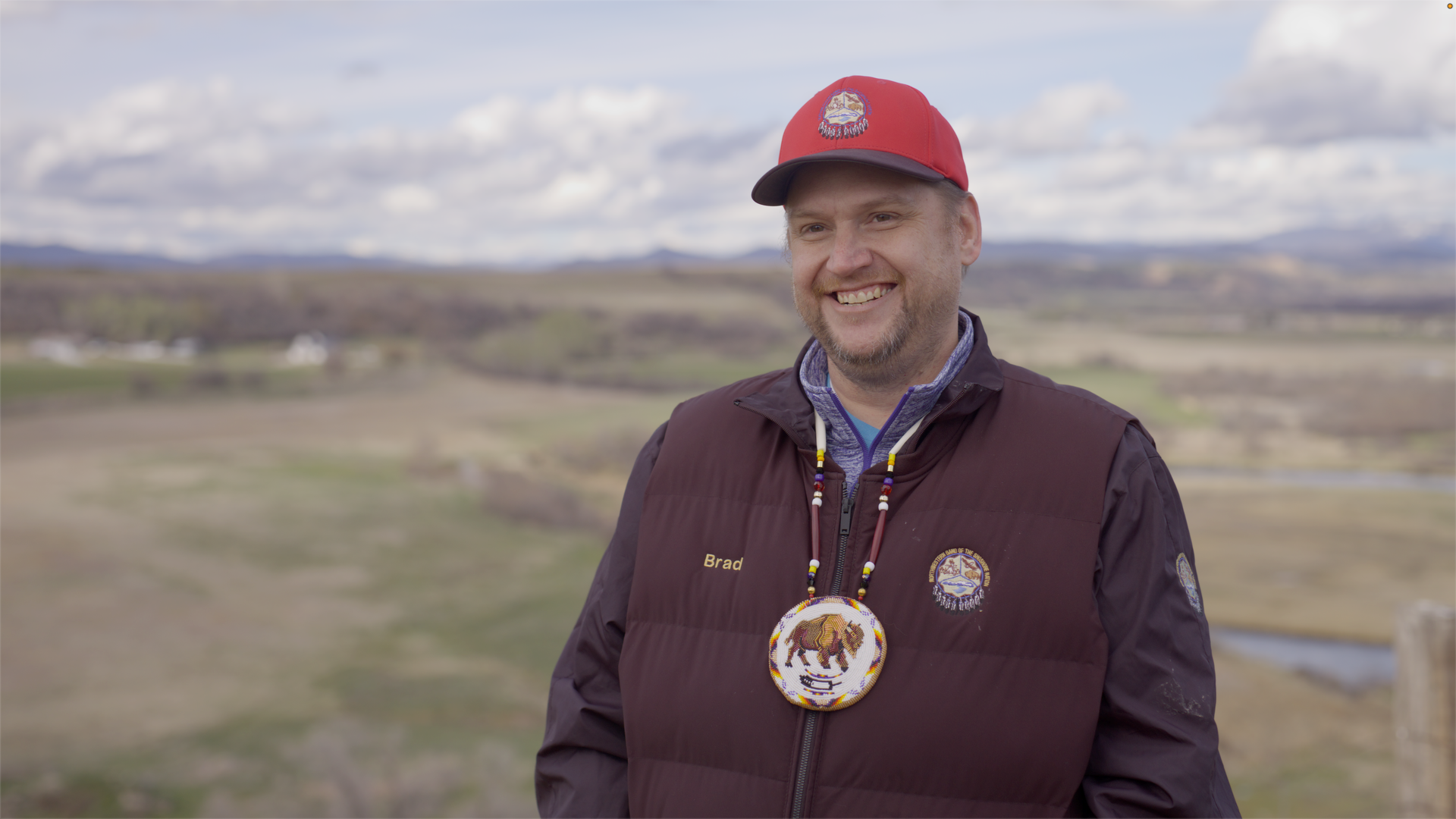
 

Northwestern Band Of The Shoshone Nation’s Vice Chairman Brad Parry Named Inaugural Winner Of Schnitzer Prize Of The West (Photo) - 04/29/26

Leading one of the largest ecological and cultural restoration projects in the American West, Parry receives the pre-eminent prize awarding collaboration in solving environmental challenges in the region


Press Kit Link - Images and Messaging


Bend, OR — April 29, 2026 — The inaugural Schnitzer Prize of the West was awarded to Brad Parry, the Vice Chairman of the Northwestern Band of the Shoshone Nation in Ogden, UT and leader of the Wuda Ogwa Cultural and Land Restoration Project. The $50,000 award granted by the High Desert Museum in Bend, OR is the first of its kind in the American West, celebrating and honoring uncommon collaboration and innovation in solving the legacy challenges of the region. Parry will receive the prize during a ceremony in Portland, OR on May 16, 2026.


Parry was awarded for his leadership transforming the site of the 1863 Bear River Massacre in Preston, Idaho, where more than 400 tribal members were killed in one of the deadliest acts of violence against Native Americans in U.S. history, into a place of ecological and cultural healing. When the Tribe purchased the 350-acre site from private owners in 2018, it also became an opportunity to bring wider awareness to a long-overlooked piece of history.


“How we view the restoration is a project not just of restoring the land, but restoring the spirit of forgiveness, and that starts with a small seed. We bring volunteers that come out to plant those seeds, and when they plant it, they bring new friends and family with them. Restoration brings brightness, hope, resilience, and remembrance, but most of all, it brings forgiveness of the past to continue forward in the future. And that’s what this project is,” says Rios Pacheco, Northwestern Shoshone spiritual leader.


Through his collaborations with Tribal members, local farmers and ranchers, academics, state and local governments, and community groups, Parry has built one of the most efficient models of watershed restoration in the American West. Despite scarce resources, ongoing institutional and local tensions, and financial restraints, Parry’s work is successfully restoring the land to its natural state by putting the creek back in its historic path and removing what didn't belong. Under his leadership, the project is removing invasive species, planting more than 70,000 native plants, restoring wetlands, and freeing the flow of a Bear River tributary. Water is now able to flow more freely downstream, benefitting local farmers, neighboring communities, and ultimately the Great Salt Lake—returning an estimated 10,000 acre-feet of water annually to the lake, which is in its own ecological crisis due to a climate-driven drought. Also central to the restoration project is Parry’s vision for a Cultural Interpretive Center, which will memorialize the site’s history as a landmark to the Northwestern Shoshone’s resilience and their long journey to federal recognition.


“Brad’s visionary leadership is critical to this project's success. He’s deeply engaged with local biologists, ecologists, and engineers, as well as community groups like the Youth Coalition for Great Salt Lake. He understands that this work is intersectional, and he's brought together a coalition of stakeholders to make this ambitious project possible,” says Katie Newburn, Education Director of FRIENDS of Great Salt Lake


Launched in partnership with Jordan D. Schnitzer and the Harold and Arlene Schnitzer CARE Foundation, the inaugural Schnitzer Prize of the West celebrates Parry, his uncommon collaborations, and his innovative response to the urgent issues of sovereignty, ecological restoration, and water security. As the 2026 Prize Winner, Parry’s work illustrates a model for others across the region and the nation to follow.


“I am deeply honored and humbled to be the inaugural recipient of the Schnitzer Prize of the West, a recognition I proudly accept on behalf of the Wuda Ogwa project. This achievement embodies the resilience and unity of our Tribe, our people, and our community, building upon the legacy of those who came before us. At its heart, this work is driven by a steadfast commitment to caring for our land, revitalizing our connection to history and culture, and building bridges with other communities—an essential responsibility we must uphold for our future generations,” said Schnitzer Prize of the West 2026 Winner Brad Parry.


“The Schnitzer Prize of the West celebrates remarkable individuals working together collaboratively to compromise and forge policies that benefit us all, and not just for us and our children, but generations to come,” said Jordan D. Schnitzer, President of Schnitzer Properties and the Harold & Arlene Schnitzer CARE Foundation.


Parry’s nomination was selected by an esteemed panel of 13 advisors with deep backgrounds in tribal leadership, ranching and farming, water policy and river restoration, and prominent academic centers focused on the American West. The panel evaluated nearly 100 nominations across 12 states. 


Among the nominations, the Advisory Committee also recognized four finalists—Amy Bowers Cordalis, Talent, OR; Kelley Delpit, Bend, OR; Julie Rentner, Chico, CA; and Laura Van Riper, Bend, OR—who will each receive a $2,500 cash prize during the Portland ceremony on May 16. More information on the selection committee and finalists are available on the High Desert Museum’s website.


Administered through the High Desert Museum, the Schnitzer Prize of the West will begin accepting new nominations in May 2026. Nominations for consideration for the 2027 Prize must be received by December 31, 2026 to be eligible. Nominees not selected in one cycle remain eligible in future cycles.


For more information on the Schnitzer Prize of the West, nominations, eligibility, and award cycles, please visit highdesertmuseum.org/schnitzer-prize.


###


About Schnitzer Prize of the West 2026 Winner Brad Parry

Brad Parry is the Vice Chairman for the Northwestern Band of the Shoshone Nation, where he also serves as the Tribe’s natural resource officer, currently managing and directing the Wuda Ogwa restoration project.  He is actively involved as a member of the Weber River Commission, the Bear River Commission, the Jordan River Commission, the Great Salt Lake Advisory, and the University of Utah’s Board for Native Excellence and Tribal Engagement.  Brad spent over 16 years with the Department of the Interior’s Bureau of Reclamation, focusing on water quality improvement and Colorado River Basin salinity control. Brad spent his formative years in Syracuse, Utah, near the Great Salt Lake, and earned a Bachelor of Science in Speech Communication from the University of Utah.  In his spare time, he enjoys golf, fishing, music, spending time with his family, and teaching about his cultural heritage.


About Jordan D. Schnitzer and the Harold & Arlene Schnitzer CARE Foundation

Jordan Schnitzer has a vibrant legacy supporting the High Desert Museum. He is the visionary and sponsor of the Schnitzer Prize of the West.


Through the Harold & Arlene Schnitzer CARE Foundation, Jordan carries on the legacy of his late parents and their belief that “to whom much is given, much is expected.” Headquartered in Portland, Oregon, the CARE Foundation and its leaders have given over $300 million to fund hundreds of nonprofit projects that touch lives and enrich communities.


Schnitzer is also a prominent West Coast businessman. He is President and CEO of Schnitzer Properties, one of the West Coast’s Top 10 private real estate owners with offices in six Western states. Schnitzer is also an ARTnews Top 200 Art Collector globally and shares his vast contemporary art collections at no charge to museums and institutions and supports accompanying programming, educational opportunities and publications.


About the High Desert Museum

The High Desert Museum opened in Bend, Oregon in 1982. It brings together wildlife, cultures, art, history and the natural world to convey the wonder of North America’s High Desert. The Museum is a 501(c)3 nonprofit organization accredited by the American Alliance of Museums and the Association of Zoos and Aquariums, is a Smithsonian Affiliate, was the 2019 recipient of the Western Museums Association’s Charles Redd Award for Exhibition Excellence and was a 2021 recipient of the National Medal for Museum and Library Service. To learn more, visit highdesertmuseum.org and follow us on Facebook and Instagram.