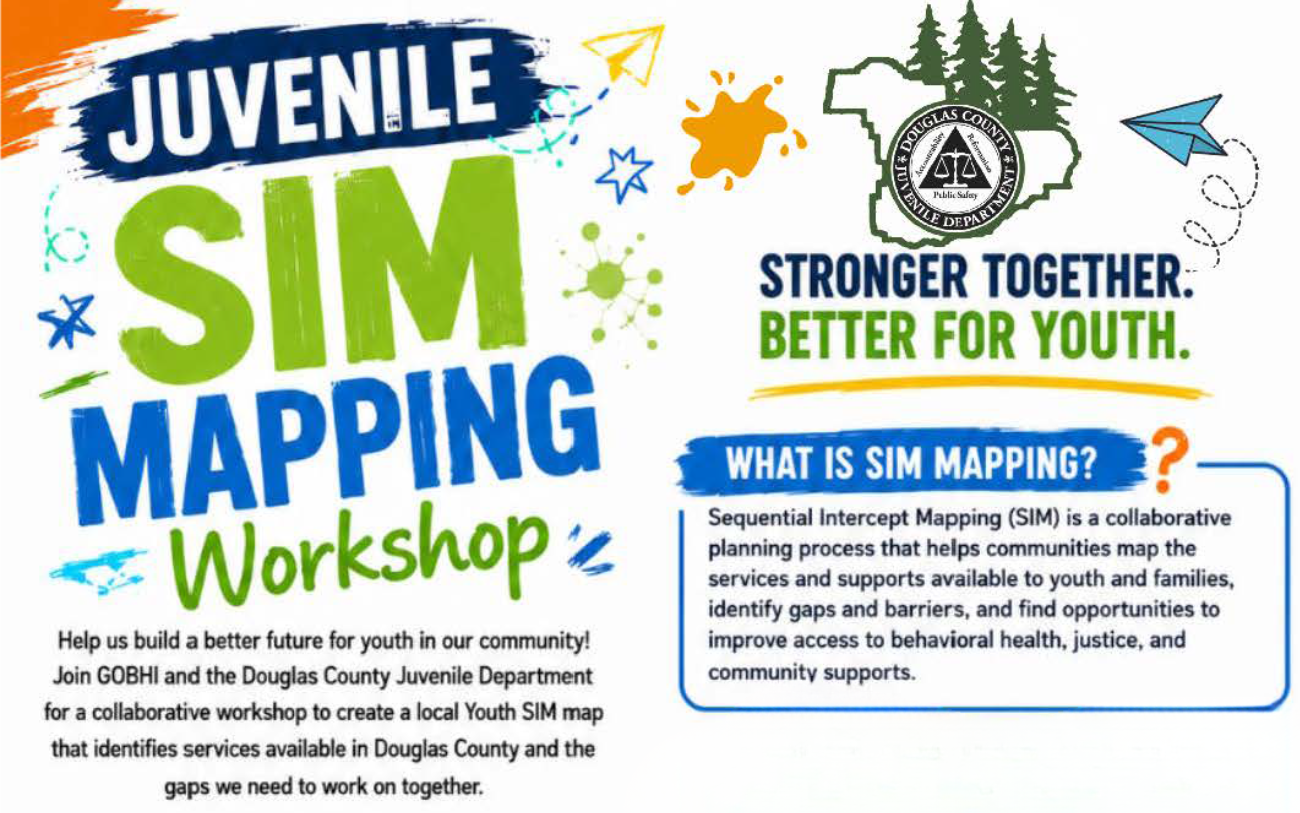
09-15-26 FOR IMMEDIATE RELEASE September 15, 2026 Douglas County Juvenile Department Brings Community Partners Together To Map Youth Resources And Identify Service Gaps (Douglas County, Ore.) The Douglas County Board Of Commissioners, Tom Kress, Chris - 09/15/26
FOR IMMEDIATE RELEASE
September 15, 2026
Douglas County Juvenile Department Brings Community Partners Together to Map Youth Resources and Identify Service Gaps
(Douglas County, Ore.) The Douglas County Board of Commissioners, Tom Kress, Chris Boice and Tim Freeman applaud the Douglas County Juvenile Department for hosting a free Sequential Intercept Mapping (SIM) Workshop on September 15 at the Roseburg Public Library. They brought together community organizations, schools, behavioral health providers, law enforcement, justice system partners and other agencies to identify resources and potential gaps in services available for Douglas County youth. The workshop was sponsored and facilitated by the Oregon Center on Behavioral Health and Justice Integration (OCBHJI). OCBHJI offers free SIM workshops to Oregon communities through a grant process, with the goal of helping communities strengthen connections between behavioral health services and the justice system. Douglas County Juvenile Director Wendy Lang requested and was selected to participate in one of only eight free SIM workshops offered each year by OCBHJI.
“We are incredibly fortunate OCBHJI approved us for this workshop and that Douglas County is rich with youth resources. We know that navigating through the maze of agencies and resources can be challenging for parents, youth and community partners,” Lang said. “This SIM workshop is designed specifically for Douglas County to come together and inventory our youth resources and gaps, identify behavioral health services, meet community partners and introduce youth evidence-based practices.”
Mapping the Path to Services
The Sequential Intercept Model provides a framework for communities to examine how individuals interact with behavioral health and justice systems and identify opportunities for earlier intervention and connection to appropriate services. During Tuesday’s workshop, participants worked together to map the resources available to youth throughout Douglas County and identify potential gaps, barriers and opportunities for stronger coordination. The process looks at resources and potential intervention points ranging from community-based services and law enforcement through courts, treatment, reentry and community-based support. The workshop also focused on identifying where gaps in services may exist.
“Prevention is one of the most important investments we can make in the lives of young people,” Commissioner and Juvenile Department liaison Chris Boice said. “When we help a young person overcome a challenge before it becomes a crisis, we can change the trajectory of that young person’s life. This workshop is an opportunity to look at how we, as a community, can do a better job of supporting kids early, giving families the tools they need and helping young people build a successful future.”
When appropriate behavioral health resources are difficult to find or access, youth and families may encounter challenges that can escalate before the right services are connected. Mapping the system allows community partners to better understand what resources currently exist, where additional resources may be needed and how agencies can work together to improve access.
“At the end of the day, OCBHJI will compile the information gathered during this workshop and create a customized, local strategic action plan for Douglas County,” Lang said. “We are excited to put this plan into action.”
A Community-Wide Effort
The workshop brought together a broad cross-section of organizations and agencies that serve Douglas County youth and families, including Douglas County Juvenile Department, Adapt, ARC of Douglas County, Salvation Army,
Douglas County Sheriff’s Office, Umpqua Health, Family, Faith and Relationship Advocates (FFRA), Peace at Home,
United Community Action Network (UCAN), Oregon Department of Human Services – Child Support Division,
Douglas Educational Service District, Oregon Department of Justice – Criminal Division, Local Public Safety Coordinating Council (LPSCC), Umpqua Community College – Wooley Center, Creating Community Resilience (CCR),
Take Root, Phoenix School, South Umpqua School District, Oregon Department of Corrections, Oregon Outreach Clinic,
Community Baptist Church, and Community Living Case Management (CLCM). The diverse participation reflects the many organizations and individuals who play a role in supporting the health, safety, education and well-being of young people in Douglas County.
“It is clear, Douglas County cares deeply about our kids,” Lang said. “Our goal is to make it easier for youth and families to find and access the right resources when they need them – whether at 2:00 pm on a Tuesday or 2:00 am on a Saturday. No child, family or support agency should have to navigate a confusing maze to find help and support.”
The SIM process is intended to strengthen collaboration among behavioral health providers, county leadership, law enforcement, courts, community organizations and people with lived experience. By bringing these partners together, Douglas County can develop a clearer picture of the services available to youth and identify opportunities to improve coordination and access.
Investing in Douglas County’s Youth
Lang emphasized that the work goes beyond simply creating a list of resources. The goal is to better understand how youth and families move through the system and identify opportunities to connect them with appropriate support as early as possible. “Youth are Douglas County’s future,” Lang said. “We need to make sure we can provide the resources they need to be successful and productive members of our community.”
The customized strategic action plan developed by OCBHJI following the workshop will provide Douglas County with a roadmap for addressing identified needs and establishing measurable priorities for improving cross-system responses. “It takes a community to raise, encourage, and help kids,” Lang said. “Everyone plays a unique part in the narrative, and everyone holds a piece of the success we see.”
The Douglas County Commissioners and the Douglas County Juvenile Department look forward to continuing this collaborative work with OCBHJI and community partners to help ensure youth and families can more easily find and access the resources they need. The Douglas County Juvenile Department is a division of Douglas County Government. For more information about our Douglas County Juvenile Department, visit: https://www.douglascountyor.gov/239/Juvenile.
###
Media Contact: Tamara Howell, Chief Public Information Officer | Douglas County Public Affairs Office | Office: (541) 957-4896 | Cell: (541) 670-2804 | Email: tamara.howell@douglascoumtyor.gov.