Department of Land Conservation and Development

Emergency Messages as of 11:18 AM, Thu. Jun 11

No information currently posted.

Subscribe to receive FlashAlert messages from Department of Land Conservation and Development.

News Release

Clackamas County Recognized With 2026 Achievement In Community Engagement Award (Photo) - 06/11/26

SALEM - The State’s Community Involvement Advisory Committee (CIAC), staffed by the Department of Land Conservation and Development (DLCD), helps to facilitate equitable community engagement in comprehensive land use planning. Each year, the CIAC accepts applications for the Achievement in Community Engagement (ACE) Awards. The ACE Awards recognize excellence in engaging communities in the land use planning process. The committee is pleased to recognize Clackamas County’s planning project, “Developing the Framework for Engagement and Decision-making with Underserved Populations for the Clackamas County 2045 Transportation System Plan Update” with its 2026 Achievement in Community Engagement (ACE) Award.
 

With support from an $88,500 DLCD Climate Friendly and Equitable Communities Grant for equitable engagement, Clackamas County created a partnership between the Department of Transportation and Development (DTD) and Public Health Division (PHD). The two departments collaborated on equitable engagement activities for the Transportation System Plan (TSP) update. A central goal of the long range planning project was to elevate community voices in local decision-making, especially those in underrepresented communities and those who are disabled.
 

The two county departments collaborated to develop an engagement and decision-making framework based on the knowledge and connections of community liaisons and supported by data analysis.

“This project built upon a long-standing partnership between DTD and PHD to incorporate public health principles into our transportation work”, said Mike Bezner, Assistant Director of DTD. “But this is the first time we’ve had dedicated resources to bring in additional public health staff like the community liaisons to take our collaboration to a deeper level.”
 

“Our community liaisons have strong ties to some of our most vulnerable and historically underrepresented communities, and while they may not be transportation experts, they have established trust to bring them into processes like this. It’s an exciting partnership between the two divisions that leverages each of our strengths to create an outcome that reflects the values of our diverse community here in Clackamas County”, added Kim La Croix, Clackamas County Public Health Director.
 

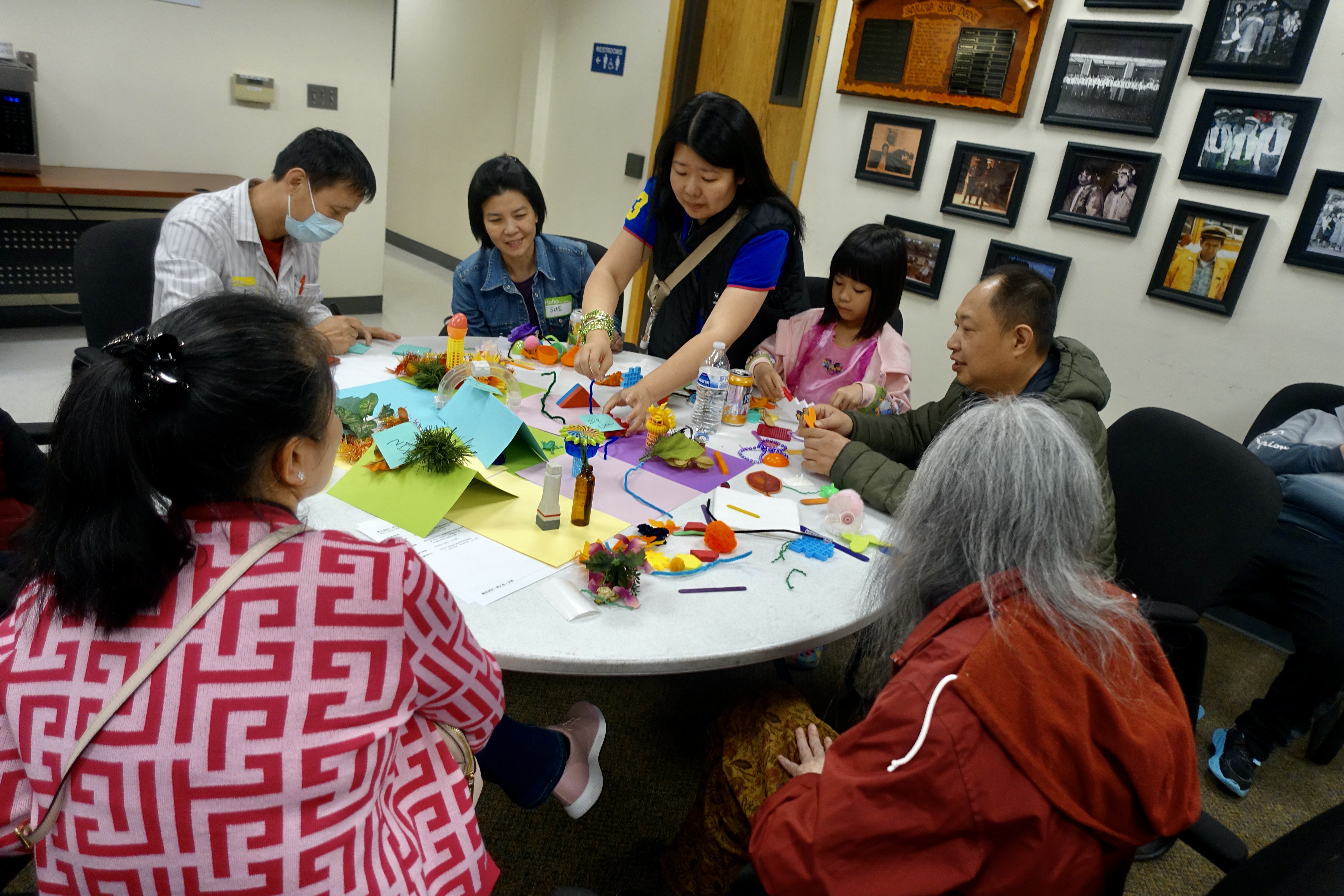
The project team piloted these recommendations through three play-based workshops across the county, which generated feedback from a broad audience that identified themes and community priorities to inform project goals. PHD’s Community Liaison team leveraged existing relationships to partner with the disability community, Eastern European and Latine communities, and others to plan the workshops. The workshops included live interpretation in multiple languages, meals, stipends for participants, and entrusted partners promote and lead the event. The content and structure of the workshops provided information and activities in a fun and accessible way that left participants smiling and interested in future engagement opportunities.
 

Clackamas County engagement efforts reached demographic identities not typically seen at government meetings. According to their data, approximately 25% of participants identified as having a disability, 50% as a refugee or immigrant, and about 75% spoke a language other than English at home. The County also reached a younger demographic than those who typically engage in long-range planning opportunities.
 

These events informed the county's "Framework for Engagement and Decision-making with Underserved Populations". This new framework will inform not only the TSP update which began in July 2025, but other long-range planning processes as well.
 

“One of the best practices the CIAC supports is using the community’s time and input thoughtfully and efficiently. Clackamas County’s partnership between different parts of county government is a great example of that”, said CIAC Chair Leah Rausch. “It’s the first of its kind that we’ve seen in an ACE Award application. The community co-design and broad application of their framework really set this project apart.”
 

DLCD staff liaison to the committee, Sadie Carney, said “With the ACE Awards, the CIAC continues to build a body of promising practices that communities throughout Oregon can learn from and build on. Every application we receive for the ACE Awards is worthy of celebrating, which we do through the DLCD website and social media.” The DLCD website includes a description of all five projects included in this year’s round of applications.

Community engagement is a fundamental and unique part of Oregon's land use planning system. The Land Conservation and Development Commission is committed to uplifting and celebrating the values of Statewide Planning Goal 1 for equitable community engagement through the ACE Awards and other activities.
Clackamas County Recognized With 2026 Achievement In Community Engagement Award (Photo) - 06/11/26

SALEM - The State’s Community Involvement Advisory Committee (CIAC), staffed by the Department of Land Conservation and Development (DLCD), helps to facilitate equitable community engagement in comprehensive land use planning. Each year, the CIAC accepts applications for the Achievement in Community Engagement (ACE) Awards. The ACE Awards recognize excellence in engaging communities in the land use planning process. The committee is pleased to recognize Clackamas County’s planning project, “Developing the Framework for Engagement and Decision-making with Underserved Populations for the Clackamas County 2045 Transportation System Plan Update” with its 2026 Achievement in Community Engagement (ACE) Award.
 

With support from an $88,500 DLCD Climate Friendly and Equitable Communities Grant for equitable engagement, Clackamas County created a partnership between the Department of Transportation and Development (DTD) and Public Health Division (PHD). The two departments collaborated on equitable engagement activities for the Transportation System Plan (TSP) update. A central goal of the long range planning project was to elevate community voices in local decision-making, especially those in underrepresented communities and those who are disabled.
 

The two county departments collaborated to develop an engagement and decision-making framework based on the knowledge and connections of community liaisons and supported by data analysis.

“This project built upon a long-standing partnership between DTD and PHD to incorporate public health principles into our transportation work”, said Mike Bezner, Assistant Director of DTD. “But this is the first time we’ve had dedicated resources to bring in additional public health staff like the community liaisons to take our collaboration to a deeper level.”
 

“Our community liaisons have strong ties to some of our most vulnerable and historically underrepresented communities, and while they may not be transportation experts, they have established trust to bring them into processes like this. It’s an exciting partnership between the two divisions that leverages each of our strengths to create an outcome that reflects the values of our diverse community here in Clackamas County”, added Kim La Croix, Clackamas County Public Health Director.
 

The project team piloted these recommendations through three play-based workshops across the county, which generated feedback from a broad audience that identified themes and community priorities to inform project goals. PHD’s Community Liaison team leveraged existing relationships to partner with the disability community, Eastern European and Latine communities, and others to plan the workshops. The workshops included live interpretation in multiple languages, meals, stipends for participants, and entrusted partners promote and lead the event. The content and structure of the workshops provided information and activities in a fun and accessible way that left participants smiling and interested in future engagement opportunities.
 

Clackamas County engagement efforts reached demographic identities not typically seen at government meetings. According to their data, approximately 25% of participants identified as having a disability, 50% as a refugee or immigrant, and about 75% spoke a language other than English at home. The County also reached a younger demographic than those who typically engage in long-range planning opportunities.
 

These events informed the county's "Framework for Engagement and Decision-making with Underserved Populations". This new framework will inform not only the TSP update which began in July 2025, but other long-range planning processes as well.
 

“One of the best practices the CIAC supports is using the community’s time and input thoughtfully and efficiently. Clackamas County’s partnership between different parts of county government is a great example of that”, said CIAC Chair Leah Rausch. “It’s the first of its kind that we’ve seen in an ACE Award application. The community co-design and broad application of their framework really set this project apart.”
 

DLCD staff liaison to the committee, Sadie Carney, said “With the ACE Awards, the CIAC continues to build a body of promising practices that communities throughout Oregon can learn from and build on. Every application we receive for the ACE Awards is worthy of celebrating, which we do through the DLCD website and social media.” The DLCD website includes a description of all five projects included in this year’s round of applications.

Community engagement is a fundamental and unique part of Oregon's land use planning system. The Land Conservation and Development Commission is committed to uplifting and celebrating the values of Statewide Planning Goal 1 for equitable community engagement through the ACE Awards and other activities.