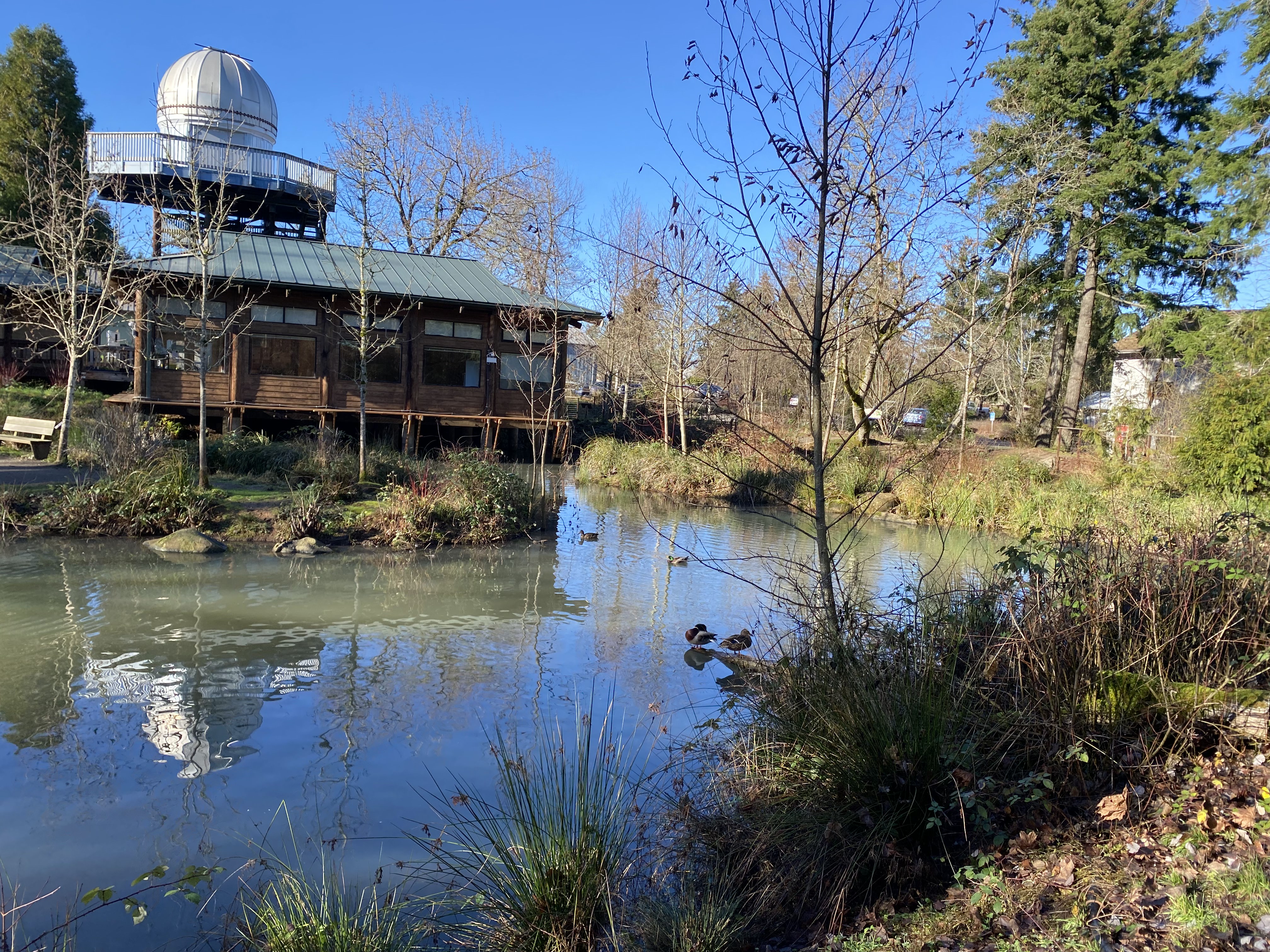
CCC Offers Free Wildlife- And Water-friendly Garden Series (Photo)
- 01/06/26
OREGON CITY – The Clackamas Community College Environmental Learning Center is hosting free weekly wildlife- and water-friendly garden workshops – with an emphasis on Indigenous Traditional Ecological Knowledge. Each week, a range of tribal members and organizations will present on practices that focus on protecting wildlife and watershed health from an Indigenous perspective. Workshops will be held virtually Thursdays, Jan. 8-Feb. 19, noon-1 p.m. Learn more about the workshops at https://bit.ly/ELCgardenseries2026.
The workshop topics include:
- Jan. 8 – Indigenous perspectives
- Jan. 15 – Landscape and first foods
- Jan. 22 – Medicinal plants
- Jan. 29 – Introduction to Indigenous Knowledge and Traditional Ecological Knowledge and how they are used to make tribal resource management decisions
- Feb. 5 – Presentation by Ecotrust
- Feb. 12 – Reconstructing Willamette Valley environments
- Feb. 19 – Indigenous partnerships and restoration
For questions, email michelle.scholz@clackamas.edu. The workshop series is sponsored by Clackamas County Water Environment Services and in partnership with Clackamas River Basin Council, Clackamas River Water Providers, Oak Lodge Water Services, Clackamas Soil and Water Conservation District, Tryon Creek Council and Greater Oregon City Watershed Council.
About the Environmental Learning Center
The Environmental Learning Center has a rich history as an educational resource for Clackamas Community College, regional schools, industry and the community. Located on the former site of a Smucker's processing plant, the center was created to demonstrate what people could do to reclaim industrial sites, address stormwater issues and restore wildlife habitats in urban areas. Each year, thousands of people visit to explore the 5-acre site and learn about watershed health. The site serves as an important stormwater facility for the college campus and provides critical wetland habitat for resident and migratory birds, such as the great blue herons, cedar waxwings and mergansers. For more information about the Environmental Learning Center, visit CCC's Environmental Learning Center webpage.
-30-
CCC Offers Free Wildlife- And Water-friendly Garden Series (Photo)
- 01/06/26
OREGON CITY – The Clackamas Community College Environmental Learning Center is hosting free weekly wildlife- and water-friendly garden workshops – with an emphasis on Indigenous Traditional Ecological Knowledge. Each week, a range of tribal members and organizations will present on practices that focus on protecting wildlife and watershed health from an Indigenous perspective. Workshops will be held virtually Thursdays, Jan. 8-Feb. 19, noon-1 p.m. Learn more about the workshops at https://bit.ly/ELCgardenseries2026.
The workshop topics include:
- Jan. 8 – Indigenous perspectives
- Jan. 15 – Landscape and first foods
- Jan. 22 – Medicinal plants
- Jan. 29 – Introduction to Indigenous Knowledge and Traditional Ecological Knowledge and how they are used to make tribal resource management decisions
- Feb. 5 – Presentation by Ecotrust
- Feb. 12 – Reconstructing Willamette Valley environments
- Feb. 19 – Indigenous partnerships and restoration
For questions, email michelle.scholz@clackamas.edu. The workshop series is sponsored by Clackamas County Water Environment Services and in partnership with Clackamas River Basin Council, Clackamas River Water Providers, Oak Lodge Water Services, Clackamas Soil and Water Conservation District, Tryon Creek Council and Greater Oregon City Watershed Council.
About the Environmental Learning Center
The Environmental Learning Center has a rich history as an educational resource for Clackamas Community College, regional schools, industry and the community. Located on the former site of a Smucker's processing plant, the center was created to demonstrate what people could do to reclaim industrial sites, address stormwater issues and restore wildlife habitats in urban areas. Each year, thousands of people visit to explore the 5-acre site and learn about watershed health. The site serves as an important stormwater facility for the college campus and provides critical wetland habitat for resident and migratory birds, such as the great blue herons, cedar waxwings and mergansers. For more information about the Environmental Learning Center, visit CCC's Environmental Learning Center webpage.
-30-