Oregon Department of Emergency Management (OEM)

Emergency Messages as of 10:23 AM, Sat. Jul 18

No information currently posted.

logo

Subscribe to receive FlashAlert messages from Oregon Department of Emergency Management (OEM).

News Release

State Emergency Coordination Center Activates To Level 3 For Wildfire Season - 07/17/26


Gilliam County Sheriff's Office HOAG FIRE

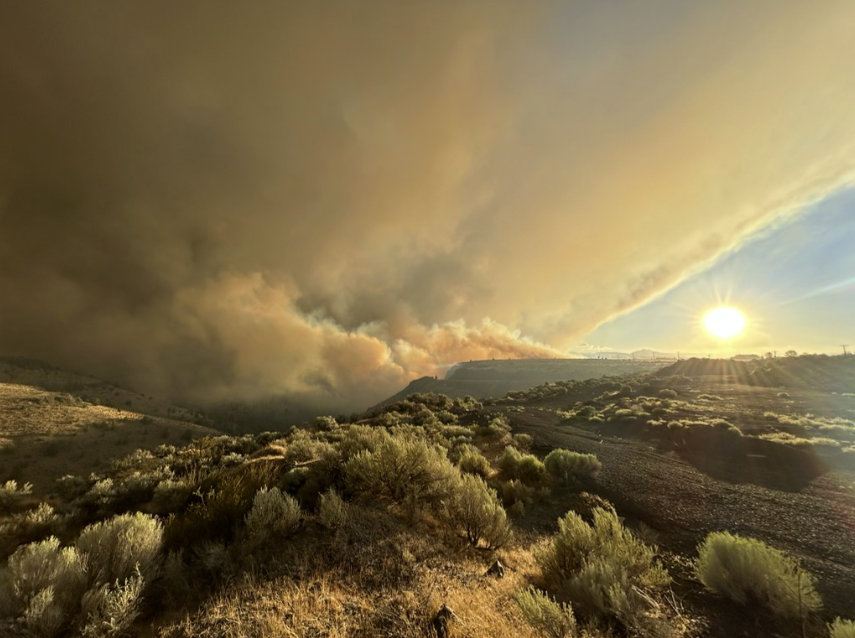
Photo of the HOAG FIRE, courtesy of the Gilliam County Sheriff's Office


SALEM, Ore. — The Oregon Department of Emergency Management (OEM) has activated the State Emergency Coordination Center (ECC) as of 8 a.m. on July 17, 2026, escalating to Level 3: Regional Response as wildfire conditions intensify across the state. At this time, the activation will be conducted in a hybrid format.

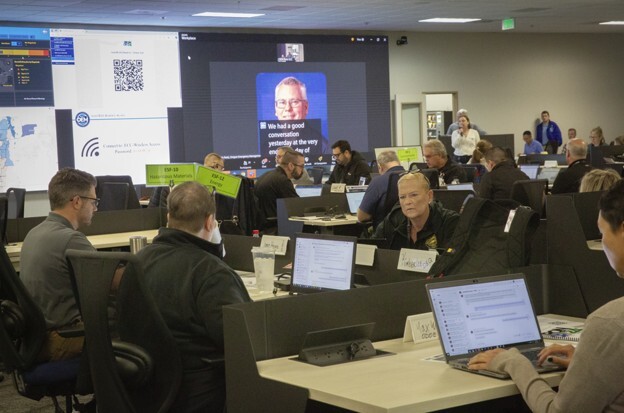
This activation allows OEM and partner agencies to increase coordination, situational awareness and resource support as wildfire danger escalates. Representatives from key state agencies will staff the ECC virtually to streamline communication and ensure timely assistance to affected communities.

Wildfire Conditions Across Oregon

Hot, dry weather and increasing winds are contributing to elevated fire danger in multiple regions. Several areas have entered Red Flag Warnings and Fire Weather Watches, with additional alerts expected as conditions worsen. Rapid fire spread, reduced visibility from smoke, and strain on local response resources remain ongoing concerns.

OEM urges people in Oregon to stay alert, take precautions to reduce wildfire risk, and be ready to act quickly should evacuation levels change.

Wildfire Safety and Preparedness

Evacuation Readiness

Evacuations are currently happening in many communities around the state, and this emphasizes the importance of being ready at any time. Pack now to avoid a panicked rush at the last second.

Pack Your Go-bags

A go-bag contains essential items you may need to take with you in a hurry. Each household member (human and animal) should have an easy-to-carry, grab and go, emergency bag. Read more about wildfire preparation here.

Understand evacuation levels

  1. Be Ready – Prepare to evacuate.
  2. Be Set – Be ready to leave at a moment’s notice.
  3. GO NOW – Leave immediately; danger is imminent.

Stay Informed

  • Sign up for emergency alerts at gov and ensure Wireless Emergency Alerts are enabled on your mobile device.
  • Monitor weather and fire updates through trusted sources such as local emergency managers, county sheriffs’ offices, the Oregon State Fire Marshal, and federal land management agencies.
  • Check road conditions at com or by calling 511.
  • View real-time hazard updates, maps, and fire information through OEM’s Wildfire Dashboard.
  • Follow your county’s office of emergency management and OEM on social media.

Stay Connected

Visit Wildfire.oregon.gov to access wildfire preparedness resources, visit the OEM website to sign up for agency updates, and learn how to Be 2 Weeks Ready for any disaster.

State Emergency Coordination Center Activates To Level 3 For Wildfire Season - 07/17/26


Gilliam County Sheriff's Office HOAG FIRE

Photo of the HOAG FIRE, courtesy of the Gilliam County Sheriff's Office


SALEM, Ore. — The Oregon Department of Emergency Management (OEM) has activated the State Emergency Coordination Center (ECC) as of 8 a.m. on July 17, 2026, escalating to Level 3: Regional Response as wildfire conditions intensify across the state. At this time, the activation will be conducted in a hybrid format.

This activation allows OEM and partner agencies to increase coordination, situational awareness and resource support as wildfire danger escalates. Representatives from key state agencies will staff the ECC virtually to streamline communication and ensure timely assistance to affected communities.

Wildfire Conditions Across Oregon

Hot, dry weather and increasing winds are contributing to elevated fire danger in multiple regions. Several areas have entered Red Flag Warnings and Fire Weather Watches, with additional alerts expected as conditions worsen. Rapid fire spread, reduced visibility from smoke, and strain on local response resources remain ongoing concerns.

OEM urges people in Oregon to stay alert, take precautions to reduce wildfire risk, and be ready to act quickly should evacuation levels change.

Wildfire Safety and Preparedness

Evacuation Readiness

Evacuations are currently happening in many communities around the state, and this emphasizes the importance of being ready at any time. Pack now to avoid a panicked rush at the last second.

Pack Your Go-bags

A go-bag contains essential items you may need to take with you in a hurry. Each household member (human and animal) should have an easy-to-carry, grab and go, emergency bag. Read more about wildfire preparation here.

Understand evacuation levels

  1. Be Ready – Prepare to evacuate.
  2. Be Set – Be ready to leave at a moment’s notice.
  3. GO NOW – Leave immediately; danger is imminent.

Stay Informed

  • Sign up for emergency alerts at gov and ensure Wireless Emergency Alerts are enabled on your mobile device.
  • Monitor weather and fire updates through trusted sources such as local emergency managers, county sheriffs’ offices, the Oregon State Fire Marshal, and federal land management agencies.
  • Check road conditions at com or by calling 511.
  • View real-time hazard updates, maps, and fire information through OEM’s Wildfire Dashboard.
  • Follow your county’s office of emergency management and OEM on social media.

Stay Connected

Visit Wildfire.oregon.gov to access wildfire preparedness resources, visit the OEM website to sign up for agency updates, and learn how to Be 2 Weeks Ready for any disaster.

OEM Announces Publication Of Oregon’s Comprehensive Recovery Plan - 07/16/26

Salem, Ore—The Oregon Department of Emergency Management (OEM) is pleased to announce the approval and publication of the Recovery Support Function (RSF) annexes, completing the Oregon Disaster Recovery Plan (ODRP), Volume IV of the State of Oregon Comprehensive Emergency Management Plan (CEMP). With these annexes finalized, Oregon now has a fully comprehensive statewide recovery plan aligned with the National Incident Management System (NIMS) and the National Disaster Recovery Framework (NDRF). This timing is critical for fire season and the upcoming October state‑level exercise, Lahar’d Times.


“The Oregon Disaster Recovery Plan strengthens our state's ability to support communities when disaster strikes,” OEM Disaster Recovery Program Manager Quinn Butler said. “With the RSF annexes now in place, Oregon has a complete, coordinated, and equitable approach to recovery that ensures communities have the resources they need to rebuild stronger and more resilient. This work could not have been accomplished without the tremendous support and collaboration of our state agency partners.”


The ODRP and its newly finalized annexes were developed under the authority of Oregon Revised Statutes Chapter 401 and align with the National Disaster Recovery Framework published by the Federal Emergency Management Agency (FEMA). The plan reflects lessons learned from recent disasters, including the 2020 Labor Day Wildfires, and incorporates best practices to support Oregon in managing recovery operations effectively.


“Across Oregon, communities are facing multiple wildfires, and moments like these remind us why preparation matters,” OEM Director Erin McMahon said. “This fully complete recovery plan reflects the collective work and dedication of numerous state agencies. This work, combined with recent legislative actions that created new state grant programs to support both public and individual assistance—programs we hope will be fully funded in the next biennium—places Oregon in the strongest position it has ever been to help Oregonians recover after disaster.”


The ODRP provides an all‑hazards, scalable outline of statewide recovery operations that can be implemented for incidents of varying size and complexity. Key components include:


Recovery Organization: Roles and responsibilities for state, local, Tribal, and federal partners and the organizational structures used during recovery.


Recovery Concept of Operations: How recovery activities are organized, coordinated, and managed at the state level, including the recovery continuum and the transition from response to recovery.


Equity Vision: A commitment to ensuring recovery efforts meet the needs of disproportionately impacted communities and promote accessible, inclusive solutions.


Recovery Support Functions (RSFs): Seven RSFs—Community Assistance, Economic Recovery, Health Services, Human Services, Disaster Housing, Infrastructure Systems, and Natural and Cultural Resources—each now supported by detailed governing annexes that outline capabilities, coordination structures, and responsibilities.

Why It Matters

Wildfires, floods, landslides, winter storms and other disasters can have long‑lasting impacts across Oregon. With the RSF annexes now approved, Oregon has a fully comprehensive recovery plan that provides clear guidance for restoring essential services, rebuilding infrastructure, and supporting economic, health, housing, social, and environmental recovery.

The plan emphasizes whole‑community collaboration across government, Tribal Nations, nonprofits, businesses and residents to ensure recovery is locally driven and state supported.

Next Steps

With the governing annexes now published, OEM will:

  • Convene quarterly meetings with recovery partners to maintain alignment and readiness.
  • Provide technical assistance, training, exercises, and funding opportunities to local and Tribal jurisdictions to support whole‑community recovery planning and capacity building.
  • Continue developing and implementing recovery strategies to help communities strengthen resilience before and after disasters.
  • Exercise the full recovery plan during the statewide exercise Lahar’d Times in October, focusing on post‑volcanic event recovery processes outlined in the ODRP and its RSF annexes.

What You Can Do

Community members can support recovery readiness by connecting with local emergency management offices, participating in local volunteer programs and ensuring personal preparedness:

  • Review insurance coverage for hazards in your region.
  • Use OEM’s Be2WeeksReady Toolkit to prepare your household.
  • Join CERT or your county’s volunteer search and rescue team.
  • Become a Search and Rescue volunteer with your local sheriff’s office.
  • Do an annual insurance check-up to ensure you have adequate coverage for all hazards—remember to confirm you have flood and wildfire insurance.
  • Develop a personal PACE communications plan. What is your primary contact information, what is your alternative, contingent, emergency. You and your family should have multiple ways to connect in an emergency.

Recovery is a whole‑community effort, and every action taken before a disaster strengthens Oregon’s ability to recover afterward.


The following agencies greatly assisted with the creation of the Oregon Disaster Recovery Plan and its Annexes:  Business Oregon, Bureau of Labor and Industries, Department of Administrative Services, Department of Consumer and Business Serv ices, Department of Corrections, Department of Environmental Quality, Department of Land Conservation and Development, Department of State Lands, Higher Education Coordinating Commission, Oregon Department of Agriculture supports, Oregon Department of Education, Oregon Department of Energy, Oregon Department of Fish and Wildlife, Oregon Department of Forestry, Oregon Department of Geology and Mineral Industries, Oregon Department of Human Services, Oregon Department of Justice, Oregon Department of Transportation, Oregon Department of Veterans' Affairs, Oregon Department of Emergency Management – Statewide Interoperability Coordinator, Oregon Health Authority, Oregon Medical Board, Oregon Parks and Recreation Department / State Historic Preservation Office, Oregon Public Utility Commission, Oregon State Fire Marshal, Oregon State Marine Board, Oregon State Police, Oregon State University Extension, Oregon Water Resources Department, Oregon Watershed Enhancement Board, Oregon Youth Authority, Regional Solutions Team, Secretary of State and Travel Oregon. 

OEM Announces Publication Of Oregon’s Comprehensive Recovery Plan - 07/16/26

Salem, Ore—The Oregon Department of Emergency Management (OEM) is pleased to announce the approval and publication of the Recovery Support Function (RSF) annexes, completing the Oregon Disaster Recovery Plan (ODRP), Volume IV of the State of Oregon Comprehensive Emergency Management Plan (CEMP). With these annexes finalized, Oregon now has a fully comprehensive statewide recovery plan aligned with the National Incident Management System (NIMS) and the National Disaster Recovery Framework (NDRF). This timing is critical for fire season and the upcoming October state‑level exercise, Lahar’d Times.


“The Oregon Disaster Recovery Plan strengthens our state's ability to support communities when disaster strikes,” OEM Disaster Recovery Program Manager Quinn Butler said. “With the RSF annexes now in place, Oregon has a complete, coordinated, and equitable approach to recovery that ensures communities have the resources they need to rebuild stronger and more resilient. This work could not have been accomplished without the tremendous support and collaboration of our state agency partners.”


The ODRP and its newly finalized annexes were developed under the authority of Oregon Revised Statutes Chapter 401 and align with the National Disaster Recovery Framework published by the Federal Emergency Management Agency (FEMA). The plan reflects lessons learned from recent disasters, including the 2020 Labor Day Wildfires, and incorporates best practices to support Oregon in managing recovery operations effectively.


“Across Oregon, communities are facing multiple wildfires, and moments like these remind us why preparation matters,” OEM Director Erin McMahon said. “This fully complete recovery plan reflects the collective work and dedication of numerous state agencies. This work, combined with recent legislative actions that created new state grant programs to support both public and individual assistance—programs we hope will be fully funded in the next biennium—places Oregon in the strongest position it has ever been to help Oregonians recover after disaster.”


The ODRP provides an all‑hazards, scalable outline of statewide recovery operations that can be implemented for incidents of varying size and complexity. Key components include:


Recovery Organization: Roles and responsibilities for state, local, Tribal, and federal partners and the organizational structures used during recovery.


Recovery Concept of Operations: How recovery activities are organized, coordinated, and managed at the state level, including the recovery continuum and the transition from response to recovery.


Equity Vision: A commitment to ensuring recovery efforts meet the needs of disproportionately impacted communities and promote accessible, inclusive solutions.


Recovery Support Functions (RSFs): Seven RSFs—Community Assistance, Economic Recovery, Health Services, Human Services, Disaster Housing, Infrastructure Systems, and Natural and Cultural Resources—each now supported by detailed governing annexes that outline capabilities, coordination structures, and responsibilities.

Why It Matters

Wildfires, floods, landslides, winter storms and other disasters can have long‑lasting impacts across Oregon. With the RSF annexes now approved, Oregon has a fully comprehensive recovery plan that provides clear guidance for restoring essential services, rebuilding infrastructure, and supporting economic, health, housing, social, and environmental recovery.

The plan emphasizes whole‑community collaboration across government, Tribal Nations, nonprofits, businesses and residents to ensure recovery is locally driven and state supported.

Next Steps

With the governing annexes now published, OEM will:

  • Convene quarterly meetings with recovery partners to maintain alignment and readiness.
  • Provide technical assistance, training, exercises, and funding opportunities to local and Tribal jurisdictions to support whole‑community recovery planning and capacity building.
  • Continue developing and implementing recovery strategies to help communities strengthen resilience before and after disasters.
  • Exercise the full recovery plan during the statewide exercise Lahar’d Times in October, focusing on post‑volcanic event recovery processes outlined in the ODRP and its RSF annexes.

What You Can Do

Community members can support recovery readiness by connecting with local emergency management offices, participating in local volunteer programs and ensuring personal preparedness:

  • Review insurance coverage for hazards in your region.
  • Use OEM’s Be2WeeksReady Toolkit to prepare your household.
  • Join CERT or your county’s volunteer search and rescue team.
  • Become a Search and Rescue volunteer with your local sheriff’s office.
  • Do an annual insurance check-up to ensure you have adequate coverage for all hazards—remember to confirm you have flood and wildfire insurance.
  • Develop a personal PACE communications plan. What is your primary contact information, what is your alternative, contingent, emergency. You and your family should have multiple ways to connect in an emergency.

Recovery is a whole‑community effort, and every action taken before a disaster strengthens Oregon’s ability to recover afterward.


The following agencies greatly assisted with the creation of the Oregon Disaster Recovery Plan and its Annexes:  Business Oregon, Bureau of Labor and Industries, Department of Administrative Services, Department of Consumer and Business Serv ices, Department of Corrections, Department of Environmental Quality, Department of Land Conservation and Development, Department of State Lands, Higher Education Coordinating Commission, Oregon Department of Agriculture supports, Oregon Department of Education, Oregon Department of Energy, Oregon Department of Fish and Wildlife, Oregon Department of Forestry, Oregon Department of Geology and Mineral Industries, Oregon Department of Human Services, Oregon Department of Justice, Oregon Department of Transportation, Oregon Department of Veterans' Affairs, Oregon Department of Emergency Management – Statewide Interoperability Coordinator, Oregon Health Authority, Oregon Medical Board, Oregon Parks and Recreation Department / State Historic Preservation Office, Oregon Public Utility Commission, Oregon State Fire Marshal, Oregon State Marine Board, Oregon State Police, Oregon State University Extension, Oregon Water Resources Department, Oregon Watershed Enhancement Board, Oregon Youth Authority, Regional Solutions Team, Secretary of State and Travel Oregon.