Oregon Parks and Recreation Dept.

Emergency Messages as of 8:07 PM, Thu. Apr 2

No information currently posted.

logo

Subscribe to receive FlashAlert messages from Oregon Parks and Recreation Dept..

News Release

National Cultural Heritage Leader Monica Rhodes To Keynote Upcoming Conference (Photo) - 04/02/26

SALEM, Oregon – Oregon Heritage is pleased to announce that internationally recognized cultural heritage leader Monica Rhodes will deliver a keynote address on April 29th at the upcoming Oregon Heritage Conference, inviting attendees to explore how preservation must evolve to meet the challenges of the future.


Rhodes, Founder of Rhodes Heritage Group, is widely known for advancing new approaches to cultural preservation at the intersection of people, place, and capital. Her work has influenced national policy, expanded access to preservation practice, and engaged millions in reimagining how history shapes the future.


Her keynote, “The Next Assignment: Why the Future Will Ask More of Us,” will challenge attendees to reconsider traditional approaches to preservation in an era shaped by artificial intelligence, climate instability, and growing public demand for complete storytelling. “We are entering unfamiliar futurescapes where the past is unstable, contested, and uncertain,” Rhodes notes.


A Rome Prize Fellow and Harvard Loeb Fellow, Rhodes has advised the White House on cultural heritage policy and serves on the board of the International Council on Monuments and Sites. Her work has been featured in national media outlets including The Washington Post, PBS NewsHour, This Old House, and Architectural Digest.


Attendees will have the opportunity to hear directly from Rhodes and engage with forward-looking ideas that connect historic preservation to civic innovation, community voice, and long-term resilience. Registration for the conference is now open. Registration is available to see Monica Rhodes only or to attend other conference sessions as well. To learn more and register to attend, visit Oregon Heritage Conference 2026.


Attached Media Files: M.Rhodes_Headshot.jpeg,

National Cultural Heritage Leader Monica Rhodes To Keynote Upcoming Conference (Photo) - 04/02/26

SALEM, Oregon – Oregon Heritage is pleased to announce that internationally recognized cultural heritage leader Monica Rhodes will deliver a keynote address on April 29th at the upcoming Oregon Heritage Conference, inviting attendees to explore how preservation must evolve to meet the challenges of the future.


Rhodes, Founder of Rhodes Heritage Group, is widely known for advancing new approaches to cultural preservation at the intersection of people, place, and capital. Her work has influenced national policy, expanded access to preservation practice, and engaged millions in reimagining how history shapes the future.


Her keynote, “The Next Assignment: Why the Future Will Ask More of Us,” will challenge attendees to reconsider traditional approaches to preservation in an era shaped by artificial intelligence, climate instability, and growing public demand for complete storytelling. “We are entering unfamiliar futurescapes where the past is unstable, contested, and uncertain,” Rhodes notes.


A Rome Prize Fellow and Harvard Loeb Fellow, Rhodes has advised the White House on cultural heritage policy and serves on the board of the International Council on Monuments and Sites. Her work has been featured in national media outlets including The Washington Post, PBS NewsHour, This Old House, and Architectural Digest.


Attendees will have the opportunity to hear directly from Rhodes and engage with forward-looking ideas that connect historic preservation to civic innovation, community voice, and long-term resilience. Registration for the conference is now open. Registration is available to see Monica Rhodes only or to attend other conference sessions as well. To learn more and register to attend, visit Oregon Heritage Conference 2026.


Attached Media Files: M.Rhodes_Headshot.jpeg,

Final State Recreational Trails Plan Approved - 04/01/26

SALEM, Oregon— At their February meeting, the Oregon Parks and Recreation Commission approved the final 2026 Oregon Recreational Trails Plan, which outlines trends and issues, creates priorities for grant funding and recommends actions to improve trails on public land in Oregon over the next 10 years.


To support implementation of the Trails Plan, the Oregon Parks and Recreation Department also developed a new technical resources website for recreation and trail planning: https://www.oregon.gov/oprd/BWT/Pages/Technical-Resources-for-Recreation-Planning.aspx


“We appreciate the time and energy trail users and partners have put into helping us develop the next trails plan, which will guide investments to make our trails even better in the future,” said Oregon Parks and Recreation Department’s Statewide Trails Planner Jessica Horning.


“Each year, more than 80% of Oregonians use trails across the state, generating over $890 million in spending at local businesses and contributing to Oregon’s overall economy.”


The Oregon Recreational Trails Plan covers non-motorized trails (hiking, biking, equestrian), motorized ATV trails, snowmobile trails, and non-motorized boating and water trails. It helps provide guidance to not only Oregon Parks and Recreation Department, but to federal, state and local agencies as well as private sector partners.


Information for the plan came from multiple sources including statewide surveys of trail users and recreation providers conducted in October 2024 and April 2025, multiple focus groups with specific user groups, workshops at the 2024 and 2025 Oregon Outdoor Recreation Summit, and the Statewide Comprehensive Outdoor Recreation Plan (SCORP), which is published every five years.


With commission approval of the 2026 Plan, State Parks staff will update Recreational Trails Program and ATV Grant criteria to be consistent with the plan. Updated grant criteria will be applied to both grant program’s next solicitations in Fall 2026.


For questions about the draft Oregon Trails Plan, please visit our website or contact OPRD Statewide Trails Planner Jessica Horning at Jessica.r.horning@oprd.oregon.gov.  


###

Final State Recreational Trails Plan Approved - 04/01/26

SALEM, Oregon— At their February meeting, the Oregon Parks and Recreation Commission approved the final 2026 Oregon Recreational Trails Plan, which outlines trends and issues, creates priorities for grant funding and recommends actions to improve trails on public land in Oregon over the next 10 years.


To support implementation of the Trails Plan, the Oregon Parks and Recreation Department also developed a new technical resources website for recreation and trail planning: https://www.oregon.gov/oprd/BWT/Pages/Technical-Resources-for-Recreation-Planning.aspx


“We appreciate the time and energy trail users and partners have put into helping us develop the next trails plan, which will guide investments to make our trails even better in the future,” said Oregon Parks and Recreation Department’s Statewide Trails Planner Jessica Horning.


“Each year, more than 80% of Oregonians use trails across the state, generating over $890 million in spending at local businesses and contributing to Oregon’s overall economy.”


The Oregon Recreational Trails Plan covers non-motorized trails (hiking, biking, equestrian), motorized ATV trails, snowmobile trails, and non-motorized boating and water trails. It helps provide guidance to not only Oregon Parks and Recreation Department, but to federal, state and local agencies as well as private sector partners.


Information for the plan came from multiple sources including statewide surveys of trail users and recreation providers conducted in October 2024 and April 2025, multiple focus groups with specific user groups, workshops at the 2024 and 2025 Oregon Outdoor Recreation Summit, and the Statewide Comprehensive Outdoor Recreation Plan (SCORP), which is published every five years.


With commission approval of the 2026 Plan, State Parks staff will update Recreational Trails Program and ATV Grant criteria to be consistent with the plan. Updated grant criteria will be applied to both grant program’s next solicitations in Fall 2026.


For questions about the draft Oregon Trails Plan, please visit our website or contact OPRD Statewide Trails Planner Jessica Horning at Jessica.r.horning@oprd.oregon.gov.  


###

New Rule Advisory Committee To Discuss Updates To The County Opportunity Grant Program Rules - 03/30/26

SALEM, Oregon— A new Rule Advisory Committee (RAC) will review proposed updates to the County Opportunity Grant Program (COGP) rules and provide feedback on draft rule changes.


The Rule Advisory Committee will meet from 2 to 4 p.m. Monday, April 13. The public can watch the livestream on the OPRD Director’s Office channel on YouTube. A recording will be available after the meeting.


The Rule Advisory Committee includes representatives from local governments, recreation providers and other stakeholders with experience in park and recreation planning, development and management.


Staff will incorporate the committee's feedback into the proposed draft rules and then open them for public comment. Following the public comment period and hearing, staff will present the proposed rules to the Oregon State Parks and Recreation Commission for consideration of adoption.


The County Opportunity Grant Program (COGP), administered by the Oregon Parks and Recreation Department (OPRD), provides financial assistance to counties for the acquisition, development, rehabilitation and planning of county park and recreation areas that provide camping facilities.


OPRD is proposing updates to portions of the rules to reflect modern program practices, improve administrative clarity and ensure consistency with related state and federal grant programs.


The proposed changes include updating definitions, formalizing administrative processes, clarifying grant application requirements and scoring criteria, and increasing administrative flexibility. The proposal also includes adding an emergency procedure rule and a conversion rule to establish long-term stewardship requirements that align COGP with other OPRD grant programs.


The proposed rule changes are intended to update and clarify grant program practices without altering the core purpose or structure of the program.


Interested individuals can follow updates, read the draft rules, and learn more about the rulemaking process on the OPRD rulemaking webpage found here.


###

New Rule Advisory Committee To Discuss Updates To The County Opportunity Grant Program Rules - 03/30/26

SALEM, Oregon— A new Rule Advisory Committee (RAC) will review proposed updates to the County Opportunity Grant Program (COGP) rules and provide feedback on draft rule changes.


The Rule Advisory Committee will meet from 2 to 4 p.m. Monday, April 13. The public can watch the livestream on the OPRD Director’s Office channel on YouTube. A recording will be available after the meeting.


The Rule Advisory Committee includes representatives from local governments, recreation providers and other stakeholders with experience in park and recreation planning, development and management.


Staff will incorporate the committee's feedback into the proposed draft rules and then open them for public comment. Following the public comment period and hearing, staff will present the proposed rules to the Oregon State Parks and Recreation Commission for consideration of adoption.


The County Opportunity Grant Program (COGP), administered by the Oregon Parks and Recreation Department (OPRD), provides financial assistance to counties for the acquisition, development, rehabilitation and planning of county park and recreation areas that provide camping facilities.


OPRD is proposing updates to portions of the rules to reflect modern program practices, improve administrative clarity and ensure consistency with related state and federal grant programs.


The proposed changes include updating definitions, formalizing administrative processes, clarifying grant application requirements and scoring criteria, and increasing administrative flexibility. The proposal also includes adding an emergency procedure rule and a conversion rule to establish long-term stewardship requirements that align COGP with other OPRD grant programs.


The proposed rule changes are intended to update and clarify grant program practices without altering the core purpose or structure of the program.


Interested individuals can follow updates, read the draft rules, and learn more about the rulemaking process on the OPRD rulemaking webpage found here.


###

Oregon Black Pioneers’ Exhibit Runs April 1st Through May 31st At The Moiser Twin Tunnels Visitor Center - 03/24/26

HOOD RIVER, Oregon— Visitors to the visitor center at the Mosier Twin Tunnels within the Historic  Columbia River Highway State Trail can learn about Black Pioneers and early Black history in Oregon at an exhibit that runs through May.


Oregon State Parks partnered with Oregon Black Pioneers to bring the traveling exhibit to the Moiser Twin Tunnels visitor center in the Columbia River Gorge. The visitor center is open Thursday through Monday from 10 a.m. to 2 p.m.


"We are excited to host the Oregon Black Pioneers exhibit at the Mosier Twin Tunnels Mark O. Hatfield West Trailhead Visitor Center. These stories are an essential part of Oregon’s history, and it is our responsibility to ensure they are visible, accessible, and honored. At Oregon State Parks’ Gorge Management Unit, we are committed to uplifting underserved voices and removing barriers that have historically limited access to these narratives,” said Park Manager Jami LeAnne.


“By bringing this exhibit to a public space, we hope to create meaningful opportunities for all visitors to connect with, learn from, and reflect on the diverse experiences that have shaped this region."


The exhibit features eight interpretive panels that highlight just a few of the approximately 400 Black residents who came to Oregon from 1840 to 1870. What little is known came from newspaper articles and public records. Topics include the Oregon Trail, Black exclusion, slavery in Oregon, challenging the laws and land ownership.


The traveling exhibit was created by Oregon Black Pioneers, an African American historical organization that has been preserving the history of Black Oregonians for more than 30 years.

“People of African descent are often left out of the stories of early Oregon," said Oregon Black Pioneers' Executive Director Zachary Stocks, "but this exhibit demonstrates the determination of the first Black men and women to call Oregon home."


People can also view the exhibit online at https://oregonblackpioneers.org/exhibit/the-black-pioneers/ If you are interested in hosting this or other traveling exhibits or would like more information on other resources and services, please reach out to the Oregon Black Pioneers at their website https://oregonblackpioneers.org/


The Historic Columbia River Highway State Trail comprises three disconnected paved paths along stretches of historic Highway 30, which predated I-84 as the only road connecting Portland and The Dalles. Together, the segments offer 12-plus miles of thrilling scenery and spectacular geologic formations. https://stateparks.oregon.gov/index.cfm?do=park.profile&parkId=113


###

Oregon Black Pioneers’ Exhibit Runs April 1st Through May 31st At The Moiser Twin Tunnels Visitor Center - 03/24/26

HOOD RIVER, Oregon— Visitors to the visitor center at the Mosier Twin Tunnels within the Historic  Columbia River Highway State Trail can learn about Black Pioneers and early Black history in Oregon at an exhibit that runs through May.


Oregon State Parks partnered with Oregon Black Pioneers to bring the traveling exhibit to the Moiser Twin Tunnels visitor center in the Columbia River Gorge. The visitor center is open Thursday through Monday from 10 a.m. to 2 p.m.


"We are excited to host the Oregon Black Pioneers exhibit at the Mosier Twin Tunnels Mark O. Hatfield West Trailhead Visitor Center. These stories are an essential part of Oregon’s history, and it is our responsibility to ensure they are visible, accessible, and honored. At Oregon State Parks’ Gorge Management Unit, we are committed to uplifting underserved voices and removing barriers that have historically limited access to these narratives,” said Park Manager Jami LeAnne.


“By bringing this exhibit to a public space, we hope to create meaningful opportunities for all visitors to connect with, learn from, and reflect on the diverse experiences that have shaped this region."


The exhibit features eight interpretive panels that highlight just a few of the approximately 400 Black residents who came to Oregon from 1840 to 1870. What little is known came from newspaper articles and public records. Topics include the Oregon Trail, Black exclusion, slavery in Oregon, challenging the laws and land ownership.


The traveling exhibit was created by Oregon Black Pioneers, an African American historical organization that has been preserving the history of Black Oregonians for more than 30 years.

“People of African descent are often left out of the stories of early Oregon," said Oregon Black Pioneers' Executive Director Zachary Stocks, "but this exhibit demonstrates the determination of the first Black men and women to call Oregon home."


People can also view the exhibit online at https://oregonblackpioneers.org/exhibit/the-black-pioneers/ If you are interested in hosting this or other traveling exhibits or would like more information on other resources and services, please reach out to the Oregon Black Pioneers at their website https://oregonblackpioneers.org/


The Historic Columbia River Highway State Trail comprises three disconnected paved paths along stretches of historic Highway 30, which predated I-84 as the only road connecting Portland and The Dalles. Together, the segments offer 12-plus miles of thrilling scenery and spectacular geologic formations. https://stateparks.oregon.gov/index.cfm?do=park.profile&parkId=113


###

Cherry Blossoms Illuminated At State Capitol State Park March 21 Through April 4 (Photo) - 03/17/26

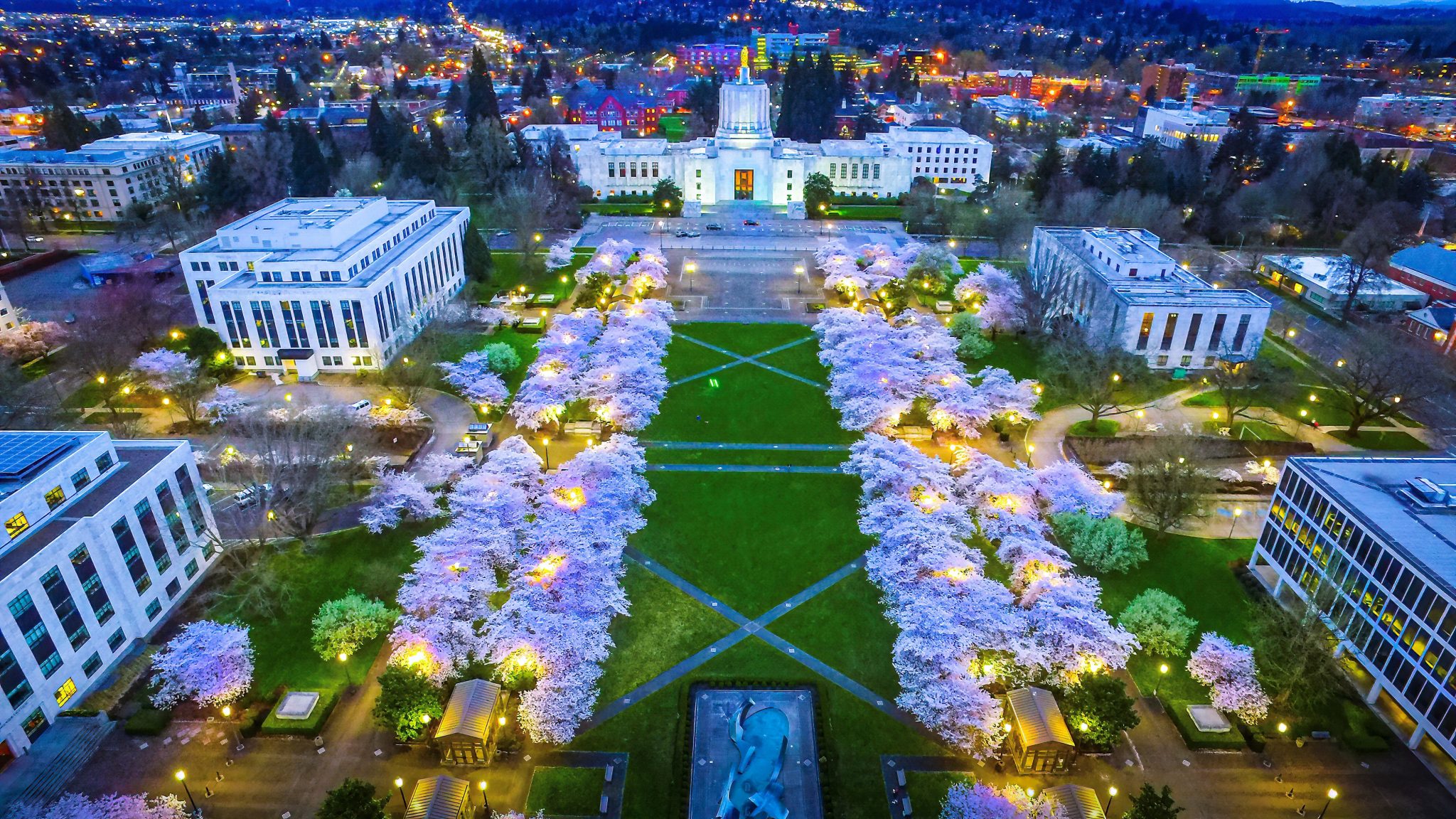
SALEM, Ore.—Oregon Parks and Recreation Department will host “Yozakura,” night viewing of the Akebono cherry blossoms, March 21 through April 4 in the North Mall at State Capitol State Park.


The cherry blossoms will be illuminated with Japanese lanterns and lights nightly from 6-10 p.m. Visitors may bring blankets, camping chairs, or an evening picnic to enjoy under the canopy of the illuminated trees.


The lanterns and lights create a striking and beautiful scene inside the park at night.


The Oregon Parks and Recreation Department will livestream the cherry blossoms on YouTube: https://www.youtube.com/@OregonParks beginning March 21 during the day and evening through April 4.


Park staff ask that tree limbs and blossoms are left as is so everyone can view them throughout the bloom. Alcohol is not allowed in State Capitol State Park (without permits) and the park closes at 10 p.m.


For more information on events at the Capitol, call Visitor Services at 503-986-1388 or visit the events page.


###

Attached Media Files: Cherry blossoms at State Capitol,

Cherry Blossoms Illuminated At State Capitol State Park March 21 Through April 4 (Photo) - 03/17/26

SALEM, Ore.—Oregon Parks and Recreation Department will host “Yozakura,” night viewing of the Akebono cherry blossoms, March 21 through April 4 in the North Mall at State Capitol State Park.


The cherry blossoms will be illuminated with Japanese lanterns and lights nightly from 6-10 p.m. Visitors may bring blankets, camping chairs, or an evening picnic to enjoy under the canopy of the illuminated trees.


The lanterns and lights create a striking and beautiful scene inside the park at night.


The Oregon Parks and Recreation Department will livestream the cherry blossoms on YouTube: https://www.youtube.com/@OregonParks beginning March 21 during the day and evening through April 4.


Park staff ask that tree limbs and blossoms are left as is so everyone can view them throughout the bloom. Alcohol is not allowed in State Capitol State Park (without permits) and the park closes at 10 p.m.


For more information on events at the Capitol, call Visitor Services at 503-986-1388 or visit the events page.


###

Attached Media Files: Cherry blossoms at State Capitol,

Oregon Outdoor Recreation Committee Meets April 3 To Evaluate Grant Applications - 03/16/26

SALEM, Oregon— The Oregon Outdoor Recreation Committee (OORC) will meet April 3 to rank and establish a priority list of Land and Water Conservation Fund grant proposals from around the state for projects to develop and rehabilitate public outdoor recreation areas and facilities. Oregon Parks and Recreation Department (OPRD) administers this federally funded grant program.


The meeting is open to the public but there will not be time for public comments during the meeting.


The meeting will be held online via Zoom. View the agenda for a list of project proposals and meeting information: https://www.oregon.gov/oprd/gra/pages/gra-lwcf.aspx     


Recommendations from the OORC will be submitted to the Oregon State Parks Commission for review and approval at their April 22 meeting. OPRD will then forward approved project proposals to the National Park Service for final approval.


The OORC is made up of nine members who represent a variety of interests and are appointed by the OPRD Director.


The Land and Water Conservation Fund Program is a financial assistance program of the National Park Service. LWCF grants provide matching funds to state and local governments for acquiring and developing public outdoor recreation areas and facilities.


For more information contact Nohemi Enciso, LWCF Grant Program Coordinator, at 503-480-9092 or nohemi.enciso@oprd.oregon.gov, or visit the LWCF webpage on the OPRD website.


###

Oregon Outdoor Recreation Committee Meets April 3 To Evaluate Grant Applications - 03/16/26

SALEM, Oregon— The Oregon Outdoor Recreation Committee (OORC) will meet April 3 to rank and establish a priority list of Land and Water Conservation Fund grant proposals from around the state for projects to develop and rehabilitate public outdoor recreation areas and facilities. Oregon Parks and Recreation Department (OPRD) administers this federally funded grant program.


The meeting is open to the public but there will not be time for public comments during the meeting.


The meeting will be held online via Zoom. View the agenda for a list of project proposals and meeting information: https://www.oregon.gov/oprd/gra/pages/gra-lwcf.aspx     


Recommendations from the OORC will be submitted to the Oregon State Parks Commission for review and approval at their April 22 meeting. OPRD will then forward approved project proposals to the National Park Service for final approval.


The OORC is made up of nine members who represent a variety of interests and are appointed by the OPRD Director.


The Land and Water Conservation Fund Program is a financial assistance program of the National Park Service. LWCF grants provide matching funds to state and local governments for acquiring and developing public outdoor recreation areas and facilities.


For more information contact Nohemi Enciso, LWCF Grant Program Coordinator, at 503-480-9092 or nohemi.enciso@oprd.oregon.gov, or visit the LWCF webpage on the OPRD website.


###

Spring Whale Watch Week Returns To The Oregon Coast For Spring Break 2026 (Photo) - 03/13/26

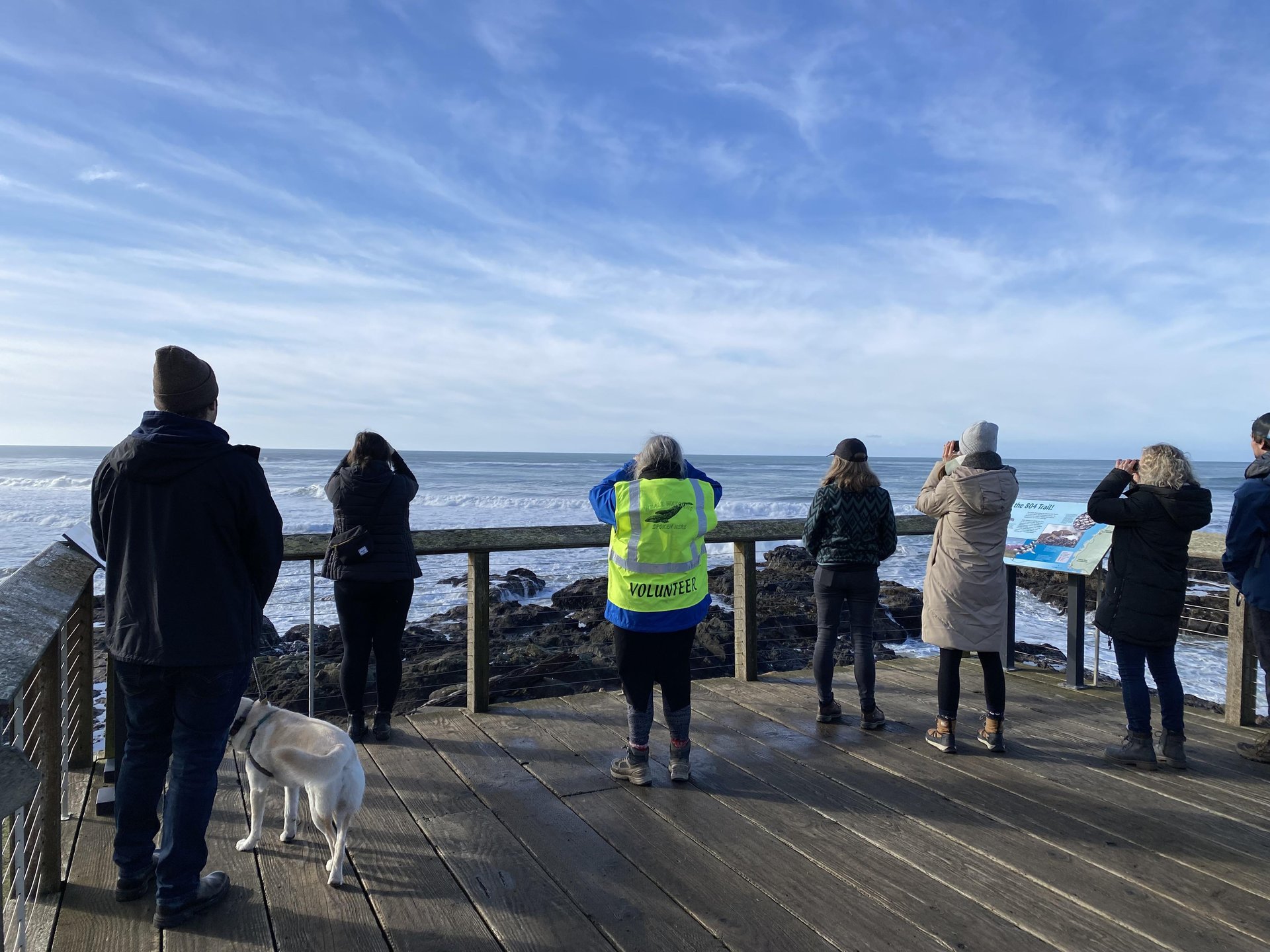
OREGON COAST, Oregon— Oregon State Parks will host Spring Whale Watch Week along the Oregon Coast Saturday, March 21 through Sunday, March 29.


Trained Oregon State Park volunteers and park rangers will be stationed at 15 sites along the Oregon Coast to help visitors spot whales and their calves and answer questions from 10 a.m. to 1 p.m. daily March 21-29. The sites are among the best places to watch whales on the Oregon Coast.


“Spring is a great time for whale watching because the gray whale migration can be a bit closer on their return trip north, usually within a few miles from shore.  As we get later into the spring, we can sometimes see the mothers with calves in tow,” said Park Ranger Peter McBride.


The National Oceanic and Atmospheric Administration (NOAA) estimates 13,000 gray whales are expected to migrate past Oregon’s shores from late winter through June as they travel back toward Alaska, far fewer than earlier projections suggested. Although NOAA declared the Unusual Mortality Event over in 2023 and initially believed the population might be rebounding, new winter 2025 estimates instead show the lowest numbers since the 1970s.


NOAA’s models, which combine visual surveys with migration pattern assumptions, indicate that the 2025 population most likely falls between 11,700 and 14,500 whales.


A map of volunteer-staffed sites is available online on the official event webpage: https://oregonstateparks.org/index.cfm?do=thingstodo.dsp_whaleWatching


The Whale Watching Center in Depoe Bay will be open 10 a.m. to 4 p.m. March 21-29. Visitors to the center can enjoy interactive whale exhibits and take in the panoramic ocean views. Binoculars are provided. Park rangers and volunteers from Oregon State Parks will also be on hand to answer questions about the whales.


All Whale Watch Week visitors are encouraged to dress for the weather, to bring binoculars and to follow beach safety guidelines such as remaining out of fenced areas, knowing the tide schedule and keeping an eye on the surf at all times. Go to https://visittheoregoncoast.com/beach-safety/ for a list of safety tips.


For more information about coast parks and campgrounds, visit stateparks.oregon.gov.


Visitors are encouraged to share their photos and videos from Spring Whale Watch on social media using #OregonStateParks and #ORWhaleWatch.


Media Resources: photos available at this link.


###


Attached Media Files: Yachats State Recreation Area,

Spring Whale Watch Week Returns To The Oregon Coast For Spring Break 2026 (Photo) - 03/13/26

OREGON COAST, Oregon— Oregon State Parks will host Spring Whale Watch Week along the Oregon Coast Saturday, March 21 through Sunday, March 29.


Trained Oregon State Park volunteers and park rangers will be stationed at 15 sites along the Oregon Coast to help visitors spot whales and their calves and answer questions from 10 a.m. to 1 p.m. daily March 21-29. The sites are among the best places to watch whales on the Oregon Coast.


“Spring is a great time for whale watching because the gray whale migration can be a bit closer on their return trip north, usually within a few miles from shore.  As we get later into the spring, we can sometimes see the mothers with calves in tow,” said Park Ranger Peter McBride.


The National Oceanic and Atmospheric Administration (NOAA) estimates 13,000 gray whales are expected to migrate past Oregon’s shores from late winter through June as they travel back toward Alaska, far fewer than earlier projections suggested. Although NOAA declared the Unusual Mortality Event over in 2023 and initially believed the population might be rebounding, new winter 2025 estimates instead show the lowest numbers since the 1970s.


NOAA’s models, which combine visual surveys with migration pattern assumptions, indicate that the 2025 population most likely falls between 11,700 and 14,500 whales.


A map of volunteer-staffed sites is available online on the official event webpage: https://oregonstateparks.org/index.cfm?do=thingstodo.dsp_whaleWatching


The Whale Watching Center in Depoe Bay will be open 10 a.m. to 4 p.m. March 21-29. Visitors to the center can enjoy interactive whale exhibits and take in the panoramic ocean views. Binoculars are provided. Park rangers and volunteers from Oregon State Parks will also be on hand to answer questions about the whales.


All Whale Watch Week visitors are encouraged to dress for the weather, to bring binoculars and to follow beach safety guidelines such as remaining out of fenced areas, knowing the tide schedule and keeping an eye on the surf at all times. Go to https://visittheoregoncoast.com/beach-safety/ for a list of safety tips.


For more information about coast parks and campgrounds, visit stateparks.oregon.gov.


Visitors are encouraged to share their photos and videos from Spring Whale Watch on social media using #OregonStateParks and #ORWhaleWatch.


Media Resources: photos available at this link.


###


Attached Media Files: Yachats State Recreation Area,

Oregon Main Street Recognized With Prosperity Award At The 2026 Oregon Governor’s Conference On Tourism - 03/12/26

SALEM, Oregon – On Monday, March 9, 2026, the Oregon Tourism Commission (dba Travel Oregon) announced the recipients of the 2025 Oregon Travel and Tourism Industry Achievement Awards at the 2026 Oregon Governor’s Conference on Tourism at the Oregon Convention Center. 
 

The Oregon Main Street Statewide Coordinating Program received the Oregon Prosperity Award. The Oregon Prosperity Award recognizes DMOs or businesses championing the value of tourism, whose vision and commitment help make Oregon's communities, tourism regions and state stronger visitor destinations, creating optimal economic impact.
 

Oregon Main Street Statewide Coordinating Program has offered a unifying model for community revitalization in 100+ towns statewide since 2008. Since then, Main Street’s tenets of promotion, organizational support, design, and economic vitality with a historic preservation lens, have activated and reactivated communities of all sizes, in every county of Oregon. As of 2021, the work of the Oregon Main Street program and partner organizations have resulted in $134.6 million total economic impact while offering free technical services for local programs, revitalizing downtowns and awarding millions of dollars in grants to communities across the state.
 

Currently, there are over 100 communities in Oregon participating in the Oregon Main Street Network which includes the following tiers: Accredited Main Street, Designated Main Street, Affiliated Main Street, Rural Regional Main Street, and Connected Communities. There is not a fee to participate in the Oregon Main Street Network.
 

Oregon Main Street is a program of Oregon Heritage in Oregon Parks and Recreation Department.
 

For more information on Oregon Main Street visit www.oregonmainstreet.org.
 

# # #

Oregon Main Street Recognized With Prosperity Award At The 2026 Oregon Governor’s Conference On Tourism - 03/12/26

SALEM, Oregon – On Monday, March 9, 2026, the Oregon Tourism Commission (dba Travel Oregon) announced the recipients of the 2025 Oregon Travel and Tourism Industry Achievement Awards at the 2026 Oregon Governor’s Conference on Tourism at the Oregon Convention Center. 
 

The Oregon Main Street Statewide Coordinating Program received the Oregon Prosperity Award. The Oregon Prosperity Award recognizes DMOs or businesses championing the value of tourism, whose vision and commitment help make Oregon's communities, tourism regions and state stronger visitor destinations, creating optimal economic impact.
 

Oregon Main Street Statewide Coordinating Program has offered a unifying model for community revitalization in 100+ towns statewide since 2008. Since then, Main Street’s tenets of promotion, organizational support, design, and economic vitality with a historic preservation lens, have activated and reactivated communities of all sizes, in every county of Oregon. As of 2021, the work of the Oregon Main Street program and partner organizations have resulted in $134.6 million total economic impact while offering free technical services for local programs, revitalizing downtowns and awarding millions of dollars in grants to communities across the state.
 

Currently, there are over 100 communities in Oregon participating in the Oregon Main Street Network which includes the following tiers: Accredited Main Street, Designated Main Street, Affiliated Main Street, Rural Regional Main Street, and Connected Communities. There is not a fee to participate in the Oregon Main Street Network.
 

Oregon Main Street is a program of Oregon Heritage in Oregon Parks and Recreation Department.
 

For more information on Oregon Main Street visit www.oregonmainstreet.org.
 

# # #

National Park Service Lists Arthur H. Devers House In National Register Of Historic Places (Photo) - 03/11/26

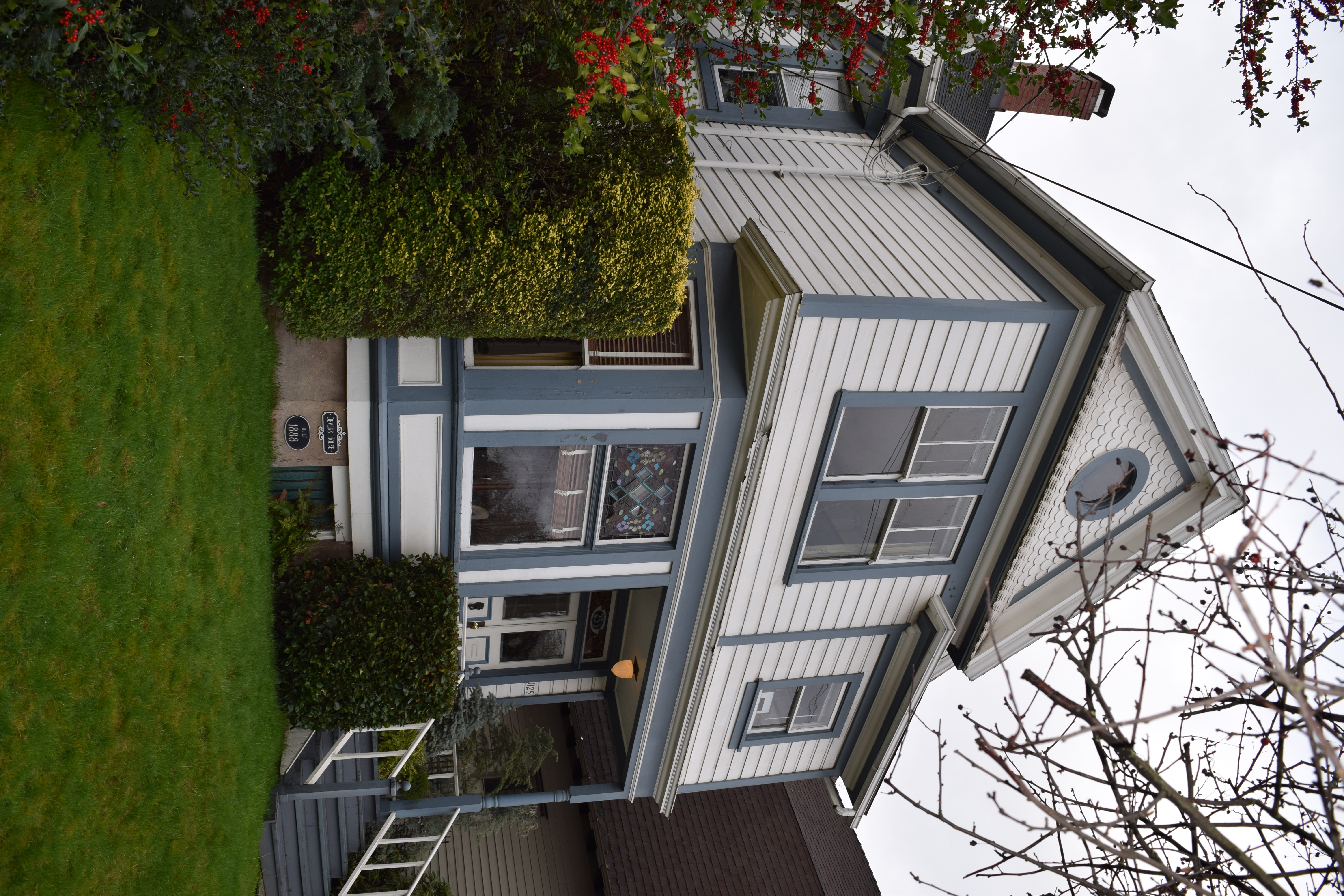
PORTLAND, Ore. – The Arthur H. Devers House in northwest Portland is among Oregon’s newest entries in the National Register of Historic Places. The State Advisory Committee on Historic Preservation (SACHP) recommended the nomination at its October 2025 meeting for the property’s association with prominent turn-of-the-century Portland businessman and civic leader Arthur H. Devers. The National Park Service, which maintains the National Register, accepted the nomination in late February 2026.
 

Completed in 1891 and located at 1125 NW 21st Avenue, the Devers House served as the longtime residence of Arthur H. Devers during the most formative years of his commercial and civic career. Devers was a co‑owner of Closset & Devers, one of the Pacific Northwest’s first prominent coffee and tea importers, and by the early twentieth century had become one of Portland’s better known business figures. While living in the house between 1891 and 1908, he played a central role in shaping major regional initiatives, including planning the Lewis and Clark Exposition of 1905, securing political support and federal funding for the Dalles‑Celilo Canal, and helping establish the “City Beautiful” committee that evolved into the Civic Improvement League, which later commissioned Edward Bennett’s Progressive‑era plan for Portland. The house is the property most directly associated with Devers during this influential period, and it reflects the social aspirations and rising prominence of a self‑made leader whose impact on Portland’s commercial and civic development was widely recognized.
 

The National Register is maintained by the National Park Service under the authority of the National Historic Preservation Act of 1966. Properties listed in the National Register are:

  • Recognized as significant to the nation, state, or community;
  • Considered in the planning of federal or federally-assisted projects;
  • Eligible for certain federal and state tax benefits;
  • Qualified for historic preservation grants when funds are available;
  • Eligible for leniency in meeting certain building code requirements;
  • Subject to local laws pertaining to the conservation and protection of historic resources.

State law in Oregon requires local governments to offer a minimal level of protection for properties listed in the National Register of Historic Places; decisions about how to accomplish that goal reside with local governments, which also have the authority to create and regulate local historic districts and landmarks.
 

Interested in learning more about the National Register of Historic Places? Visit the National Register program webpage at https://www.oregon.gov/oprd/OH/pages/national-register.aspx to explore listed properties, review eligibility criteria and the nomination timeline, access research tools, and—if you are curious whether your property might qualify—submit a Historic Resource Record (HRR) form to receive preliminary feedback from State Historic Preservation Office staff.


###

Attached Media Files: Arthur H. Devers House, Portland,

National Park Service Lists Arthur H. Devers House In National Register Of Historic Places (Photo) - 03/11/26

PORTLAND, Ore. – The Arthur H. Devers House in northwest Portland is among Oregon’s newest entries in the National Register of Historic Places. The State Advisory Committee on Historic Preservation (SACHP) recommended the nomination at its October 2025 meeting for the property’s association with prominent turn-of-the-century Portland businessman and civic leader Arthur H. Devers. The National Park Service, which maintains the National Register, accepted the nomination in late February 2026.
 

Completed in 1891 and located at 1125 NW 21st Avenue, the Devers House served as the longtime residence of Arthur H. Devers during the most formative years of his commercial and civic career. Devers was a co‑owner of Closset & Devers, one of the Pacific Northwest’s first prominent coffee and tea importers, and by the early twentieth century had become one of Portland’s better known business figures. While living in the house between 1891 and 1908, he played a central role in shaping major regional initiatives, including planning the Lewis and Clark Exposition of 1905, securing political support and federal funding for the Dalles‑Celilo Canal, and helping establish the “City Beautiful” committee that evolved into the Civic Improvement League, which later commissioned Edward Bennett’s Progressive‑era plan for Portland. The house is the property most directly associated with Devers during this influential period, and it reflects the social aspirations and rising prominence of a self‑made leader whose impact on Portland’s commercial and civic development was widely recognized.
 

The National Register is maintained by the National Park Service under the authority of the National Historic Preservation Act of 1966. Properties listed in the National Register are:

  • Recognized as significant to the nation, state, or community;
  • Considered in the planning of federal or federally-assisted projects;
  • Eligible for certain federal and state tax benefits;
  • Qualified for historic preservation grants when funds are available;
  • Eligible for leniency in meeting certain building code requirements;
  • Subject to local laws pertaining to the conservation and protection of historic resources.

State law in Oregon requires local governments to offer a minimal level of protection for properties listed in the National Register of Historic Places; decisions about how to accomplish that goal reside with local governments, which also have the authority to create and regulate local historic districts and landmarks.
 

Interested in learning more about the National Register of Historic Places? Visit the National Register program webpage at https://www.oregon.gov/oprd/OH/pages/national-register.aspx to explore listed properties, review eligibility criteria and the nomination timeline, access research tools, and—if you are curious whether your property might qualify—submit a Historic Resource Record (HRR) form to receive preliminary feedback from State Historic Preservation Office staff.


###

Attached Media Files: Arthur H. Devers House, Portland,

Respect Nesting Areas To Protect Threatened Snowy Plover Mar. 15 Through Sept. 15 (Photo) - 03/11/26

Corvallis, OR – The Oregon Parks and Recreation Department and Siuslaw National Forest remind visitors to the Oregon Coast that western snowy plover nesting season begins March 15 and runs through Sept. 15. Beachgoers can help recovery efforts for the threatened shorebird by observing recreation restrictions at designated plover beaches.


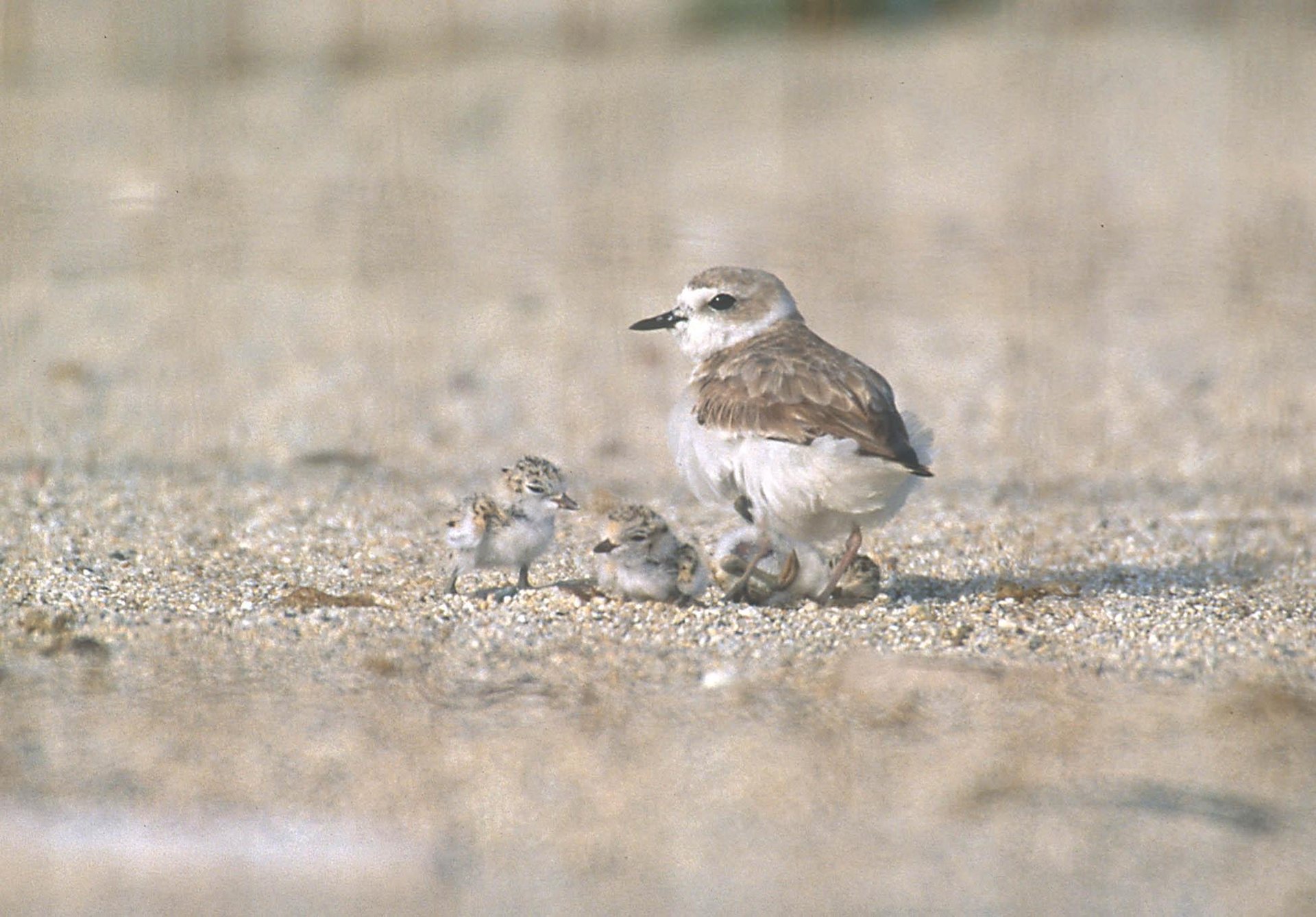
Sensitive plover nesting areas are identified on maps for the northern Oregon Coast and southern Oregon Coast. Western snowy plovers nest in dry sand above the high tide line and are often difficult to see because they camouflage well. To help protect these tiny shorebirds, please stay on wet sand and leave your dogs at home or at your campsite, even if they are leashed. Visitors may notice signs at trailheads with additional rules and limitations. There may be rope fencing in dry sand areas; this fencing delineates some, but not all, of the critical plover habitat that should be avoided.


Seasonal recreation restrictions have helped protect and recover the western snowy plovers living on Oregon’s beaches. Nests, and especially chicks, are well-hidden. During the nesting season, human disturbances can flush adult plovers away from their nests as they attempt to defend their young. Left alone too long, or too often, eggs or chicks can die from exposure and predators. Habitat loss from invasive plants and human disturbances—including litter and discarded food scraps that attract predators— also contribute to the birds’ decline.


Recreation restrictions occur only in designated plover management areas where plovers nest or might nest. These areas combined make up about 40 miles of Oregon's 362 miles of shoreline.


Reminders for recreation on designated plover beaches March 15 - Sept. 15:

  • The following are not permitted: dogs (even on a leash), driving a vehicle, riding a bicycle or e-bike, camping, burning wood, flying kites or operating drones.
  • Foot and equestrian traffic are permitted below the high-tide line on wet, hard packed sand.
  • Respect signs and barriers to protect nesting habitat.


The U.S. Fish and Wildlife Service listed western snowy plovers as a threatened species in 1993 when officials counted only 45 breeding adults. Populations have steadily increased since then due to ongoing efforts. Officials counted 546 during the breeding season survey in 2025.


"We appreciate visitors' support in keeping these shorebirds safe. We invite visitors to enjoy permitted recreation in sensitive areas or to recreate without seasonal restrictions on beaches not designated as plover nesting areas," said Laurel Hillmann, ocean shore specialist for the Oregon Parks and Recreation Department.


More information on the snowy plover, including detailed maps of nesting sites, can be found on the Oregon State Parks website (oregon.gov/plovers) and on the Siuslaw National Forest website (fs.usda.gov/r06/siuslaw/animals-plants/western-snowy-plover).


Visitors to the Oregon Dunes National Recreation Area can review Off-highway Vehicle (OHV) maps to identify unrestricted recreation areas and information on riding motor vehicles on the sand at fs.usda.gov/r06/siuslaw/recreation/rules-and-guidelines.


Plover activity near Sand Lake Recreation Area

The increase in plover numbers may result in nesting occuring at new or historical nesting sites. For example, visitors to Sand Lake Recreation Area may see small roped off areas near the lake’s inlet to protect active nests and may encounter plovers on the beach. Beachgoers are encouraged to protect these birds by restricting recreation activities to wet sand areas, avoiding roped off nesting areas, packing all trash out and keeping dogs on leash. Paragliders should steer toward the northern area of Sand Lake Recreation Area to avoid gliding or landing near plover nests on the southern edge of the Sand Lake spit.


Background on plover protections

Several land managers oversee beach activity for plover protection, primarily the U.S. Forest Service (USFS), the Bureau of Land Management (BLM) and Oregon Parks and Recreation Department (OPRD). For more information on how plovers are managed in Oregon, see the Habitat Conservation Plan (HCP): https://www.oregon.gov/oprd/PCB/Documents/WSP-HCP_08182010-web.pdf.


Editors: photos are available at the Oregon State Parks and Recreation Department website and the USDA Forest Service flicker site.


###
Attached Media Files: Plover and chicks,

Respect Nesting Areas To Protect Threatened Snowy Plover Mar. 15 Through Sept. 15 (Photo) - 03/11/26

Corvallis, OR – The Oregon Parks and Recreation Department and Siuslaw National Forest remind visitors to the Oregon Coast that western snowy plover nesting season begins March 15 and runs through Sept. 15. Beachgoers can help recovery efforts for the threatened shorebird by observing recreation restrictions at designated plover beaches.


Sensitive plover nesting areas are identified on maps for the northern Oregon Coast and southern Oregon Coast. Western snowy plovers nest in dry sand above the high tide line and are often difficult to see because they camouflage well. To help protect these tiny shorebirds, please stay on wet sand and leave your dogs at home or at your campsite, even if they are leashed. Visitors may notice signs at trailheads with additional rules and limitations. There may be rope fencing in dry sand areas; this fencing delineates some, but not all, of the critical plover habitat that should be avoided.


Seasonal recreation restrictions have helped protect and recover the western snowy plovers living on Oregon’s beaches. Nests, and especially chicks, are well-hidden. During the nesting season, human disturbances can flush adult plovers away from their nests as they attempt to defend their young. Left alone too long, or too often, eggs or chicks can die from exposure and predators. Habitat loss from invasive plants and human disturbances—including litter and discarded food scraps that attract predators— also contribute to the birds’ decline.


Recreation restrictions occur only in designated plover management areas where plovers nest or might nest. These areas combined make up about 40 miles of Oregon's 362 miles of shoreline.


Reminders for recreation on designated plover beaches March 15 - Sept. 15:

  • The following are not permitted: dogs (even on a leash), driving a vehicle, riding a bicycle or e-bike, camping, burning wood, flying kites or operating drones.
  • Foot and equestrian traffic are permitted below the high-tide line on wet, hard packed sand.
  • Respect signs and barriers to protect nesting habitat.


The U.S. Fish and Wildlife Service listed western snowy plovers as a threatened species in 1993 when officials counted only 45 breeding adults. Populations have steadily increased since then due to ongoing efforts. Officials counted 546 during the breeding season survey in 2025.


"We appreciate visitors' support in keeping these shorebirds safe. We invite visitors to enjoy permitted recreation in sensitive areas or to recreate without seasonal restrictions on beaches not designated as plover nesting areas," said Laurel Hillmann, ocean shore specialist for the Oregon Parks and Recreation Department.


More information on the snowy plover, including detailed maps of nesting sites, can be found on the Oregon State Parks website (oregon.gov/plovers) and on the Siuslaw National Forest website (fs.usda.gov/r06/siuslaw/animals-plants/western-snowy-plover).


Visitors to the Oregon Dunes National Recreation Area can review Off-highway Vehicle (OHV) maps to identify unrestricted recreation areas and information on riding motor vehicles on the sand at fs.usda.gov/r06/siuslaw/recreation/rules-and-guidelines.


Plover activity near Sand Lake Recreation Area

The increase in plover numbers may result in nesting occuring at new or historical nesting sites. For example, visitors to Sand Lake Recreation Area may see small roped off areas near the lake’s inlet to protect active nests and may encounter plovers on the beach. Beachgoers are encouraged to protect these birds by restricting recreation activities to wet sand areas, avoiding roped off nesting areas, packing all trash out and keeping dogs on leash. Paragliders should steer toward the northern area of Sand Lake Recreation Area to avoid gliding or landing near plover nests on the southern edge of the Sand Lake spit.


Background on plover protections

Several land managers oversee beach activity for plover protection, primarily the U.S. Forest Service (USFS), the Bureau of Land Management (BLM) and Oregon Parks and Recreation Department (OPRD). For more information on how plovers are managed in Oregon, see the Habitat Conservation Plan (HCP): https://www.oregon.gov/oprd/PCB/Documents/WSP-HCP_08182010-web.pdf.


Editors: photos are available at the Oregon State Parks and Recreation Department website and the USDA Forest Service flicker site.


###

Attached Media Files: Plover and chicks,

Ocean Shore Permitting Process Rule Advisory Committee Extended - 03/09/26

SALEM, Oregon—Oregon Parks and Recreation Department (OPRD) will extend a Rule Advisory Committee (RAC) convened last fall to review ocean shore permitting and update rules to implement HB 2925 (2025). The committee will continue to discuss topics including application requirements and processing, emergency and general authorizations, enforcement and fees.


Rule Advisory Committee meetings began in December 2025 and will now continue through July 2026 (remaining meeting dates/times below). The public can watch the livestream on YouTube on OPRD Director’s Office live channel.  A recording will be available after each meeting.


OPRD will be updating rules relating to the ocean shore alteration permitting process for the first time in over twenty-five years. Topics will include application requirements and processing, emergency and general authorizations, enforcement, and fees.


Staff will review feedback from the committee, amend the draft as needed and then open the draft rules for public comment in fall 2026. Staff will review public feedback, amend the draft as needed and then present the rules to the Oregon State Parks and Recreation Commission for adoption in the spring of 2027.


Additional information and recordings will be available on the agency’s rulemaking website. https://www.oregon.gov/oprd/PRP/Pages/PRP-Ocean%20Shore%20Alterations.aspx


Anticipated meeting schedule:


  • March 20, 1 - 4 p.m.
  • April 24, 1 - 4 p.m.
  • May 15, 1 - 4 p.m.
  • June 5, 1 - 4 p.m.
  • June 26, 8:30 a.m. – noon
  • July 28, 1 – 4 p.m.


Ocean Shore Permitting Process Rule Advisory Committee Extended - 03/09/26

SALEM, Oregon—Oregon Parks and Recreation Department (OPRD) will extend a Rule Advisory Committee (RAC) convened last fall to review ocean shore permitting and update rules to implement HB 2925 (2025). The committee will continue to discuss topics including application requirements and processing, emergency and general authorizations, enforcement and fees.


Rule Advisory Committee meetings began in December 2025 and will now continue through July 2026 (remaining meeting dates/times below). The public can watch the livestream on YouTube on OPRD Director’s Office live channel.  A recording will be available after each meeting.


OPRD will be updating rules relating to the ocean shore alteration permitting process for the first time in over twenty-five years. Topics will include application requirements and processing, emergency and general authorizations, enforcement, and fees.


Staff will review feedback from the committee, amend the draft as needed and then open the draft rules for public comment in fall 2026. Staff will review public feedback, amend the draft as needed and then present the rules to the Oregon State Parks and Recreation Commission for adoption in the spring of 2027.


Additional information and recordings will be available on the agency’s rulemaking website. https://www.oregon.gov/oprd/PRP/Pages/PRP-Ocean%20Shore%20Alterations.aspx


Anticipated meeting schedule:


  • March 20, 1 - 4 p.m.
  • April 24, 1 - 4 p.m.
  • May 15, 1 - 4 p.m.
  • June 5, 1 - 4 p.m.
  • June 26, 8:30 a.m. – noon
  • July 28, 1 – 4 p.m.


Parks Commission Approves Rate And Reservation Rules, Grant Proposals And Construction Projects - 03/04/26

SALEM, Oregon— The Oregon State Parks and Recreation Commission approved several grant recommendations and rule updates, including changes to camping cancellation policy, special access pass program requirements and rate ranges, at its February 24, 2026, virtual meeting.
 

The updated reservation rules will go into effect beginning April 2026. These rules, 736-015-0006 to 736-015-0043, will update the agency cancellation policy, refunds, special access passes and rate ranges.
 

Changes include:
 

Cancellation Policy:

  • No refunds on the day of arrival. 
  • No-show reservations will not be refunded.
  • Refunds vary based on how long the reservation was held and how close to arrival it is canceled. 


Special Access Pass:

  • New passes granted only to Oregon residents.
  • Free Day Use parking year-round.
  • 4 nights of free camping per calendar month.


Other items:

  • Updates reservation rate ranges to reflect future costs.
    • These rate ranges set only the minimum and maximum allowed amounts. They are not the actual price visitors will pay.
    • Actual rates will continue to be set separately and may stay the same or change gradually over time. This change allows greater use of demand-based pricing across seasons and park types.
    • The new rate ranges are not new rates. These ranges allow for the director to set new rates within the approved range to respond to inflation and operational needs.
  • State Parks Day will provide free parking for Oregon residents.
    • Individuals with existing camping reservations for June 6, 2026 will continue to have camping fees waived.
  • Updates language to allow for input of license plate input instead of printed tags.


The request to adopt rules guiding use of unmanned aircraft systems in parks and on the ocean shore was postponed until the April 2026 commission meeting.
 

The commission approved the following grant recommendations:

  • All-Terrain Vehicle Program 15 grants totaling $1,402,458 (Grants funded by ATV user permit sales and percentage of gas tax)
  • County Opportunity Grant with 9 grants totaling $2,171,547 (Grant program funded by RV license plate registration dollars)

Additional approved action items include:

  • Acknowledgement of a donation from Fastap Screw Company.
  • Addition of Ewuana Flats to the State Natural Areas Program
  • Approval to proceed with construction contracts for Lake Owyhee and Cape Lookout.

This was the first meeting for Commissioner Chane Griggs. Commissioner Griggs represents congressional district six. She is active in the Salem community and retired from a career with the state of Oregon. Commissioner Griggs enjoys camping with her family, including many spring break trips tent camping at Wallowa Lake State Park when her children were younger.
 

The next commission meeting will be held virtually on April 22, 2026.

To watch the February commission meeting or any others, visit https://bit.ly/oprdlive and find supporting documents on the commission webpage: https://www.oregon.gov/oprd/CAC/Pages/CAC-oprc.aspx
 

The Oregon State Parks and Recreation Commission promotes outdoor recreation and heritage by establishing policies, adopting rules and setting the budget for the Oregon Parks and Recreation Department. The seven members are appointed by the Governor and confirmed by the Oregon Senate. They serve four-year terms and meet several times a year virtually or at locations across the state.

Parks Commission Approves Rate And Reservation Rules, Grant Proposals And Construction Projects - 03/04/26

SALEM, Oregon— The Oregon State Parks and Recreation Commission approved several grant recommendations and rule updates, including changes to camping cancellation policy, special access pass program requirements and rate ranges, at its February 24, 2026, virtual meeting.
 

The updated reservation rules will go into effect beginning April 2026. These rules, 736-015-0006 to 736-015-0043, will update the agency cancellation policy, refunds, special access passes and rate ranges.
 

Changes include:
 

Cancellation Policy:

  • No refunds on the day of arrival. 
  • No-show reservations will not be refunded.
  • Refunds vary based on how long the reservation was held and how close to arrival it is canceled. 


Special Access Pass:

  • New passes granted only to Oregon residents.
  • Free Day Use parking year-round.
  • 4 nights of free camping per calendar month.


Other items:

  • Updates reservation rate ranges to reflect future costs.
    • These rate ranges set only the minimum and maximum allowed amounts. They are not the actual price visitors will pay.
    • Actual rates will continue to be set separately and may stay the same or change gradually over time. This change allows greater use of demand-based pricing across seasons and park types.
    • The new rate ranges are not new rates. These ranges allow for the director to set new rates within the approved range to respond to inflation and operational needs.
  • State Parks Day will provide free parking for Oregon residents.
    • Individuals with existing camping reservations for June 6, 2026 will continue to have camping fees waived.
  • Updates language to allow for input of license plate input instead of printed tags.


The request to adopt rules guiding use of unmanned aircraft systems in parks and on the ocean shore was postponed until the April 2026 commission meeting.
 

The commission approved the following grant recommendations:

  • All-Terrain Vehicle Program 15 grants totaling $1,402,458 (Grants funded by ATV user permit sales and percentage of gas tax)
  • County Opportunity Grant with 9 grants totaling $2,171,547 (Grant program funded by RV license plate registration dollars)

Additional approved action items include:

  • Acknowledgement of a donation from Fastap Screw Company.
  • Addition of Ewuana Flats to the State Natural Areas Program
  • Approval to proceed with construction contracts for Lake Owyhee and Cape Lookout.

This was the first meeting for Commissioner Chane Griggs. Commissioner Griggs represents congressional district six. She is active in the Salem community and retired from a career with the state of Oregon. Commissioner Griggs enjoys camping with her family, including many spring break trips tent camping at Wallowa Lake State Park when her children were younger.
 

The next commission meeting will be held virtually on April 22, 2026.

To watch the February commission meeting or any others, visit https://bit.ly/oprdlive and find supporting documents on the commission webpage: https://www.oregon.gov/oprd/CAC/Pages/CAC-oprc.aspx
 

The Oregon State Parks and Recreation Commission promotes outdoor recreation and heritage by establishing policies, adopting rules and setting the budget for the Oregon Parks and Recreation Department. The seven members are appointed by the Governor and confirmed by the Oregon Senate. They serve four-year terms and meet several times a year virtually or at locations across the state.